








Hasan S. Cemkan
Corporate
- Thread Author
- #1
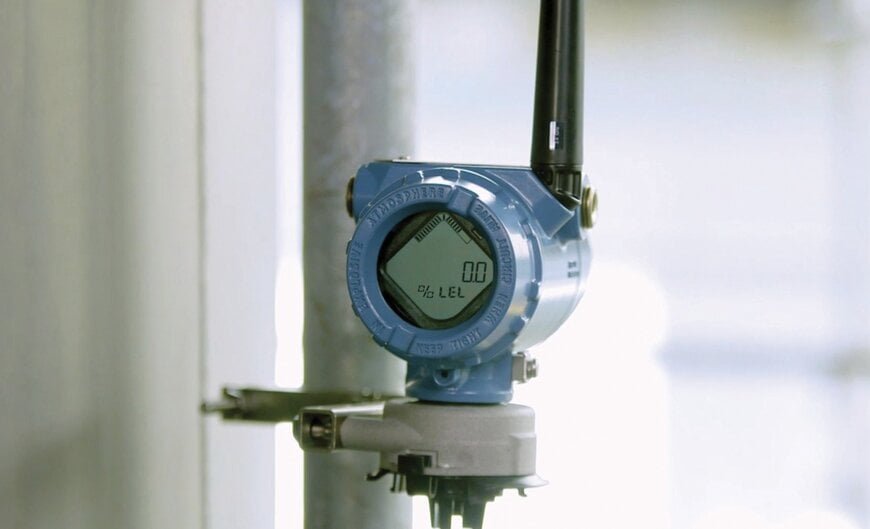
Safety is always a top priority in industrial facilities. Especially in chemical processing, oil and gas, and manufacturing sectors, flammable gas leaks can pose serious dangers. So, how can we manage these risks remotely and cost-effectively? Emerson answers this question with the new update to its Rosemount 928 Wireless Gas Monitor.
─────────────────────────
💡 Flammable Gas Detection in Remote Locations Just Got Easier!
Emerson has integrated flammable gas detection capabilities into the Rosemount 928 Wireless Gas Monitor, expanding its remote hazard detection capabilities over existing WirelessHART networks. This innovation allows for monitoring atmospheric risks in facilities without the need to lay new power cables or signal wires.
─────────────────────────
📊 Real-time Data Flow in Hazardous Areas
The updated device can measure flammable gas concentrations from 0% to 100% (Lower Explosive Limit - LEL). This data is transmitted via the WirelessHART protocol, providing plant operators with real-time visibility into atmospheric risks in remote locations where cabling is logistically impractical. By leveraging existing wireless sensor networks, facilities can deploy these monitors to detect early-stage gas leaks, avoiding the high capital expenditures of traditional wired infrastructure.
─────────────────────────
⚙️ Less Maintenance with Innovative Sensor Technology
Traditional flammable gas detectors often rely on catalytic bead sensors, which have consumable elements that chemically degrade when repeatedly exposed to target gases. Emerson's module, however, avoids these consumable components by using an alternative sensing technology that does not degrade with gas exposure. This engineering mechanism directly extends operational service intervals and reduces the frequency of manual calibration required by maintenance teams in the field.
─────────────────────────
🚀 Easy Integration into Existing Infrastructure
Dave Ruhland, global flame and gas product manager at Emerson, states that facilities can expand their wireless gas detection strategies to include flammable hazards on their existing WirelessHART platforms. This simplifies installation and supports reliable monitoring in inaccessible areas. Since the architecture relies on secure WirelessHART communication, the hardware operates autonomously, acting as a discrete monitoring node within a broader industrial safety ecosystem.
─────────────────────────
🔬 Advantages of NDIR Sensors
Industrial flammable gas detection typically relies on pellistor (catalytic bead) or Non-Dispersive Infrared (NDIR) sensors. Catalytic bead sensors require oxygen to operate and are susceptible to poisoning by silicones, lead, or sulfur compounds, which permanently reduces their sensitivity. In contrast, NDIR sensors, which fit the "non-consumable" description of the updated Emerson unit, measure gas concentrations by analyzing the absorption of infrared light at specific wavelengths.
Compared to catalytic bead alternatives, NDIR sensors consume slightly more baseline power but offer an extended lifespan of five to ten years, compared to the typical two to three-year lifespan of pellistor sensors. Furthermore, NDIR technology provides a "fail-safe" operational mode because any optical fault is immediately registered as a sensor failure. A poisoned catalytic bead, on the other hand, may silently fail to react to flammable gases during a leak event.
─────────────────────────
Emerson's innovation is transforming how we manage flammable gas risks in industrial facilities. With less maintenance, longer lifespan, and easy integration into existing infrastructure, businesses are both enhancing safety and reducing operational costs. Wireless monitoring technologies appear to be playing an indispensable role in the safe industrial environments of the future.




















