








Alper Aktaş
Endüstri Vadisi
- Thread Author
- #1
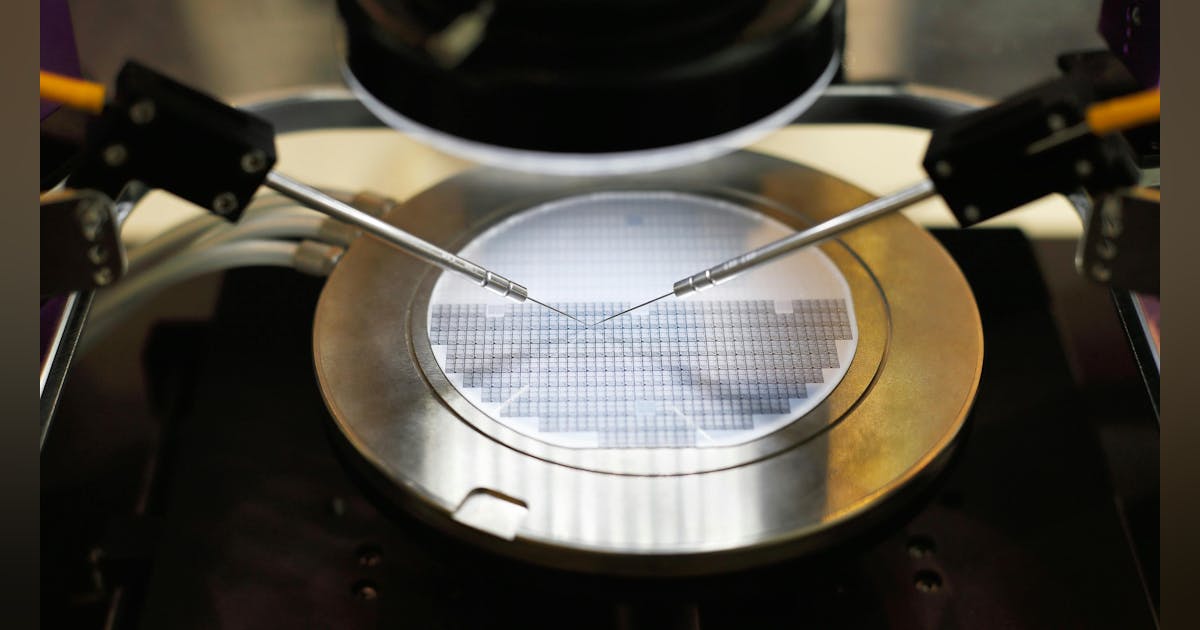
The semiconductor industry is approaching a critical turning point. With sales expected to reach $975 billion in 2026, the pressure to scale up production is more intense than ever.
─────────────────────────
📈 Investment and Demand Boom
According to Deloitte's 2026 Manufacturing Industry Outlook report, over $500 billion in private sector commitments have been announced to expand the U.S. manufacturing ecosystem. This indicates the sector's potential to triple its domestic capacity by 2032.
This surge in investment and demand is reshaping expectations for fabrication facilities. The question is no longer whether semiconductor manufacturers can add wafer capacity, but rather how quickly they can accelerate production volume, achieve target yield at advanced process nodes, reduce cycle time, and maintain equipment efficiency in an increasingly complex environment.
In this context, smart manufacturing is no longer an option; it has become the fundamental mechanism through which capital investments fuel operational advancement.
─────────────────────────
💰 Proving Return on Investment
As fabs modernize, leaders face pressure to justify investments in smart manufacturing technologies with tangible results. The experimentation phase is ending with the scaling of artificial intelligence (AI) and advanced analytics in manufacturing environments. However, many organizations still struggle to demonstrate measurable return on investment (ROI).
Effective business cases focus on operational levers that matter in semiconductor manufacturing. Yield improvement, defect density, and process drift detection/correction take center stage, directly impacting profitability in high-cost environments.
Similarly, reducing cycle time through bottleneck tools, increasing overall equipment effectiveness (OEE), and improving equipment availability can enable more wafer starts without additional capital investment.
Sustaining this value requires three practices:
[]Establishing clear operational baselines before deployment.
[]Measuring incremental gains accumulated over time.
[]Clearly linking operational improvements to financial impact.
Often, organizations lose sight of the baseline after implementing smart manufacturing solutions, making it difficult to demonstrate whether improvements represent true progress or merely a reversion to the mean.
─────────────────────────
⚙️ Challenges in Scaling Semiconductor Manufacturing
Despite generating terabytes of data daily from lithography, metrology, and inspection tools, many fabs struggle to translate information into actionable insights.
In brownfield deployments, where existing infrastructure needs to be enhanced, common limitations include:
[
- ]Critical Manufacturing Execution System (MES), Advanced Process Control (APC), Fault Detection and Classification (FDC), and Statistical Process Control (SPC) data being trapped in siloed systems and incompatible formats.

[]Engineers and operators being overwhelmed by dashboards lacking the necessary context and relevance for their current roles.
[]Inconsistent metrics across work centers and sites.
These challenges are further exacerbated by talent constraints and institutional knowledge gaps. As experienced engineers retire and new facilities emerge, the ability to codify, scale, and operationalize knowledge becomes a differentiator. Traditional execution models built for less complex environments are increasingly inadequate.
─────────────────────────
🤖 Preparing for AI-Powered Manufacturing
The semiconductor companies that will succeed are those that embed intelligence into their operations as quickly as possible. According to Deloitte's Enterprise AI Infrastructure Survey, over 70% of businesses expect to operate AI factories at scale by 2028; this represents an almost twofold increase in three years. AI infrastructure budgets are also expected to more than triple during the same period.
This acceleration creates an opportunity for early adopters to gain advantages. As AI continues to evolve, organizations that become future-ready will gain the capacity to ramp up production faster with less risk, scale consistently across multiple facilities, and adapt quickly as product complexity and demand evolve.
In greenfield facilities, this transformation begins on day one. AI capabilities are embedded directly into core systems, enabling near real-time insights, predictive analytics, and adaptive operations.
AI can have a significant impact on accelerating applications like yield learning during process development and production ramp-up. By correlating equipment signals, metrology data, defect reports, and electrical test results, advanced analytics can help engineers identify yield detractors earlier and shorten the time to achieve target yield.
In brownfield environments, effectiveness requires a different approach. Data must first be cleaned and properly managed, pulled from existing assets and infrastructure. Furthermore, it is important for AI solutions to be explainable and trusted by domain experts, enabling engineers and operators to integrate insights into their daily workflows. Scaling across facilities requires consistent architecture, data models, and performance metrics.
In both scenarios, there are several principles that define effective smart manufacturing strategies:
[]Role-based insights: Tailoring intelligence for process engineers, equipment engineers, operations leaders, and executives ensures relevance and adoption.
[]Near real-time decision support: Integrating insights across MES, APC, and FDC systems enables dynamic dispatch, bottleneck management, and cycle time improvement.
- Embedded workflows: Integrating analytics into daily operations promotes sustainable behavioral change.
─────────────────────────
🎯 The Way Forward
The scale of current semiconductor investment underscores the urgency of getting this transformation right. According to Deloitte's 2026 Manufacturing Industry Outlook, nearly 80% of manufacturers plan to allocate at least 20% of their improvement budgets to smart manufacturing technologies, including automation, advanced analytics, and AI.
However, technology alone will not deliver results. The true differentiator lies in implementation—how effectively companies align use cases with business priorities, prepare their data foundations, and integrate new capabilities into operational workflows.
Start by targeting use cases aligned with the fab's operational constraints. For some facilities, the biggest opportunity may lie in reducing cycle time through bottleneck tools. For others, it might be accelerating yield learning, minimizing deviations, or increasing equipment availability...