







Süeda Asil
Corporate
- Thread Author
- #1
Digital Transformation in a Major Project in Portugal
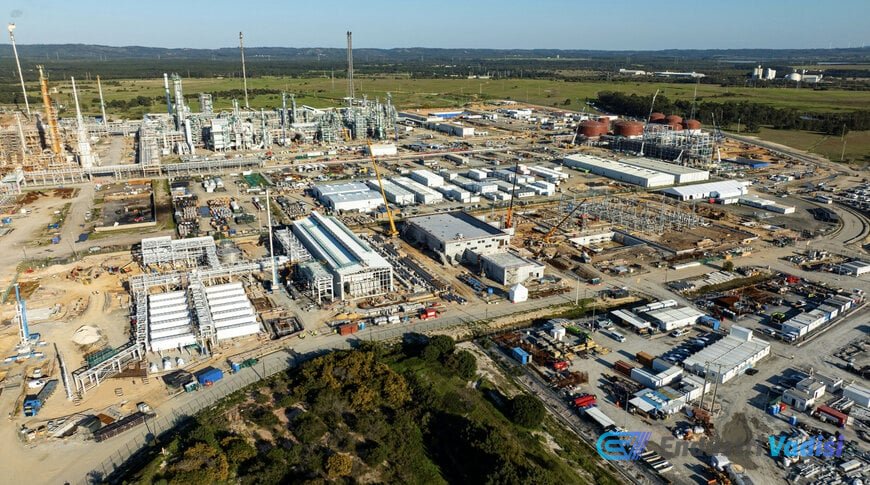
Siemens is breaking new ground in renewable hydrogen production by digitalizing Galp Energia's 100 MW GalpH2Park facility in Sines, Portugal. This project utilizes Siemens' software portfolio for the hydrogen industry to tackle challenges such as dynamic electricity tariffs, intermittent renewable energy sources, and highly variable stack degradation.
Optimization with Digital Twin Technology
At the heart of the project is the Siemens Hydrogen Performance Suite (HPS), an operational software cockpit structured for continuous plant optimization. This platform runs a predictive digital process twin that combines thermodynamic and electrochemical models with physical plant measurements. This allows critical parameters such as gas-liquid mass transfer, cell voltage behavior, thermal distribution, and membrane hydration dynamics to be simulated in real-time.
The software continuously compares measured sensor data with physical equations to identify operational deviations, prevent cell overpotential, and calculate optimal hydrogen production setpoints without accelerating stack degradation.
Energy Market and Production Planning
In industrial hydrogen production, electricity costs account for 70-80% of operating expenses. HPS integrates live plant telemetry with external market inputs such as electricity grid operator signals and spot markets. This bidirectional connection allows operators to automate dynamic production planning based on forecasted power prices, renewable generation capacity, and plant ramping constraints. This integration can lead to electricity energy savings of up to 15% across system duty cycles, based on operational modeling.
Industrial Decarbonization and Sines Refinery Integration
The initial phase of the GalpH2Park facility uses dedicated renewable energy sourced from Galp's renewable energy generation portfolio and long-term corporate power purchase agreements. The 100 MW electrolyzer is designed to produce up to 15,000 tons of renewable hydrogen per year, aiming for an annual reduction of approximately 110,000 tons of CO2 equivalent greenhouse gas in Scope 1 emissions.
Axel Lorenz, Executive Vice President for Siemens Automation Process Industries, stated that software-driven optimization and digital innovation are critical for industrial-scale renewable hydrogen plants to achieve commercial viability and accelerate industrial decarbonization.
This project maintains electrical balance by integrating with plant-wide automation architectures (SCADA, DCS, safety instrumented systems, power distribution networks, and variable frequency drive controls).
Technical Details and Competitive Analysis
The GalpH2Park facility in Sines operates alongside the existing Sines oil refinery, replacing approximately 20% of the refinery's conventionally produced fossil-based grey hydrogen with renewable output. This aims to meet the requirements of the EU Renewable Energy Directive (RED II / RED III).
The physical electrolysis infrastructure is based on proton exchange membrane (PEM) technology, featuring ten 10 MW GenEco modular containerized electrolyzers designed and delivered by Plug Power. PEM systems offer fast response times and wide dynamic operating ranges but require real-time monitoring to prevent membrane drying, localized overheating, and catalyst degradation.
Siemens' Hydrogen Performance Suite directly competes with rivals such as AspenTech's Aspen HYSYS Hydrogen Modeling and Emerson's Ovation Green and Plantweb Digital Twin frameworks. Siemens differentiates itself by combining real-time Distributed Control System (DCS) integration via SIMATIC PCS neo and PCS 7 with energy market forecasting APIs and predictive electrochemical twin simulations. This provides an end-to-end operational optimization loop that can dynamically change megawatt-level setpoints based on real-time market conditions.