






Semih Asil
Industry Valley
- Thread Author
- #1
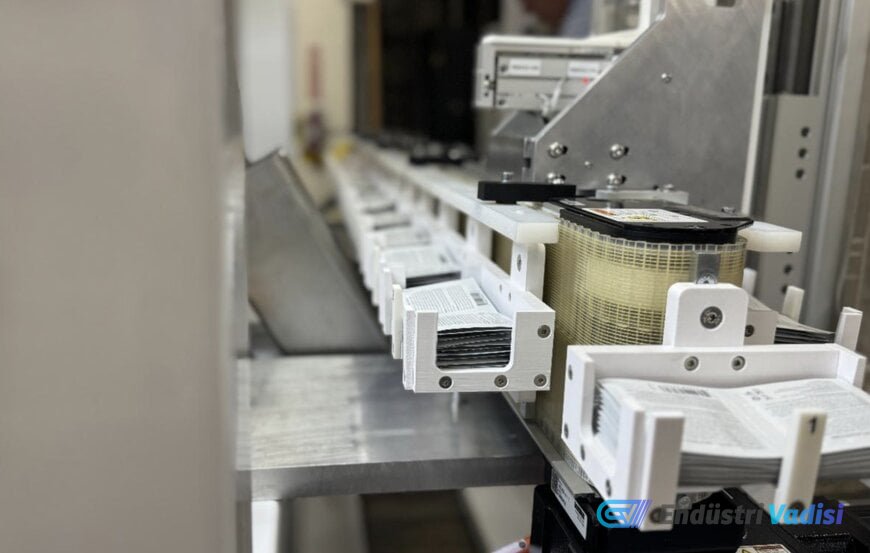
💡 Revolutionary Solutions from Integrion Automation
Integrion Automation supports strict regulatory compliance by offering risk-based assembly and inspection architectures for complex manufacturing processes in the life sciences sector. The company is expanding its portfolio of specialized equipment with advanced automation configurations designed to support validated and audit-ready manufacturing processes.
🔬 Medical Device Specific Automation
This technical approach provides automated product assembly and testing frameworks for the production of regulated medical devices such as catheters, medical filters, and bioprocess bags.
🛡️ Risk Mitigation and Regulatory Compliance
The integration of automated systems in life sciences requires adherence to strict regulatory standards to ensure patient safety and product suitability. Integrion Automation's new capabilities address these constraints by implementing the Good Automated Manufacturing Practice (GAMP 5) risk-based methodology. This framework enables engineering teams to conduct comprehensive risk identification during the initial proposal phase and complete mitigation planning before project execution.
The compliance-focused architecture is supported by rigorous validation services and documentation, including user requirement specifications, design specifications, and a complete package of installation, operational, and process qualifications. This approach allows medical device manufacturers to systematically reduce operational risks and maintain strict regulatory traceability.
⚙️ Precision Assembly and Traceable Inspection Technologies
To meet complex manufacturing requirements, automated systems incorporate specialized technical mechanisms for high-precision tasks such as implant frame assembly, intravenous connector assembly, and high-speed defect detection. Hardware architectures integrate three-dimensional vision inspection systems, ultrasonic welding units, and carbon dioxide laser cutting modules coordinated with robotic pick-and-place kinematics.
These mechanisms are configured to operate in designated cleanroom environments, ensuring physical contamination control while maintaining comprehensive part and batch traceability through integrated data management systems. This vertical integration of mechanical assembly, specialized inspection technology, and software-driven data logging offers manufacturers the ability to sustain high-throughput production goals while providing the data accuracy necessary to pass regulatory audits.
📊 Industry Comparison and Technical Details
In the medical device automation sector, leading integration firms such as ATS Life Sciences and Mikron Automation also specialize in regulatory-compliant assembly systems. Objective comparison among these specialized equipment integrators focuses on verifiable cleanroom compatibility, specifically the hardware's ability to operate in ISO Class 7 and ISO Class 8 environments without generating particulate contamination. Furthermore, digital traceability architectures are evaluated against standard regulatory requirements for electronic records and signatures.
Unlike off-the-shelf industrial manufacturing equipment, medical device automation platforms are measured by the depth of their validation documentation, particularly the traceability matrix that directly links user requirement specifications to functional equipment test results. The integration of high-resolution vision systems in these automated cells is routinely compared by defect detection accuracy, requiring micrometer-level precision to verify the structural integrity of critical components such as implant frames and fluid filtration devices.
Last edited by a moderator: