






Süeda Asil
Corporate
- Thread Author
- #1
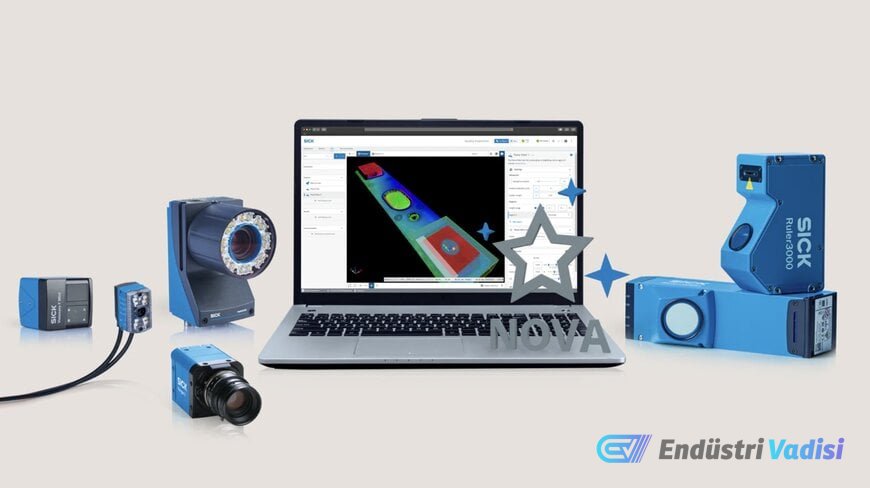
SICK is revolutionizing quality control with AI-powered 3D machine vision capabilities integrated into its Nova software. This innovative solution, combining deep learning algorithms with precise spatial height data analysis, addresses complex automation requirements across various industries, from logistics to automotive, electronics to battery production.
🧠 Neural Networks and 3D Spatial Imaging Combined!
Traditional rule-based machine vision systems often fell short in detecting low-contrast or variable defects. Nova software captures a distinct height value for each pixel using high-precision spatial sensors, reconstructing 3D topological data. A neural network embedded within the software analyzes this dataset, performing quality controls independent of color and contrast. By combining spatial understanding with AI, this system detects anomalies missed by traditional 2D imaging configurations, transforming perceived structural defects into a visual anomaly heatmap.
🏭 Industrial Application Areas and Technical Use Cases
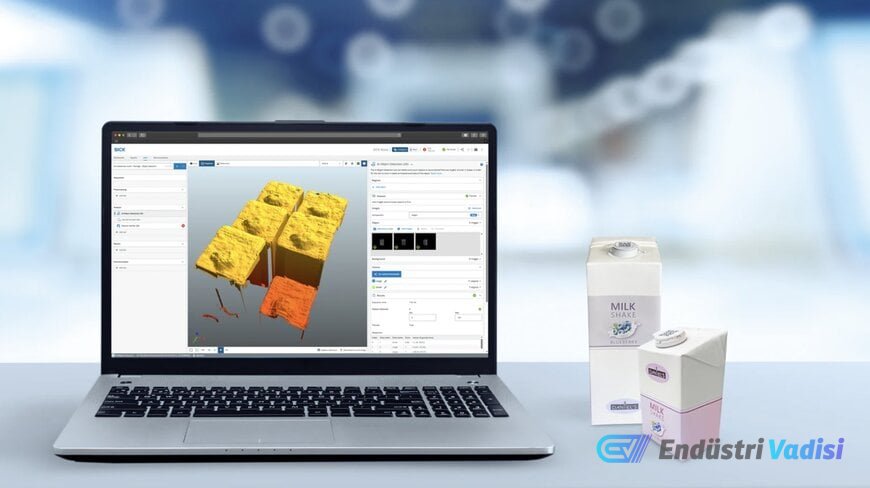
Applying deep learning to 3D height analysis enables defect detection in automated environments where standard optical contrast is insufficient. In the food, beverage, and consumer goods sectors, the system measures height deviations on carton surfaces to inspect package deformation and identify structural anomalies at high speeds. Logistics operations utilize spatial data for matrix packaging validation to detect empty boxes or missing objects in crates. Other technical applications include assembly verification and surface inspection in electronics and battery production, completeness checks for automotive tire classification, and 3D Optical Character Recognition (OCR).
🛠️ On-Device Training and System Deployment
The machine vision architecture employs a "teach by example" methodology, allowing engineers to train deep learning models using site-specific sample datasets. Data acquisition, model training, and inspection execution occur entirely on-device, facilitating production batch changes without the need for additional external processing hardware. The toolkit is activated via software licensing on predefined hardware and retains standard rule-based machine vision tools alongside AI functionalities. Market Product Manager Diego Quintana Tukasaki emphasized that integrating neural network capabilities into the platform expands inspection parameters, providing "more control over data and analysis to deliver highly accurate, configurable, easily trainable, customized intelligent inspection solutions.