





Erkan Teskancan
Corporate
- Thread Author
- #1
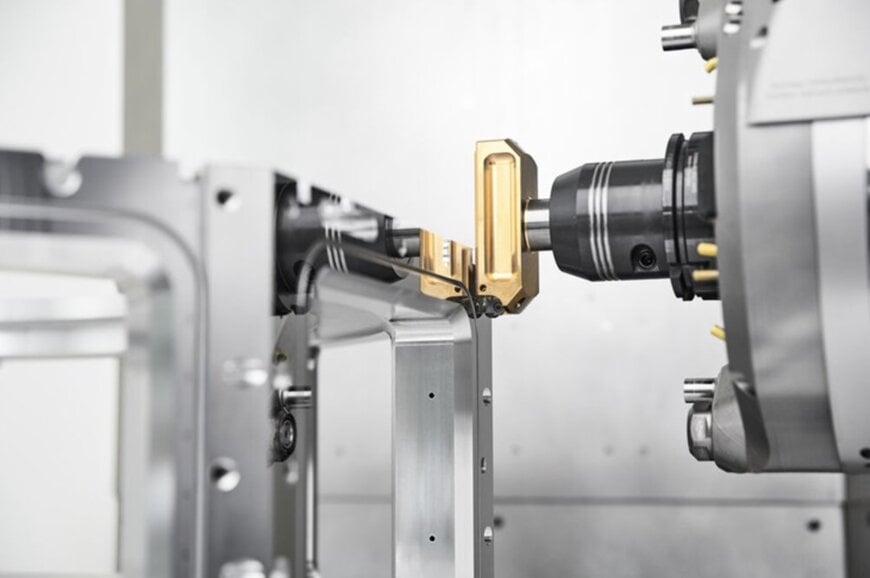
The semiconductor industry is raising the bar for precision and cleanliness standards every day. To meet these demanding requirements, DMG MORI has introduced the Machining Transformation (MX) framework, specifically designed for contract manufacturers. So, how does this innovative approach transform the production of complex components?
─────────────────────────
⚙️ The MX Framework: A Holistic Approach
DMG MORI's MX framework addresses the precision, process reliability, and cleanroom quality standards required in global computer numerical control (CNC) manufacturing for the semiconductor industry. This framework brings together elements of process integration, automation, Digital Transformation (DX), and Green Transformation (GX) to offer an end-to-end system aimed at scaling the production of complex components.
─────────────────────────
🔬 Process Integration and System Stability
Components such as process chamber enclosures require micrometer-precision tolerances, long machining times, and strict surface quality and particle cleanliness parameters. Traditional manufacturing setups introduce operational limitations due to discrete machining stages and manual interfaces. The MX framework ensures complete process integration by consolidating milling, turning, grinding, and measuring operations into a single machine tool. This consolidation reduces the number of structural setups, minimizes setup-induced sources of error, and shortens overall lead times. As a result, repeatable processes reduce scrap rates to support cost-effective series production.
─────────────────────────
🤖 Automation and Production Scalability
Automation is a key driver for increasing machine uptime without requiring additional personnel during long component machining cycles. The integration of automated pallet handling equipment with automated guided vehicles (AGVs) forms a foundation for automated shifts and flexible processing of varying part configurations. This operational structure improves machine capacity utilization, lowers long-term production costs, and enhances overall planning reliability.
─────────────────────────
📊 Digital Transformation and Real-Time Controls
The framework leverages Digital Transformation (DX) to maintain operational transparency and process control as integration and automation levels increase. Through the implementation of end-to-end data chains, process simulations, and digital twins, manufacturers can achieve proactive scheduling and continuous machine optimization. Real-time production data provides direct metrics on capacity utilization, component lead times, and production quality.
─────────────────────────
✨ Cleanroom Quality and Media Concepts
Particle management is a key element of semiconductor manufacturing strategy, where microscopic contaminants can jeopardize the functionality of sensitive components. Cleanroom quality protocols are directly integrated into machine tool designs and process engineering solutions.
Coordinated media concepts, such as specially formulated cooling lubricants, play a dual role in the machining environment:
[]They maintain thermal and tribological stability throughout the material removal phase.
[]They manage localized particle transport, minimize residue behavior, and facilitate subsequent component cleaning cycles.
─────────────────────────
🎯 Conclusion: The Future of Manufacturing Starts Today
DMG MORI's MX framework offers a comprehensive and innovative response to the challenges faced in semiconductor manufacturing. By combining precision, automation, and cleanliness standards, this integrated approach enables manufacturers to remain competitive and shape the technologies of the future. This transformation not only optimizes production processes but also reduces costs and improves manufacturing quality.