








Cengiz Özemli
Academic
- Thread Author
- #1
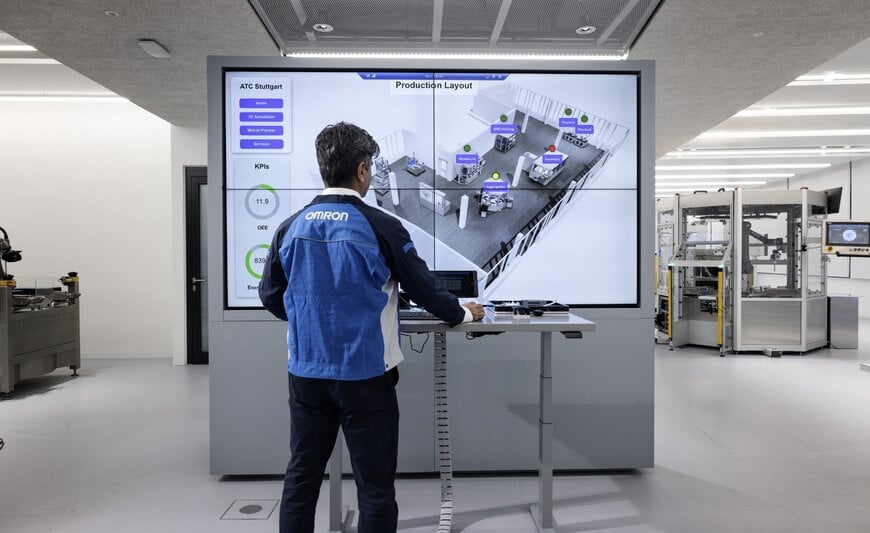
Digital transformation in industrial production plays a vital role in today's competitive market. However, the disconnects between operational technology (OT) and information technology (IT) are among the biggest obstacles to this transformation. OMRON offers a revolutionary solution to bridge this gap and increase production efficiency: i-BELT.
─────────────────────────
💡 What is i-BELT?
i-BELT, offered by OMRON, stands out as a digital lean transformation service. This service integrates operational technologies (OT) in production with corporate information systems (IT), ensuring a seamless flow throughout the digital supply chain. Its primary goal is to optimize production workflows and build a structural bridge between hardware automation and corporate data management systems.
─────────────────────────
⚙️ Bridging System Architecture Gaps
Industrial manufacturers often encounter fragmented system architectures where IT integrators manage data flows independently of the production floor context, and automation specialists optimize machines without connecting them to high-level corporate systems. This situation can lead to digital pilot projects stalling before full deployment. i-BELT closes this gap by combining Lean Six Sigma process optimization principles with digital infrastructure engineering. This provides a structured path to smart manufacturing without the need to completely replace existing hardware.
─────────────────────────
🔬 Diagnostic Methodologies and System Integration
The implementation process begins with a comprehensive production floor diagnosis. This diagnosis includes mapping process flows and analyzing key performance indicators (KPIs). OMRON collaborates with Cognizant and a broad technology ecosystem, utilizing a multidisciplinary engineering team to carry out these deployments. This structure ensures that continuous improvement methodologies are applied alongside targeted digital data collection. The service is designed to establish a real-time and scalable data infrastructure, compatible with any existing Manufacturing Execution System (MES), Enterprise Resource Planning (ERP) environment, or third-party automation hardware, using a technology-agnostic approach.
─────────────────────────
📊 Measurable Equipment Effectiveness and Implementation
By focusing on targeted integration rather than full system replacement, this framework aims for measurable operational improvements. Documented factory implementations show increases in Overall Equipment Effectiveness (OEE) rates from 5% to over 30%. Additionally, physical metrics such as calculated reductions in production cycle times, scrap rates, and overall plant energy consumption are also achieved.
Karthigeyan Vadivel, Regional Director of OMRON EMEA Advanced Solutions Division, states that the service structure is designed to take responsibility for the entire deployment lifecycle and manage the integration process until key metric improvements are achieved. Alexander Myagkov, Senior General Manager of the Advanced Solutions Division, emphasizes that the primary goal is to identify missing technological links and seamlessly integrate them into existing architectures. This allows manufacturers to make the best use of their existing assets while transitioning to a data-driven operational model.
─────────────────────────
🚀 Competitive Analysis and Technical Details
In the industrial IT-OT convergence and digital lean consulting market, deployment services are often compared with comparable frameworks from major automation suppliers such as Siemens (Xcelerator), Rockwell Automation (FactoryTalk consulting), and Schneider Electric (EcoStruxure). The evaluation of these digital transformation services focuses on interoperability and time to value. While proprietary vendors often prioritize integrating their own Programmable Logic Controllers (PLCs) or software stacks, a technology-agnostic service is measured by its capacity to interface with heterogeneous legacy equipment using standard industrial protocols like OPC UA or MQTT. Performance success is ultimately benchmarked against guaranteed percentage increases in Overall Equipment Effectiveness (OEE) and reductions in data latency between edge control layers and centralized enterprise servers.
In this competitive environment, OMRON i-BELT stands out with its technology-agnostic approach and focus on measurable results, promising manufacturers a true digital transformation.



















