







Hasan S. Cemkan
Corporate
- Thread Author
- #1
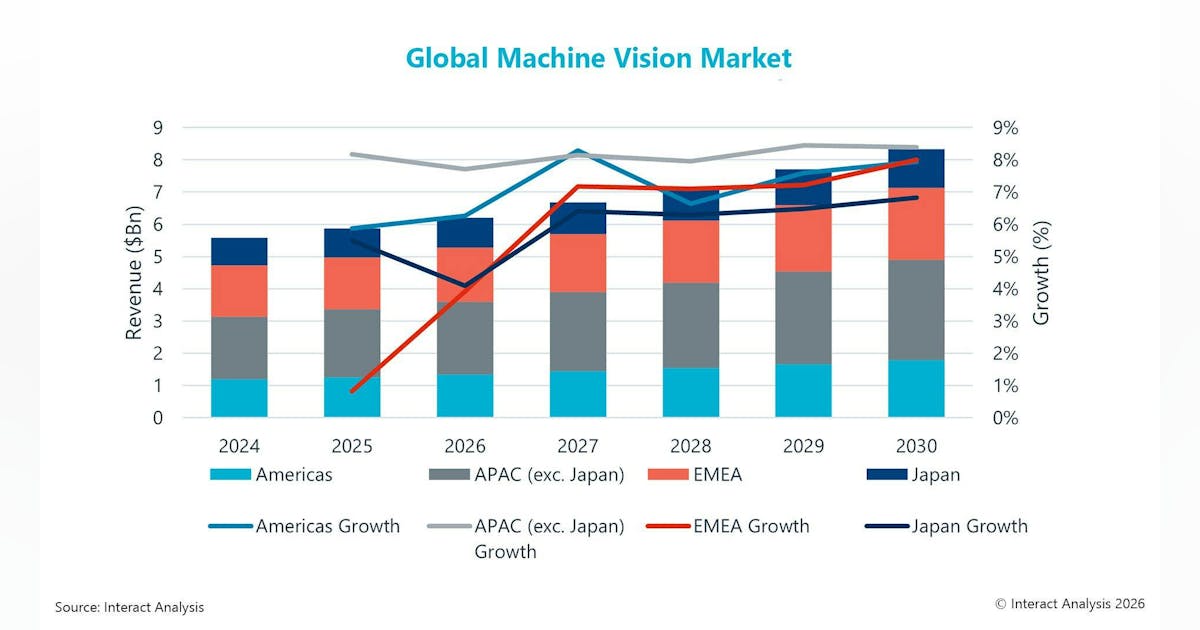
The machine vision sector, considered the heart of industrial automation, continues its rapid pace despite unexpected obstacles. According to a report by market intelligence specialist Interact Analysis, the sector is set to reach a massive size of $8.3 billion by 2030. So, what are the driving forces behind this growth?
─────────────────────────
📊 A Performance Exceeding Expectations
According to the report, the machine vision industry recorded a 5.2% growth in 2025, surpassing expectations. This highlights the sector's resilience and adaptability. An average annual growth rate of 7.2% is projected for the 2025-2030 period.
─────────────────────────
⚙️ Growth Drivers: 3D Cameras and Software
At the core of this momentum in the sector are 3D cameras and advanced vision software. The increasing demand for precision and high-quality inspection is accelerating the transition to intelligent vision systems. This reinforces the critical role of machine vision technologies in industry.
─────────────────────────
🚗 Autonomous Driving and Bin-Picking: New Application Areas
Innovative applications such as autonomous driving and bin-picking also play a significant role in the growth of machine vision. These areas demonstrate how crucial the sector is, not only in traditional manufacturing but also in future technologies.
─────────────────────────
🌍 Regional Dynamics: Asia-Pacific Leadership
Interact Analysis analysts predict that the Asia-Pacific region, excluding Japan, will continue to be the fastest-growing region for machine vision, with an average annual growth rate of 8.1%. Although the Europe, Middle East, and Africa (EMEA) region experienced the lowest growth at 0.8% in 2025, a recovery of 3.9% is expected in 2026.
─────────────────────────
📦 Rise in the Logistics Sector
Increased automation in warehousing, sorting, and distribution is fueling demand for machine vision in the logistics sector. Between 2025 and 2030, logistics will be the fastest-growing sector for machine vision, increasing from $494 million to $898 million with an average annual growth of 12.7%. Bin-picking and autonomous mobile robots stand out as the fastest-growing applications in this area.
─────────────────────────
⚡ Electronics and Electrical Sector Remains at the Top
Despite strong growth in the logistics sector, the electrical and electronics sector will continue to be the largest market for machine vision. This sector is expected to grow from $742 million to approximately $1.1 billion between 2025 and 2030.
─────────────────────────
🛡️ Tariff Impact Remained Limited
Although tariffs implemented at the beginning of 2025 initially created uncertainty in the machine vision market, Interact Analysis states that the tariffs' impact on the sector ultimately remained limited. As Jonathan Sparkes noted, while additional costs were partly reflected in price increases, this did not significantly affect demand, and prices are expected to stabilize in the future. This indicates how indispensable machine vision technologies have become in industrial processes.