








Erkan Teskancan
Corporate
- Thread Author
- #1
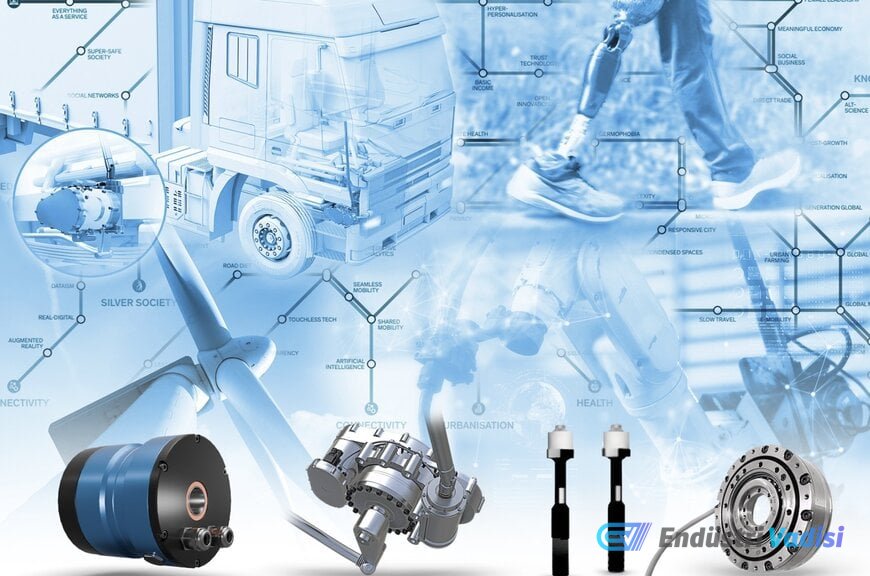
The heart of industrial automation beats in precise and efficient motion control systems. Today's complex production environments demand integrated solutions that bring together mechanical, electronic, and software components under one roof. One of the leading companies in this field is developing consolidated motion platforms that synchronize mechanical gearboxes, sensors, and software to optimize advanced robotic and machine systems.
─────────────────────────
💡 Architectural Integration and Motion Control
Modern operational requirements demand drive systems that offer precision, dynamic response, and operational efficiency even in confined spaces. Traditional approaches involved sourcing and assembling separate components, which increased integration complexity and footprint. However, there is now a shift towards a new methodology where mechanics, control electronics, and embedded software are combined into a single system. This approach reduces integration effort and streamlines the digital supply chain by eliminating the need for customers to independently coordinate motor, sensor, and gearbox interfaces.
─────────────────────────
🔬 Kinematic Components and Sensor-Integrated Solutions
The development framework utilizes a modular product portfolio that includes high-torque cycloidal gears, backlash-free wave gears, and high-efficiency motor architectures. Combined with specialized control units and sensor arrays, these systems provide continuous data monitoring and precise physical actuation. For example, the CV-EPS steer-by-wire platform designed for autonomous commercial vehicles and custom drive solutions for medical exoskeletons are concrete examples of this integration. Additionally, space-saving digital gears with integrated sensor technology and a CMFS condition monitoring system that monitors the operating status of wind turbine yaw drives are also being developed.
─────────────────────────
📊 Engineering Methodologies and System Scalability
As an end-to-end development partner, the company supports the entire hardware and software lifecycle, from conceptual design to series production. The transition to mechatronic integration enables precise physical motion coupled with data-driven control logic, directly supporting advanced manufacturing and automated infrastructure without adding systemic complexity.
─────────────────────────
⚙️ Technical Depth: Gear Technologies and Sensor Integration
In the high-precision mechatronic drive sector, cycloidal and wave gear solutions directly compete with products from manufacturers such as Harmonic Drive SE and Wittenstein SE. Benchmarking for these systems typically focuses on torque density, zero-backlash precision measured in arc minutes, and torsional rigidity. While traditional planetary gears offer robust power transmission for general industrial use, cycloidal drives provide superior shock load capacity and lower hysteresis loss, making them the standard mechanism in heavy-duty six-axis industrial robots.
Instead of relying on external, shaft-mounted encoders, localized sensor arrays integrated directly into the gearbox housing are a significant point of technological differentiation. This embedded sensing approach allows for real-time thermal and vibration monitoring by directly interfacing with industrial automation networks via standard protocols such as EtherCAT or PROFINET. This integration enables deterministic predictive maintenance algorithms without requiring secondary data processing hardware at the edge.
─────────────────────────
Integrated mechatronic drive systems are shaping the future of industrial automation. The seamless combination of mechanics, electronics, and software offers more precise, efficient, and compact solutions, revolutionizing manufacturing processes. These technologies simplify the integration of complex systems while enhancing performance and reliability, forming the foundation of industrial transformation.




















