






Ahmet Ö.
Corporate
- Thread Author
- #1
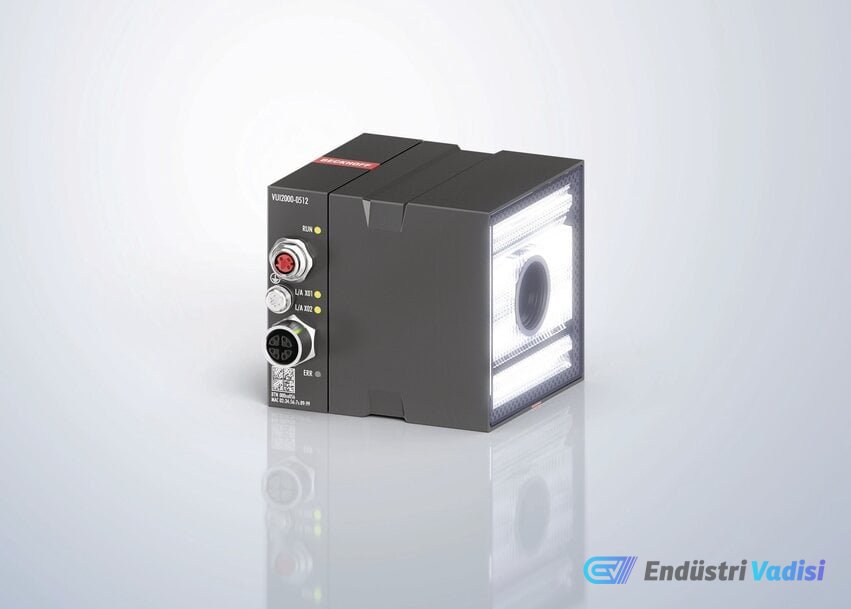
Beckhoff has enhanced machine vision performance in industrial environments by adding 16 new hardware variants to its Vision Unit Illuminated (VUI) series, which include liquid lens technology and integrated polarization features.
### New Vision Unit Features
- The VUI operates as a decentralized vision system, combining image acquisition, adjustable optics, and illumination within a single IP65/67 certified housing.
- It enables integration into automotive data ecosystems and broad industrial control environments via EtherCAT, thereby occupying less space and reducing wiring complexity compared to modular vision systems.
- Sensor resolutions are 5.1, 8.1, and 12.4 megapixels, targeting high-speed cycle detection and high-precision metrology applications.
### Technical Integration of Adjustable Optics
- Liquid lens technology allows for software-based focus adjustment without mechanical movement.
- This technology minimizes wear in high-vibration environments, common in digital supply chains and production lines.
- The new device variants use global shutter sensors to capture accurate geometry on fast-moving conveyor systems, preventing rolling shutter deformation.
### Preventing Surface Reflections with Polarization
- Cross-polarized filters are used to reduce reflection-induced interference in optical quality control.
- The VUI delivers high-contrast images through transparent or highly reflective materials such as glass, plastic film, and liquid surfaces.
- This hardware-level filtering makes it possible to detect subsurface defects or printed marks that are invisible due to glare.
- In applications like pharmaceutical packaging and electronic assembly, it reduces the computational load on processing algorithms.
### Durability and Control System Synchronization
- The device is designed to withstand thermal and mechanical stress in machine construction.
- Fully integrated into the TwinCAT vision software environment, camera parameters, illumination strobing, and the focus position of the liquid lens are synchronized with the PLC cycle.
- This real-time coordination allows focus settings to be changed based on product height or inspection requirements without manual intervention, thus maintaining efficiency in flexible production cells.