






Cengiz Özemli
Academic
- Thread Author
- #1
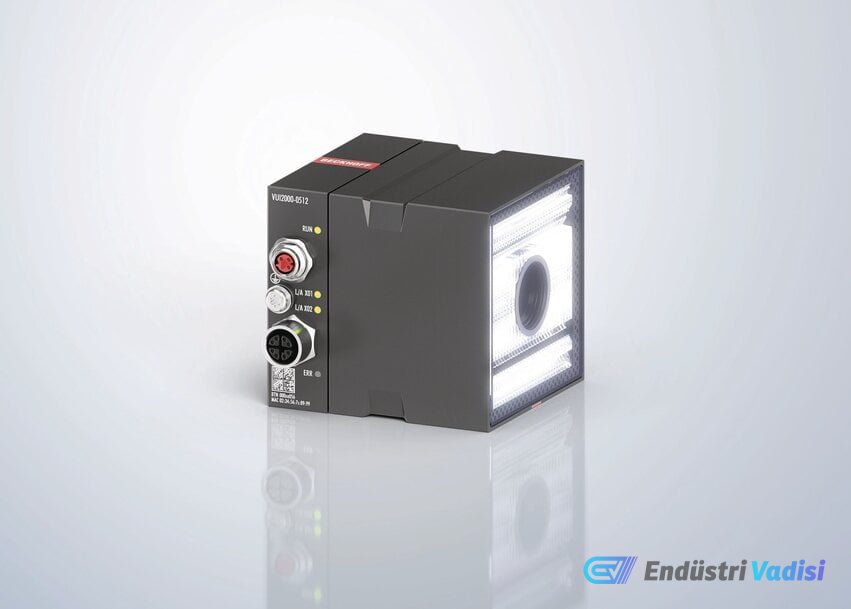
Beckhoff has expanded its Vision Unit Illuminated series with 16 hardware variants featuring liquid lens technology and integrated polarization. This development aims to enhance machine vision performance in industrial environments.
### Vision Unit Illuminated Series
The Vision Unit Illuminated (VUI) functions as a decentralized imaging system, combining image acquisition, adjustable optics, and illumination in a single IP65/67 rated housing. Integrable into the automotive data ecosystem and general industrial control systems via EtherCAT, this system occupies less space and reduces cabling complexity compared to modular vision hardware.
The latest expansion introduces sensors with 5.1, 8.1, and 12.4 megapixel resolutions. These sensors target high-speed cycle detection and high-precision metrology applications.
### Technical Integration of Adjustable Optics
At the core of the series is liquid lens technology, which provides software-controlled focusing. This technology, requiring no mechanical movement, increases the device's durability in high-vibration production and supply chain environments. The new 16 models, when used with global shutter sensors, eliminate rolling shutter distortion that occurs in fast-moving conveyor systems.
### Reducing Surface Reflections with Polarization
The use of cross-polarized filters addresses issues caused by surface reflections in optical quality control. Polarized light enables high-contrast images to be obtained from transparent and reflective materials such as glass, plastic film, and liquid surfaces. This hardware-level filtering detects subsurface defects and printed markings without them becoming invisible due to glare. In applications like pharmaceutical packaging and electronic assembly, this method reduces the load on image processing algorithms.
### Durability and Control System Synchronization
The device is designed to withstand thermal and mechanical stresses in machine building processes. The VUI is fully integrated into the TwinCAT vision software environment. Camera parameters, illumination strobing, and liquid lens focusing functions are synchronized with the PLC cycle, allowing for instantaneous and automatic changes in focus settings for different product heights or inspection requirements on the production line. This feature enables the maintenance of production speed in flexible manufacturing cells.