





Ahmet Ö.
Corporate
- Thread Author
- #1
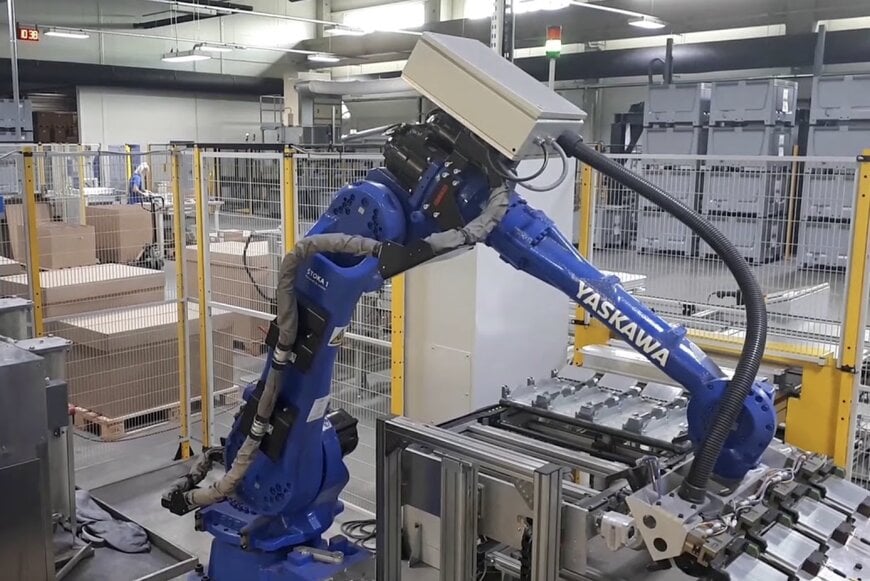
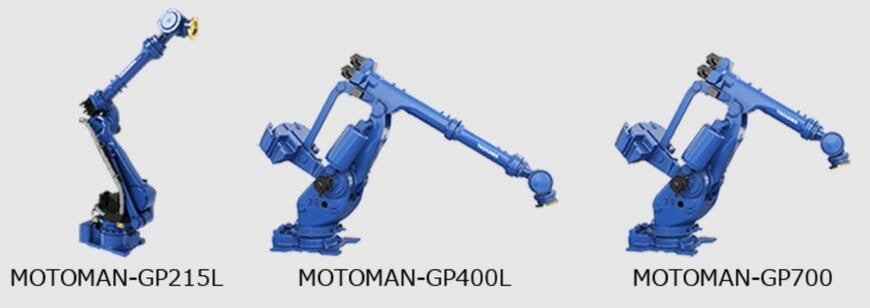
In modern manufacturing facilities, the transportation of large and heavy workpieces is becoming increasingly critical. Yaskawa is revolutionizing industrial automation with its new generation of heavy-duty robotic arms, the MOTOMAN GP215L, GP400L, and GP700, designed to overcome this challenge. These robots not only increase transport efficiency but also transform production processes from the ground up.
─────────────────────────
🏭 Production Trends and Heavy Load Requirements
In today's manufacturing world, individual workpieces and component sub-assemblies are growing in both size and weight. Especially in the automotive sector, structural body components, heavy cast metal parts, and modular battery cases are notable for their continuously increasing size and mass. Similarly, battery production processes require the bulk transport of multiple cells simultaneously to maintain efficiency.
Beyond automotive, sectors such as construction machinery manufacturing, building materials processing, and industrial factory equipment manufacturing are also facing increasing demands for transporting large structural parts and massive processing molds. To automate these tasks, manufacturing facilities need heavy-duty industrial robots designed with extended physical reach and higher wrist load tolerance to balance bulk components.
─────────────────────────
⚙️ Performance and System Specifications
The expanded product series offers distinct mechanical advantages in three different models designed to optimize line architecture and maximize overall floor space utilization:
[]MOTOMAN-GP215L: This model offers a maximum payload capacity of 215 kg and an extended horizontal reach of 3114 mm. Wrist load tolerance shows an improvement of up to 44% compared to conventional robots in its class.
[]MOTOMAN-GP400L: Designed for high payload and long reach requirements, this unit offers a 400 kg payload capacity and a maximum horizontal reach of 3718 mm. This reach is 200 mm longer than previous models, while wrist load tolerance has been increased by up to 110% compared to conventional classes.
[]MOTOMAN-GP700: Positioned as a high-payload model for heavy material handling, this arm provides a 700 kg payload capacity. While maintaining a maximum horizontal reach of 2845 mm, it increases the permissible mechanical wrist tolerance by up to 60%.
─────────────────────────
📐 Structural Layout and Space Optimization
The mechanical layout of the series uses a compact structural footprint designed to reduce the active interference radius during rotational path movements. This compact geometry increases design flexibility when planning or modifying equipment layout configurations within standard factory footprints. By minimizing spatial interference contours, the robots support efficient use of facility floor space, enabling factory designers to optimize production line layouts and shorten overall processing line lengths.
─────────────────────────
🏭 Factory Production Applications
This heavy-duty robot series is designed for material handling and automation roles across various manufacturing sectors:
[
- ]Automotive Manufacturing: Inter-stage transfer of structural vehicle body components, high-mass cast parts, and integrated electric vehicle battery assemblies.
[]Battery Production: Bulk transfer and palletizing of raw battery cells in high-density pack assembly stages.
[]Construction and Infrastructure: Equipping and transporting heavy industrial parts, large structural building elements, and high-mass manufacturing components.
- Factory Tool Logistics: Manipulation, positioning, and machine feeding of large-scale mechanical workpieces and heavy processing molds.
─────────────────────────
🔬 Technical Details and Competitive Analysis
Heavy-duty industrial robots managing capacities between 200 kg and 700 kg are rigorously evaluated by their static payload limits, maximum spatial reach, permissible wrist torque (moment), and wrist inertia. In high-inertia applications – such as moving offset automotive chassis panels or dense battery trays – the true limit of an industrial robot is often determined by dynamic wrist torque rather than pure vertical lifting power.
📏 Long-Reach Handling Metrics
In the 400 kg payload capacity class, standard long-reach industrial robots like the M-900iB/400L or KR 420 R3080 offer maximum horizontal reach distances limited to approximately 3,000 mm to 3,100 mm. The MOTOMAN-GP400L extends this operational envelope by offering a maximum reach distance of 3,718 mm while maintaining its full 400 kg rating. This extended arm reach allows for the extraction of large components from deep presses or casting machines and eliminates the need for secondary, floor-mounted linear shuttle rails, thereby reducing overall capital infrastructure complexity.
💪 Wrist Load Tolerance and Dynamic Inertia
Traditional heavy-duty arms often suffer from restricted permissible inertia moments when handling bulky, long objects that shift the load's center of gravity away from the tool mounting flange. When comparable heavy robots encounter high-offset tooling, their speeds must be software-reduced by up to 50% to prevent gear damage in the wrist axis.
Structural upgrades in the MOTOMAN-GP215L, GP400L, and GP700 series increase wrist load thresholds by 44%, 110%, and 60% respectively, compared to conventional baselines. For example, compared to standard 700 kg models like the MX700N with a 2,540 mm reach, the MOTOMAN-GP700 provides an extended reach of 2,845 mm by utilizing reinforced wrist dual-bearing reducers. This architecture allows for the manipulation of heavy processing molds and offset loads at higher acceleration rates without triggering servo overload faults or structural resonance during emergency stops.
✨ Case Footprint and Interference Optimization
As factories transition to high-density production work cells, the base footprint and rear clearance interference radius of large articulated arms impact layout efficiency. Traditional parallel-link or counterweighted heavy robots require large rear mechanical stabilization structures that move within a wide envelope, necessitating extensive safety fencing.
The compact pivot design used in this extended series limits the rear interference radius. This allows the base placement to sit closer to CNC machine beds, stamping fixtures, and perimeter safety barriers. By consolidating the primary link assembly, these arms allow for a reduction in the floor allocation area required per cell and help shorten the spatial distance between successive production stations along a combined production line.
Yaskawa's new robot series is shaping the future of industrial automation with its heavy-duty handling capacity, extended reach, and optimized space utilization. Manufacturers will be able to design more efficient, safe, and flexible production processes thanks to these robots.