








Ahmet Ö.
Corporate
- Thread Author
- #1
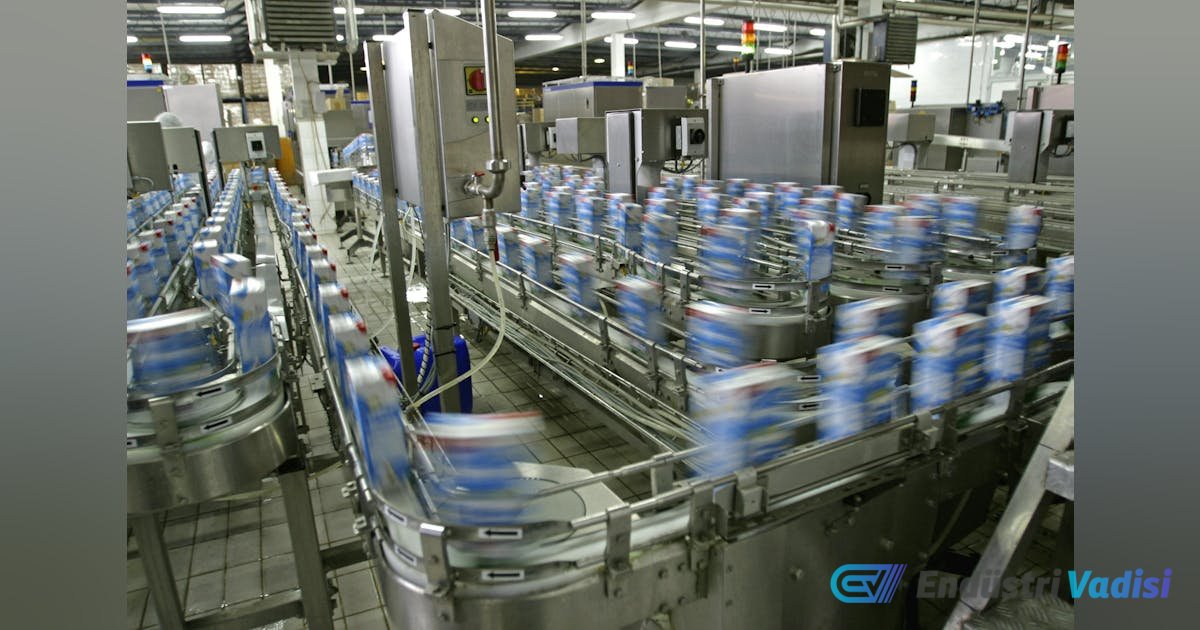
Factory Acceptance Tests Are Not Enough! 🚧
Even if an automated production line successfully passes factory acceptance tests, is installed at the facility, and receives full marks on every equipment check, it may not be ready for production. The reason for this is often not missing hardware or software, but unproven behaviors in the installed system.
What is Production Readiness? 🤔
Factory acceptance tests question whether automation performs its functions under specific conditions at the supplier's facility. However, production readiness is a broader question encompassing the ability of controllers, robots, safety systems, auxiliary services, manufacturing software, material flow, and people to come together and achieve full production capacity.
What Do Standards Say? 📚
The International Society of Automation's ISA-105 and ISA-95 frameworks treat factory acceptance tests, site acceptance tests, site integration tests, and commissioning as distinct but related activities. These standards emphasize that verifying a machine or software package is not proof that the installed production system is ready for operation.
Solution: Not Longer Checklists! ✅
For automation teams, the solution is not longer checklists, but a readiness methodology built on production capabilities, dependencies, and proven evidence.
Production Capability-Focused Readiness Definition 🎯
Traditional readiness checklists often focus on project deliverables: equipment installed, power available, network connected, code loaded, etc. While these are indicators of progress, they do not prove that production outcomes can be achieved.
A stronger approach begins by defining the capabilities the facility needs to perform. For example:
- Initiating and executing a production order
- Starting the line from an empty state
- Sustaining required throughput
- Performing a controlled shutdown
- Restoring operation after a system interruption
A readiness record should be created for each capability. This record shifts the discussion from "Is the control work complete?" to "Has the facility proven it can perform this production capability under installed conditions?"
Command to Confirmed Outcome Dependency Chain 🔗
Production capabilities rely on chains of command and confirmation. A request can originate from an enterprise platform, pass through line supervisory control, and reach PLCs and motion systems. The readiness team should map the runtime chain for each critical capability. This map should identify the initiating command, preconditions, decision points, confirmations, and final status.
For example, the release of a production order, even if valid in the manufacturing execution system, might fail because a controller has an old product code or a packaging cell is unavailable. These situations may not surface in isolated equipment tests. Therefore, site integration must test the entire command path.
Inter-System State and Data Reconciliation 🔄
Many challenging startups result not from complete communication breakdowns, but from disagreements after communication is restored. Readiness tests should examine state ownership and reconciliation. For each significant inter-system transaction, the team should determine:
- Which system is the authoritative source for the current state?
- How are duplicate or delayed commands recognized?
- What happens to a transaction that is interrupted after physical motion has begun?
- How are product identity, counts, and quality status reconciled?
- What must be true before a new command is accepted?
Scenario-Based Site Integration Tests 🎬
While component tests are built around devices and functions, startup readiness tests should be built around operational scenarios. A scenario defines an initial facility state, a production objective, an intentionally introduced condition, and an expected system-wide response. It should also define the evidence that will demonstrate successful completion.
Useful sets of scenarios might include:
- Starting from a completely stopped state after all required services are restored
- Production with one non-critical subsystem unavailable
- Loss and restoration of communication between control and manufacturing software
- Interruption during an active product or material transaction
- Restart after a coordinated facility shutdown
The goal is not to create an exhaustive catalog of failures, but to select scenarios that cross organizational or technical boundaries and reveal whether the entire automation architecture responds coherently.
Proving Sustainable Throughput as a System Property 📈
Peak speed is not the same as sustainable production. While a machine may achieve its nominal cycle, the overall system can lose throughput due to small timing mismatches, repeated wait states, or inadequate recovery after interruptions.
A startup readiness test should establish a performance envelope for the integrated system. The test should use a representative production mix and run long enough to reveal recurring constraints, not just short-term capability.
Useful metrics include:
- Time spent waiting for upstream or downstream conditions
- Accumulation growth and depletion by production zone
- Frequency and duration of short interruptions
- Time required to return to stable throughput after an interruption
- Transaction latency between automation and manufacturing software
- Inter-system rejection and rework synchronization




















