








Erkan Teskancan
Corporate
- Thread Author
- #1
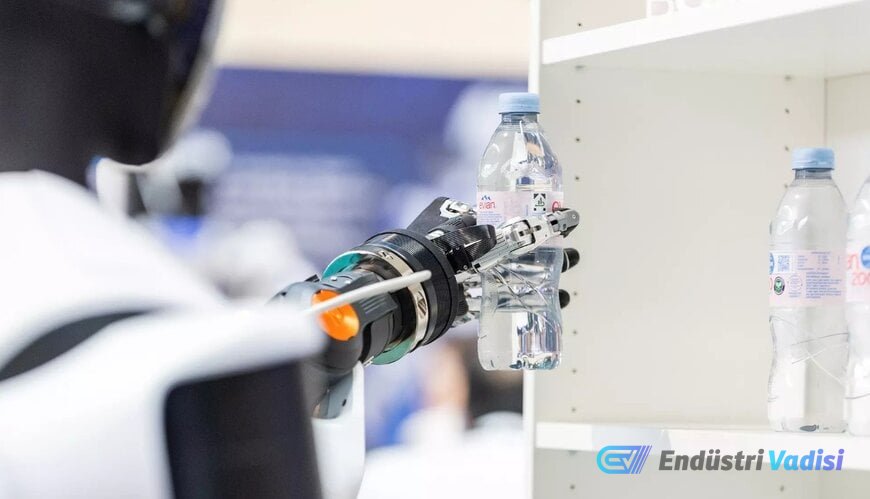
A revolutionary step is being taken in the world of industrial automation! Bosch Robotics and SCHUNK have joined forces to develop a flexible, anthropomorphic (human-like) hand platform for humanoid robots. This collaboration aims to create a robust end effector capable of automating complex tasks in manufacturing and logistics, dealing with variable object geometries and materials.
─────────────────────────
⚙️ Operational Context and Technical Challenges
Traditional robotic grippers are often optimized for specific object shapes or predefined tasks. However, modern digital infrastructure demands rapid adaptation to shorter product lifecycles and changing workflows. While humanoid robots offer an adaptable alternative in environments designed for human operators, advanced, dexterous end effectors are needed to perform complex tasks. The high mechanical complexity, precise engineering, and real-time processing demands of a multi-fingered robotic hand necessitate a combination of specialized engineering expertise.
─────────────────────────
🤝 Distribution of Engineering Responsibilities
This collaboration brings together complementary technical portfolios to address integration and scalability challenges:
[]Bosch Robotics provides the fundamental architectural framework, leveraging its expertise in precision mechanics, electronics, and software development. The company integrates artificial intelligence (AI) algorithms for environmental perception and trajectory planning.
[]SCHUNK optimizes the hand's mechanical kinematics, force transmission, and material composition, drawing on nearly 20 years of research and development in anthropomorphic gripping technology.
─────────────────────────
🎯 System Integration and Application Areas
Primary target areas for this technology include assembly lines, logistics centers, internal service processes, and manufacturing environments with high variability. By mimicking the kinematics of the human hand, the system can perform end-to-end processes such as perceiving an unstructured environment, adjusting gripping forces based on material properties, and handling fragile or complex components.
A functional system demonstrator has validated the interoperability of the hardware and software layers. By combining the physical hand with advanced sensing software, the partners have proven that high-performance robotic components can be synthesized into a stable industrial application without requiring extensive custom engineering for individual tasks. The focus is on transitioning the prototype phase to a scalable, high-volume production standard that meets industrial reliability criteria.
─────────────────────────
💡 Strategic and Technical Rationale
Technical leaders from both organizations emphasized the operational requirements driving the project. SCHUNK CTO Timo Gessmann stated that the partnership combines extensive development capabilities with a deep portfolio specifically designed for advanced robotic hand applications. Robert Bosch GmbH CTO Mathias Pillin expressed that precise robotic hands are critical for performing high-precision handling tasks that exceed the capabilities of traditional gripping systems, positioning the platform for a wide range of manufacturing and logistics applications.
This collaboration is a significant milestone that will pave the way for more widespread and effective use of humanoid robots in the smart factories and logistics centers of the future.





















