




Hasan S. Cemkan
Corporate
- Thread Author
- #1
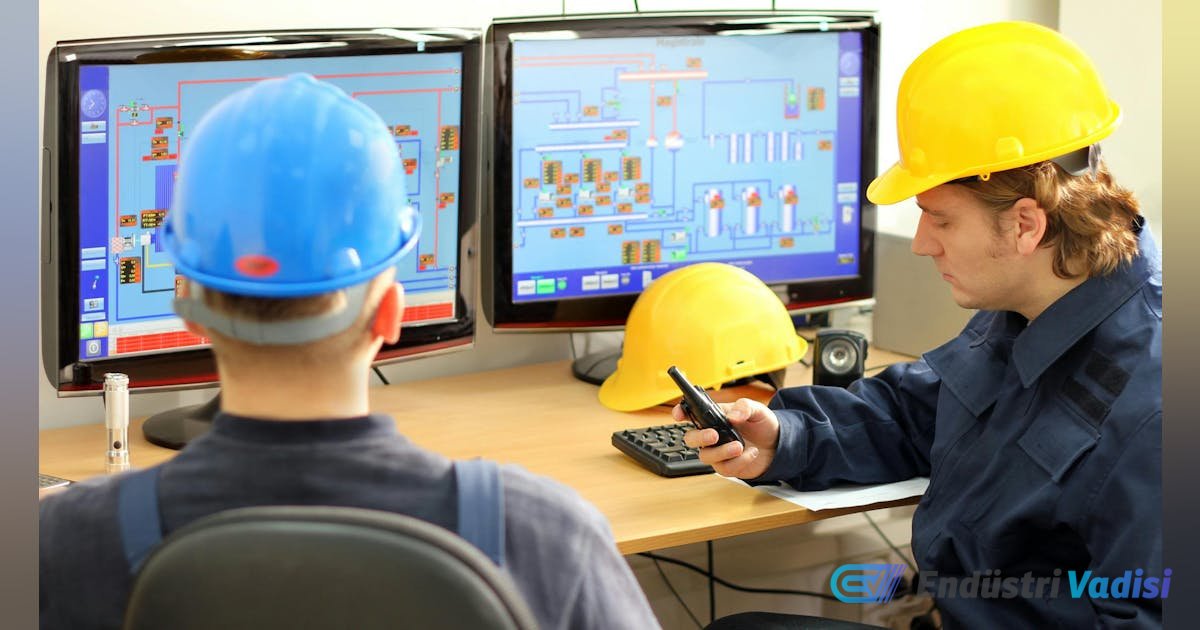
In the manufacturing sector, artificial intelligence (AI) offers significant potential to improve operational decision-making processes, optimize processes, and predict equipment failures. The benefits promised by this technology are highly attractive: higher efficiency, reduced unplanned downtime, and strict control over product quality.
─────────────────────────
🚨 Safety First: CISA and NSA Warning
However, joint guidance issued by the National Security Agency (NSA) and the Cybersecurity and Infrastructure Security Agency (CISA) emphasizes that these integrations must be handled with utmost care. As Madhu Gottumukkala, CISA's acting director, stated, "OT (Operational Technology) systems are the backbone of our nation's critical infrastructure, and integrating AI into these environments requires a thoughtful, risk-focused approach."
AI should be used to strengthen essential services, not as a way to jeopardize system security. Before AI models are incorporated into manufacturing systems, governance, assurance, and risk management are essential for their deployment in OT environments.
─────────────────────────
💥 AI's Incorrect Outputs and Risks
Implementing AI in OT can lead to much more serious consequences compared to corporate IT (Information Technology) environments. While incorrect analyses in an office environment might lead to financial losses or inefficient planning, in operational environments, incorrect AI outputs can halt production, create legal risks, and even endanger human lives.
This difference explains why NSA and CISA guidance focuses on governance and built-in security rather than rapid deployment. While speed is important to realize AI's potential, the pace of implementation takes a backseat when security is an integral part of the OT environment.
─────────────────────────
🔍 A Different Risk Landscape
AI introduces new failure modes. Data integrity issues can quickly erode trust and effectiveness in an AI-powered system. Models can drift, and the decision logic of AI systems can be quite opaque. While an AI engine can be convinced to do a job, its designer may never fully know why or how it did so, or even why a system suddenly failed.
When you combine these failure modes with a broader attack surface and the possibility of hackers introducing adversarial inputs designed to trick or poison AI models, the danger becomes clear. If an AI model influences production control, quality thresholds, or safety-related decisions, its reliability becomes a direct part of the control environment.
OT environments also operate under unique constraints. Equipment lifecycles are long, upgrade windows are limited, and downtime directly incurs operational costs. The digitalization process of OT equipment is still ongoing, and many legacy systems continue to operate, sometimes using inflexible or obscure connection methods to more modern platforms. AI systems developed in isolated test environments can behave very differently when connected to live production data.
AI's training data is inherently retrospective. It reflects past operational conditions. When these conditions change through the introduction of new suppliers, process changes, or variations in workload, model performance can degrade. If operators accept AI outputs as authoritative without understanding their limitations, they introduce fragility into a control system that should be robust.
─────────────────────────
🎯 AI's Place in OT
The role of AI in the OT architecture determines its operational risk. Some systems offer recommendations that engineers or operators review before taking action. Others may be allowed to adjust process parameters or automate decisions directly. These two approaches have very different implications for security and governance.
Advisory systems provide clear oversight by keeping humans in the loop, preserving operational authority. Autonomous systems create a direct dependency between model behavior and plant operations.
For example, an AI system that suggests maintenance schedules adds very little operational risk. A system directly integrated with OT hardware that adjusts production parameters or affects safety-related controls requires much stricter governance.
Decisions regarding where AI is positioned within the plant architecture must align with security engineering principles and cybersecurity controls. In this context, AI is no different from other components of the operating environment and must be evaluated, validated, and continuously monitored in the same way.
─────────────────────────
📈 Maintaining Trust in Model Performance
AI models degrade when operating conditions deviate from the data used during training. Manufacturing environments are constantly changing: equipment ages, maintenance alters performance characteristics, product mixes shift, and supply chains evolve. Without monitoring, models can drift away from real-world conditions while continuing to produce confident and seemingly accurate outputs.
Therefore, manufacturers must establish structured processes to monitor model performance and detect drift early. These include setting clear thresholds for model retraining, validating predictions against real-world outcomes, and auditing records of model behavior over time. Without these controls, a model can slowly become unreliable without operators realizing it.
Human oversight in AI-powered OT takes different forms. Some systems allow operators to override automated decisions, while others require active review before implementation. Still others allow AI to manage routine decisions, with human intervention only for anomalies.
However, the effectiveness of oversight depends less on its form and more on how information is presented and how operators are trained to interpret it.
If recommendations appear as unexplained outputs, oversight becomes ineffective. If operators receive too many alerts, they may start automatically approving them. Human oversight works when operators understand what the model is doing, how reliable its predictions are, and when its outputs should be viewed with skepticism.
─────────────────────────
🏗️ Building a Practical Foundation
AI can provide measurable value in manufacturing environments when used carefully. Predictive maintenance, quality analysis, and process optimization benefit from advanced analytics. However, these benefits depend on how the technology is incorporated into operational systems.
Organizations must understand exactly where AI is positioned in the OT architecture, how it interacts with existing control systems, and how cyber risk will be managed throughout the model's lifecycle.
Deployment must align with security engineering practices, cybersecurity controls, and operational governance. When evaluating AI adoption, priority should always be given to disciplined integration rather than rapid proliferation.
AI can support operational performance, but only when it operates within a framework that preserves safety, reliability, and system integrity. A responsible business would never commission a physical machine without rigorous validation and clear oversight.
The NSA and CISA guidance reflects the fact that as soon as AI is deployed in an OT environment, it itself becomes an operational technology.