








Alper Aktaş
Endüstri Vadisi
- Thread Author
- #1
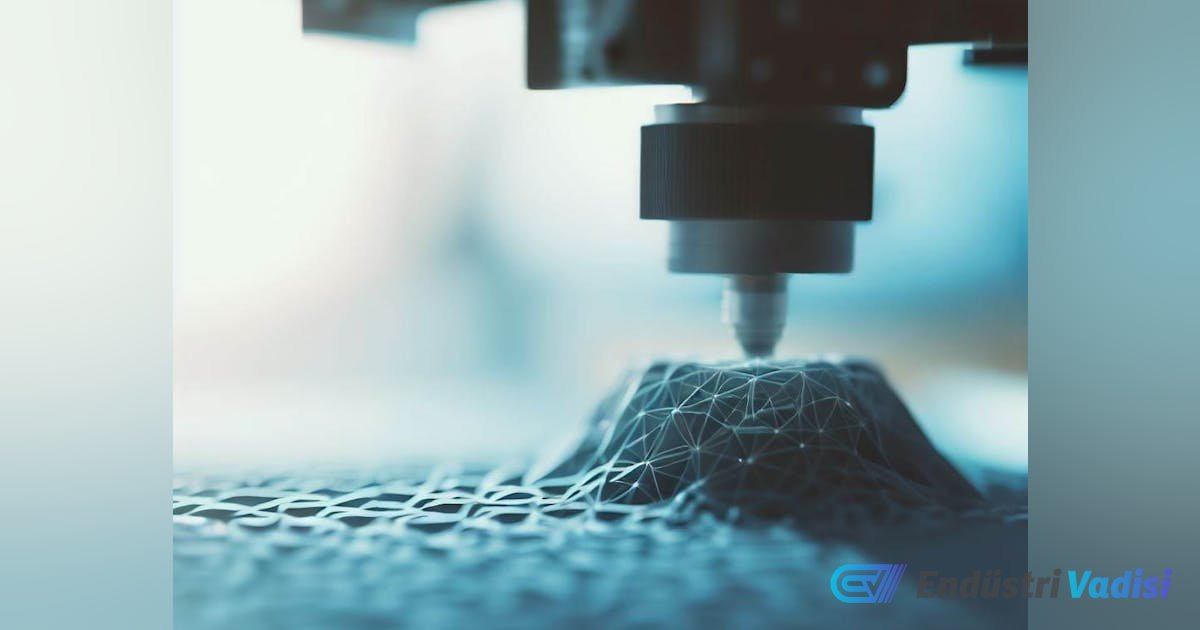
4D printing, touted as one of the future manufacturing technologies, adds the dimension of time to conventional 3D printing, enabling objects to change their shape or properties. Produced with smart materials that react to heat, light, moisture, electric current, or pressure, these objects can adapt to environmental conditions almost like living organisms. Imagine a smart fabric that breathes according to humidity, or a pipe system that expands and contracts with temperature changes! 🤯
─────────────────────────
🔬 Revolutionary Applications in the Healthcare Sector
The rigid structure of traditional implants could become a thing of the past with 4D printing. Shape-changing implants can offer perfect integration by adapting to the patient's body over time. For example, dental implants that fit perfectly into the jawbone and can expand and contract are no longer a dream. 🦷
Robert Jones, a manufacturing engineer at Nissha Medical Technologies, believes that 4D printing will go beyond implants. According to Jones, this technology can be used to precisely control drug delivery in the body and could revolutionize the medical field. Researchers are developing 4D-printed hydrogels that respond to vital signs such as body temperature, pH levels, or blood pressure. This way, drugs can be released at the right time and place, potentially saving lives, especially for heart patients. ❤️🩹
─────────────────────────
✈️ New Horizons in Aerospace
The aerospace industry can greatly benefit from 4D printing technologies. Shape-changing components allow aircraft to adapt to different flight conditions, reduce air resistance, and increase fuel efficiency. Research by Concordia University shows that 4D-printed drone wings, which can bend up to 20 degrees in response to stimuli, significantly increase efficiency. Furthermore, lightweight and flexible structures can reduce the cost and complexity of satellites and spacecraft. 🛰️
Adrian Nordtomme, director of APAPTA LTD, states that the benefits of 4D printing will not be limited to aviation. Nordtomme emphasizes that objects that change shape with electric current can be used for aerodynamic purposes in sectors such as automotive, aerospace, and marine. 🚗🚢
─────────────────────────
👗 Smart Designs in the Apparel Industry
4D printing offers designers the ability to create clothing and accessories that adapt to environmental factors and user preferences. Brands like Adidas are working on 4D-printed shoes that adapt to the user's foot shape and movements. These shoes can provide a competitive advantage to athletes by offering superior fit, cushioning, insulation, and breathability. 👟
Robin Brockötter, a 3D printing expert at Hubs, states that 4D-printed textiles will push the boundaries of design and functionality in the fashion industry. Brockötter says, "Imagine a jacket that thickens in the cold or hiking gear that becomes more breathable when exposed to sweat. Similarly, a 4D-printed dress could dynamically change its texture or form according to the wearer's movements, resulting in a fluid, ever-changing design." 🧥
─────────────────────────
🛋️ Self-Assembling Designs in the Furniture Sector
4D printing promises self-assembling furniture. Instead of spending hours with assembly instructions, you can now watch your new furniture take shape on its own. This simplified assembly process saves both time and effort and makes household items more accessible. 🪑
Francesco Rivalta, a mechanical engineer at Hubs, believes that shape-changing systems can transform the furniture industry. Rivalta explains, "This could be the next big thing after the flat-pack furniture concept. Imagine assembling a chair with just the heat of a hairdryer." 💨
─────────────────────────
📦 Smart Protection and Automation in Packaging
4D printing technology makes it possible to develop packaging that can protect contents from external factors such as rain, extreme cold, or heat. Additionally, this technology can automate the packaging process by adapting to external factors. ☔️🔥
Robert Jones from Nissha Medical Technologies agrees. Jones says, "It might be possible to make a packaging material that is stored as flat sheets but self-wraps when a product is placed on it and exposed to light, heat, or another stimulus. This would reduce the labor, cost, and time spent packaging products that might not easily fit into a standard box." ♻️
─────────────────────────
🔮 The Shape of the Future: Challenges and Potential
Research on shape-changing systems is being conducted by the MIT Self-Assembly Lab in collaboration with Stratasys and Autodesk. Significant breakthroughs have been made in the development of self-assembling and shape-changing materials. However, this is just the tip of the iceberg. Many more possibilities will emerge as the technology matures. 🌟
Alexandru Tilita, president and CEO of 3DK Tech, states that the biggest challenge for shape-changing systems will be adoption. Tilita says, "The technology can truly enable new concepts, but finding the industrial application for its wider adoption is crucial. Transformation can only happen if it is adopted by key players in the market and scaled significantly. I expect 4D printing to show its true impact only in the next 10-15 years." ⏳
Meanwhile, just like the technology itself, engineers can continue to push the boundaries of what's possible by adapting to a changing environment. 🛠️




















