








Mucitler Elektrik
Corporate
- Thread Author
- #1
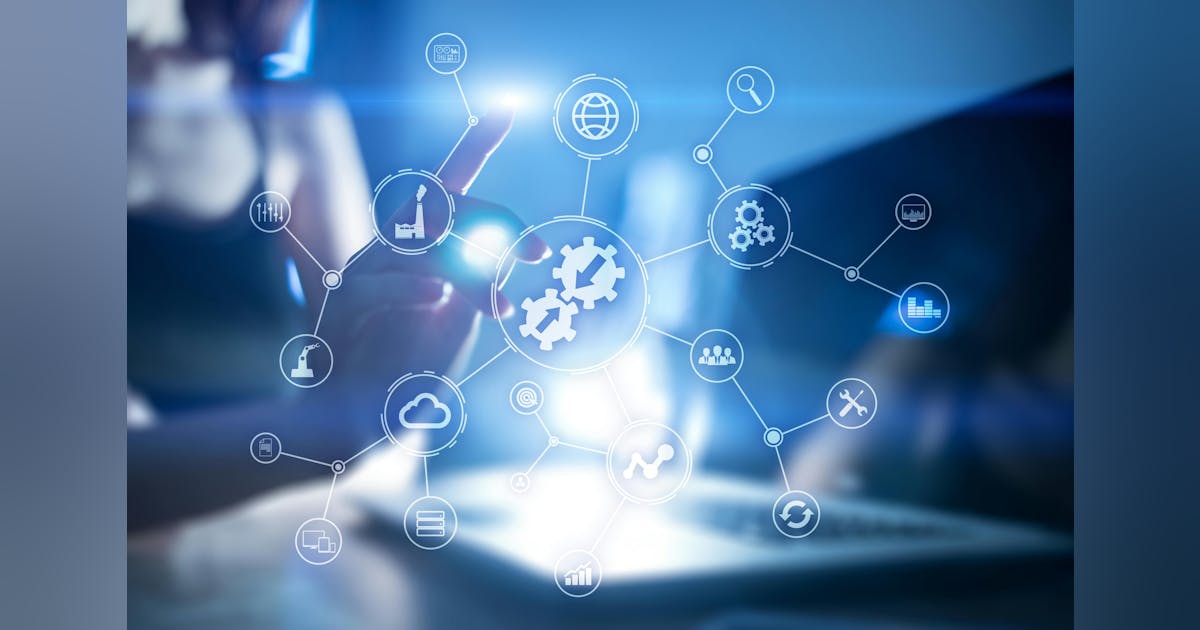
The world of industrial automation is undergoing a transformation where the lines between traditional control systems integration and custom software development are becoming increasingly blurred. What was once confined to PLC logic, HMIs, historical databases (historians), and point-to-point integrations now encompasses a much broader spectrum.
─────────────────────────
💡 New Terms, A New Reality
Leading players in the industry frequently use terms like software-defined automation, modern application stack, autonomy journey, cloud-based manufacturing, and AI-powered operations. But what do all these terms mean?
While these terms might sometimes seem disconnected from the reality of daily operations on the factory floor, the operational and architectural pressures driving modernization have become undeniable. These pressures are reshaping how industrial systems are designed, deployed, and maintained.
─────────────────────────
⚙️ The Supporting Architecture of Industrial Automation Is Changing
For years, most control projects followed a familiar model: the system integrator would develop the PLC code, build the HMI application, commission the system, train operators, and transition from delivery to support. The PLC was at the center of the architecture, and most operational functionality resided directly within the control system.
However, today, this architecture has begun to extend beyond the traditional control layer. Modern projects now include remote operations, cybersecurity platforms, API integrations, cloud connectivity, edge infrastructure, mobile applications, operational analytics, Unified Namespace architectures, and enterprise data integrations. Manufacturers are no longer just asking about control functionality but also how operational systems connect to the larger digital enterprise structure.
This shift brings new discussions about infrastructure, scalability, sustainability, and lifecycle management—topics historically more prevalent in the IT and enterprise software world.
─────────────────────────
🤖 What Does Software-Defined Automation Mean?
The frequently heard phrase "software-defined automation" often focuses on the idea of virtual PLCs, containerized runtimes, and decoupling automation software from proprietary hardware platforms. These trends are real, and some mainstream industrial vendors are starting to offer containerized components for SCADA, edge data collection, and operational services. However, focusing solely on containerized PLCs would miss the larger transformation in industrial architecture.
The broader change is that manufacturing systems are no longer defined solely by hardware and controller logic but also by the software ecosystems that surround and orchestrate these systems. Operational workflows, visualization layers, analytics, remote support platforms, cybersecurity tools, enterprise integrations, and AI-powered applications are becoming an increasingly larger part of the operational environment.
The PLC remains fundamental. Deterministic control, sequencing, interlocks, and real-time process execution are still core responsibilities of the control layer. However, the systems surrounding the PLC are becoming significantly more software-centric than they were a decade ago. In many ways, the control industry is beginning to experience the architectural modernization that enterprise IT underwent years ago.
─────────────────────────
📊 IT Expectations Have Reached the Factory Floor
One of the biggest drivers of this transition is the increasing impact of enterprise IT expectations on manufacturing environments. Historically, OT systems operated with some independence from broader enterprise infrastructure standards. However, as manufacturing systems become more connected, IT organizations are becoming more involved in operational architectural decisions. Many IT departments are now pushing for less reliance on Windows-heavy infrastructure, an improved cybersecurity posture, lifecycle automation, infrastructure standardization, and cloud-based architectures.
This pressure is moving up the industrial automation stack.
At the same time, as manufacturers pursue larger digital transformation initiatives, traditional SCADA-centric architectures are beginning to show some limitations. As data consumers proliferate and integrations expand across sites and business systems, tightly coupled architectures become harder to scale and maintain cleanly. This doesn't mean every factory will suddenly switch to Kubernetes or containerized control tomorrow. Most manufacturing environments will remain largely hybrid for years. But the overall direction is becoming very clear.
─────────────────────────
🚀 The Autonomy Journey Is Actually About Adaptability
The same applies to another increasingly common phrase: "the autonomy journey." Autonomy in manufacturing is often misunderstood as meaning fully autonomous facilities with very little human intervention. In reality, manufacturers are focused on practical goals: reducing operational friction, increasing visibility, accelerating decision-making, standardizing operations across sites, contextualizing operational data, and reducing reliance on tribal knowledge.
This journey requires systems that are more connected, interoperable, contextualized, and adaptable than traditional isolated automation architectures were initially designed to support. This is why concepts like Unified Namespace and Industrial DataOps are gaining traction. These are not just technology trends; they are foundational layers for building more connected and adaptable manufacturing environments. And these environments are beginning to rely as much on software orchestration as they do on physical control hardware.
─────────────────────────
🔬 What Does This Shift Mean for Industrial Automation?
Historically, system integrators primarily delivered projects around control functionality, visualization, data accessibility, and initial execution. Now, integrators are being asked to support operational software ecosystems that continue to evolve even after commissioning is complete. In many ways, the control industry has already embraced software-level complexity, even if many organizations still operate with traditional project delivery models.
This doesn't mean control engineers suddenly need to become software engineers, or that PLCs, traditional SCADA, and Windows servers will disappear overnight. Manufacturing still relies on operational discipline, process understanding, commissioning expertise, and deep OT knowledge that traditional software organizations often lack.
However, the larger point is becoming undeniable: industrial automation is no longer defined solely by control logic and hardware. The industry is now shaped by the software ecosystems that surround it.
This is why industrial automation is quietly transforming into a software discipline.






















