






Cengiz Özemli
Academic
- Thread Author
- #1
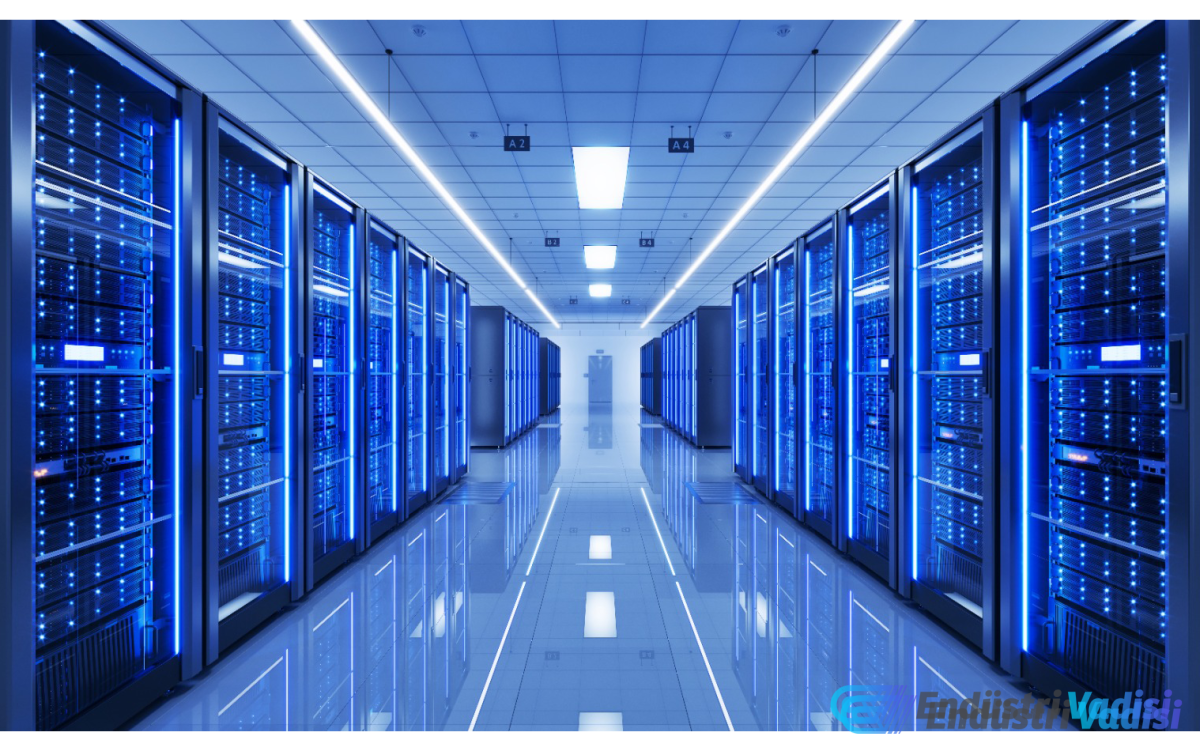
## Indispensable for Data Centers in 2026: Redfish Protocol and Unitronics PLCs
The data center industry faces new challenges with increasing AI workloads, hyperscale growth, and liquid cooling architectures. Traditional control systems are proving inadequate in responding to this escalating thermal density, energy consumption, and operational complexity.
### Thermal Limits Exceeded in Data Centers
- Goldman Sachs Research predicts that US data centers will consume approximately 8% of national electricity by 2030, a significant increase from 3% in 2022.
- Frost & Sullivan estimates that the data center cooling market will exceed $18.5 billion by 2030, driven by the rise of high-density racks, AI accelerators, and liquid cooling.
Heat is no longer just a facility issue; it directly impacts computational capacity. Cooling accounts for 40% of total energy expenditure, and with rack densities exceeding 30–60 kW, the margin for error is shrinking.
### Cooling Now Under IT Responsibility
In the past, cooling systems were controlled by independent PLCs, while IT infrastructure provided health and status information through standard interfaces. However, there is now a need for cooling systems that can dynamically respond to variable workloads and rapid power changes, working integrated with management systems like DCIM.
Cooling systems need to:
- Provide real-time system visibility
- Integrate directly with DCIM and IT platforms
- Support redundancy and rapid fault detection
- Be scalable across facilities
Traditional control architectures, however, require additional gateways or special integrations to meet these requirements, increasing system complexity and cybersecurity risks.
### Need for a Common Management Language
While IT systems share health, availability, and energy data in a standard format that DCIM platforms can understand, cooling systems mostly do not use this common language. This creates a gap that limits operational and optimization decisions.
### What is Redfish and Why is it Becoming Mandatory?
Redfish, developed by the Distributed Management Task Force (DMTF), is a REST-based management standard in JSON format suitable for modern data centers. It presents elements such as system health, power and energy telemetry, thermal zones, fans, pumps, and alarm reporting with a standard model.
This web-based standard, suitable for IPA6 and hyperscale environments, is widely used in server and power systems. However, until now, protocol converters or gateways were required for cooling systems. This limitation is disappearing.
### Redfish Must Be Within the Controller
Cooling systems are active control systems that regulate flow, pressure, and thermal responses in real-time. For Redfish to be effective, this protocol must be embedded within the control platform.
Unitronics offers this innovation with UniStream® PLCs:
- Redfish is embedded within the controller
- Works with deterministic control and real-time processing
This enables:
- Cooling systems to become fully visible
- DCIM platforms to directly access real-time health and status information
- Alarm transmission to occur without delay
- A simplified and robust system architecture
### Practical Example: Liquid Cooling CDUs in High-Density AI Racks
Thanks to UniStream controllers:
- Real-time deterministic control continues
- System health and telemetry are directly presented via Redfish
- Intermediate layers and gateways are eliminated
- Points of failure and latency are reduced
The resulting more transparent and manageable infrastructure facilitates the integration of cooling with the management layer.
### Why is 2026 a Turning Point?
As data centers grow, cooling must become part of the management layer. To maintain computational availability, cooling needs to speak the same language as the IT infrastructure. By the end of 2026, Redfish will become mandatory. This is not just a feature, but an architectural transformation.
The Unitronics UniStream solution, with its PLC + HMI combination, embedded Redfish, IPv6, and protocols like BACnet, Modbus, REST API, OPC UA, bridges the gap between IT and OT.
### Conclusion
Redfish is the language of the modern data center, and embedding it directly into the controller is the next logical step. Redfish-embedded PLCs represent a conceptual shift in the control and management of data center infrastructure. By 2026, Redfish will be everywhere, and the real question is which platforms are ready for it.
Unitronics provides a unified control platform specifically for data center environments, offering control, visualization, OT communication protocols, and embedded IT integration in a single device.