








Süeda Asil
Corporate
- Thread Author
- #1
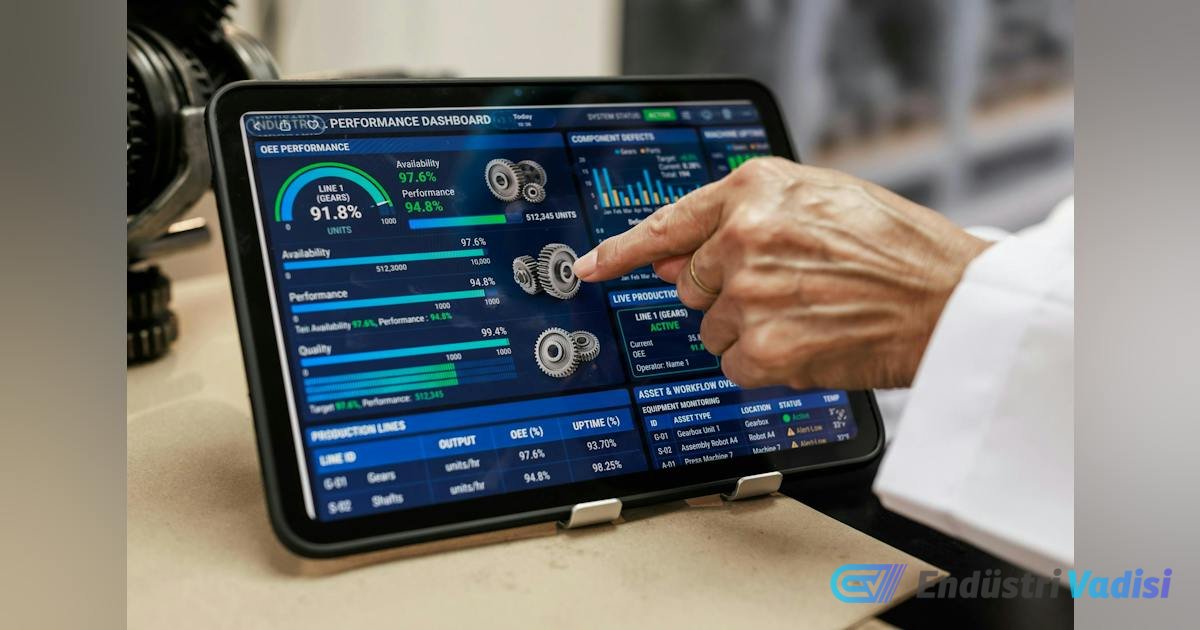
What Happens When the Numbers on Your Dashboard Are Wrong?
After months of work, a carefully crafted dashboard finally goes live. The charts are crisp, the colors add depth, and the team is ready to use it in their first production meeting. Until someone looks at the numbers and says, "I'm not sure about that."
For a manufacturer, that small moment can quickly derail a project. If supervisors, operators, or finance teams lose confidence in the data, they start comparing the dashboard to spreadsheets, handwritten notes, and their gut feelings. Thus, the tool that was supposed to bring alignment becomes a subject of debate.
The problem is rarely in the visual layer. Fundamental issues include OEE looking different based on how it's calculated, finance and operations pulling output figures from different systems, or missing, late, or manually entered data being presented in a polished chart, making it unreliable. Addressing these issues before going live is more cost-effective than dealing with them afterward.
3 Key Points to Check Before Going Live
- Name Everything Once
In almost every facility, equipment is labeled in different ways: PUMP3_RUN_ST, Pump 3 Running, P3_Status. These might describe the same signal, but across lines or sites, these differences silently corrupt merges, reports, and comparisons.
A useful structure needs a single convention across sites and vendors, a facility hierarchy that people recognize, and consistent units and data types.
Three labels become one path: Site1/Packaging/Line2/Pump3/Running.
The same applies to the business side. If "production order" in ERP and "work order" in maintenance are treated as separate things, that gap often ends up in a translation table managed by one person and trusted by no one.
- Add Context to Your Data
A temperature reading of 74 degrees means little without context. Which asset, product, batch, or shift? Was the machine running or idle? Much of this information is already available in business systems, so capture it when the data is collected, rather than recreating it manually later.
Metric definitions can also succeed or fail here. Disagreement often stems not from the formula itself, but from what's included. Is a planned changeover downtime or planned time? Are micro-stops recorded at all? Two sites might give different answers, and both call the result OEE.
Define metrics once, assign owners, and let the same calculation drive every report.
- Make Your Systems Talk Nicely
PLC, SCADA, and historical data must meet ERP, MES, maintenance, and quality data. Rarely do they share timestamps, identifiers, or update rates. A PLC logging in local time and an ERP sending in UTC is enough to push a shift's output into the wrong day.
Aim for:
- A single source of truth for each data item, with an assigned owner
- Aligned time bases and reliable shared keys (from work order to machine, to batch)
- Visible handling of gaps and low-quality values
Ownership is critical here. When systems conflict, someone needs the authority to decide which source wins, and that's a human decision before it's a technical one.
- A single source of truth for each data item, with an assigned owner
Good Data Practices Deliver More Than Dashboards
Reliable data foundations do more than boost the credibility of a dashboard. Consistent naming, shared definitions, clear ownership, and connected systems create reusable building blocks for process improvement, quality reporting, predictive maintenance, and AI. Treating data practices as core infrastructure means every project strengthens the next, rather than adding another reporting layer to reconcile later.
A Five-Minute Check to Help Build Good Data Foundations
Use these questions in your next project review:
- Is there a documented naming standard for plant and business data, and is it followed?
- Is context captured at the source, or recreated later?
- Is each key metric defined once, with an assigned owner?
- Do we know the source of truth behind every number on the dashboard?
- What happens to missing or low-quality data, and does everyone know?
- Do identifiers match between OT and business systems, or are they translated somewhere in the middle?
If two or more give you an ambiguous answer, look at the foundations before anything goes live.
What to Do If You Think Your Data Foundations Need Improvement?
If these questions make you think, it's worth addressing the foundations before going live. Start with one line or area, prove the approach, then scale. Because a dashboard is only valuable when the people using it trust what it says.





















