




Elif Özaksu
Corporate
- Thread Author
- #1
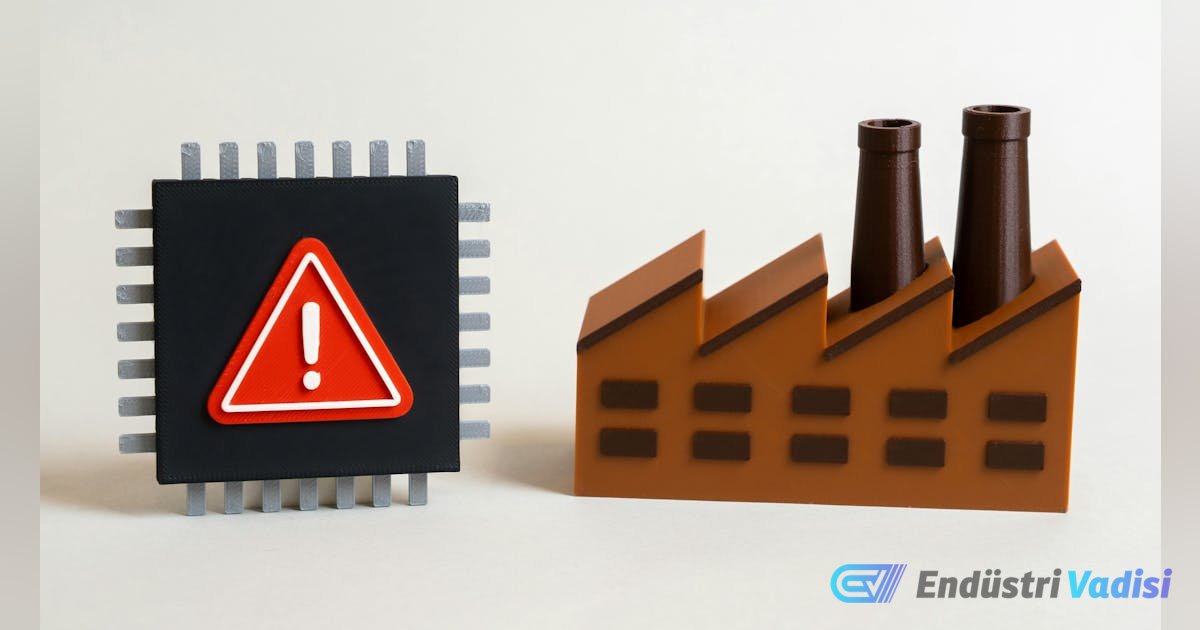
🚨 When Production Lines Go Dark: The Ransomware Nightmare
Imagine production lines halted for days, even weeks. Shelves empty, supply chains paralyzed... This situation affects everyone from the lowest ranks to top management. So, how do ransomware attacks hit manufacturers?
🦠 How Ransomware Spreads
Ransomware infects computers, locking them and encrypting files or systems until a ransom is paid. In manufacturing environments, this malicious software can spread rapidly by taking over every computer on the network one by one. From mixers to labeling machines, every piece of equipment communicates with each other in this networked, IoT environment.
While ransomware attacks can target anyone, food and beverage companies are particularly vulnerable and can be severely impacted by coordinated attacks.
🎯 Why Food and Beverage Manufacturers Are Targets
Among manufacturers, food and beverage products are highly visible consumer goods. Any loss of consumer confidence can severely damage a company's reputation in a crowded market. A halt in the production line immediately affects everything from packaging to overtime to meeting consumer demand.
The performance of a manufacturing facility depends on the use of IT and the reliability of OT networks. As connectivity, automation, data-driven, and even AI-powered systems become standard, manufacturers have developed patched networks over time, trying to keep their OT systems and processes up to date.
- Vendor integrations
- Remote access
- Unpatched third-party vulnerabilities
- Shadow IT
...factors like these are more vulnerable to ransomware that can cause significant disruptions.
OT networks are built to be accessible from end to end. With over 42,700 food and beverage processing facilities in the US alone, there are numerous open targets. All these factors make the food and beverage sector a relatively easy target for ransomware attackers.
📉 Lessons from the Past: Major Attacks
Arizona Beverages experienced a severe ransomware attack in 2019 that led to weeks of outages. Outdated operating systems exacerbated the situation. The company spent hundreds of thousands of dollars after the incident.
Last summer, a targeted attack on United Natural Foods Inc. (UNFI) was even more costly. UNFI, a leading North American wholesaler of health and specialty foods, lost $400 million in sales due to this incident.
A worrying pattern has emerged in these and similar attacks: attackers can easily pivot from initial infiltration to broader attacks within OT, impacting more of the company's operations and causing more widespread disruptions.
While the importance of strengthening security for OT environments has always been clear, the urgency has never been higher, with the average manufacturer facing 1,585 attempted attacks per week.
🛡️ Differences Between IT and OT Security
We use IT every day: logging into computers, connecting to Wi-Fi, accessing websites, downloading applications. Updates and patches are routine in IT.
In contrast, OT consists of highly specialized hardware running on technical protocols that can be supported by legacy, outdated software. OT prioritizes system availability and physical safety to maintain production. OT's proprietary protocols often lack basic security features like user passwords and data encryption.
Statically designed networks are another factor working against OT's relative security posture. Each OT device has a fixed job and is designed for stability and predictability. They are difficult to update and not easily patched. Testing a security patch update is often costly, as it typically requires shutting down an assembly line or an entire facility.
Interconnected machines and fragile systems create single points of failure in production lines. In continuous assembly lines, a single faulty controller can bring an entire factory to a halt. Restarting a server or performing a heavy antivirus scan, while standard IT security tactics, can overload OT networks and stop production.
During a cyberattack, ransomware spreads from Windows computer to Windows computer, or from Windows to Linux. A programmable logic controller does not spread malware. Robotic arms and conveyor belts are not held hostage for ransom.
Instead, the Windows 7 or Ubuntu computer controlling them is vulnerable and gets infected. Multi-purpose endpoints, increasingly used as part of OT environments, are the targets of ransomware attackers.
All these factors, combined with OT's sharp focus on availability and zero downtime, contribute to manufacturing systems that are uniquely vulnerable to external attacks.
playbook 🚀 The Modern Manufacturer's OT Security Guide
So, what can be done to limit exposure to these attacks? Measures such as real-time production network visibility, authentication parity between IT and OT, and isolation response time can help level the playing field for OT against attackers.
These processes can make a critical difference by preventing hidden threats, stopping unauthorized lateral movement, and containing active cyberattacks before they can damage equipment.
Beyond these practices, manufacturers can learn from IT and apply concepts to OT, moving from finding vulnerabilities to taking action to fix the problem. There are also lessons to be adapted from critical infrastructure; the CI Fortify model is a prime example of how isolation and recovery can mitigate cyber threats.
According to international standards ISA/IEC 62443, companies need to secure systems in zones and ensure reliability in defense against attacks. In the event of an incident, CI Fortify can help contain the threat and quarantine machines, then recover safely and quickly.
Another way to empower manufacturers is to bring identity to OT. Identity allows teams to determine which systems can connect and work together. When every machine on the network is identified, isolating devices and controlling access reduces both the risk and the blast radius of these attacks.
And when enabled by identity, isolation is not static or fixed and can even respond by quarantining potential threats. As manufacturing rapidly moves towards a dynamic world and cyber threats increase daily, identity will offer the best way to keep up and stay as secure as possible.
A successful game plan is to know every machine in the factory. Every machine has an identity and controlled access. Then we can securely segment, isolate, and even quarantine when necessary.