








Erkan Teskancan
Corporate
- Thread Author
- #1
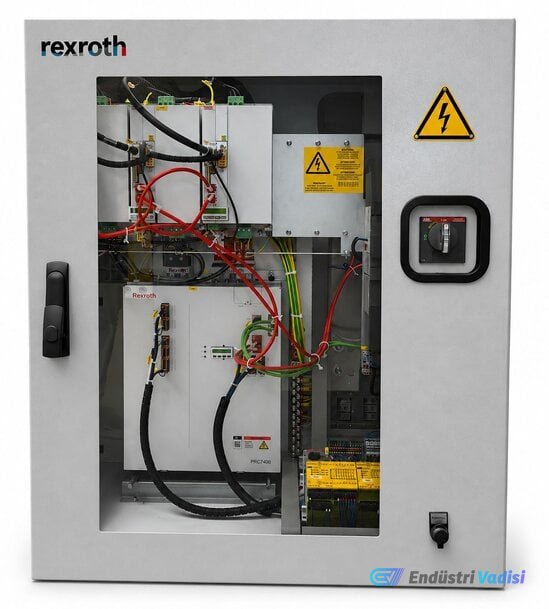
Bosch Rexroth and CenterLine introduced a groundbreaking innovation in projection welding at the EuroBLECH exhibition. This collaboration reduces cycle times by up to 60% while significantly lowering energy consumption. Specifically developed for robotic applications, this system combines Rexroth's PRC7000 resistance welding control system with CenterLine's servo-driven SoftMount projection welding gun.
🔥 Welding in 10 Milliseconds: How is it Possible?
Traditionally, a welding process takes 100 milliseconds, but with this new technology, it is reduced to just 10 milliseconds. This massive time saving offers significant advantages for users:
- Energy Savings: Shorter welding time means less energy consumption.
- Reduced Cooling Needs: Decreased thermal stress reduces cooling requirements.
- Extended Electrode Life: Less heat extends the life of electrodes and reduces maintenance costs.
🧠 Smart Control and Parallel Feeding
At the heart of the system is the PRC7000 control system, which simplifies electrode control and facilitates integration with higher-level MES or cloud systems via open IoT interfaces (OPC UA, MQTT). CenterLine's SoftMount gun is specifically designed for robotic applications, compensating for mechanical part tolerances thanks to its floating suspension.
Another critical feature that plays a significant role in shortening cycle times is the integrated QFP (Quick Fastener Placement) unit. This unit ensures that weld nuts are fed in parallel with the robot's movement or during idle times, eliminating inefficient downtime in fully automated processes.
🚗 Major Impact in the Automotive Sector
Projection welding is indispensable for reliably joining nuts, bolts, and structural components in automotive and sheet metal production. With thousands of fasteners installed fully automatically in a modern body shop, even millisecond-level savings translate into enormous productivity gains on an annual basis. Shifting material feeding into the robot's existing motion time is a critical lever for maximizing Overall Equipment Effectiveness (OEE).
Reducing the welding time to 10 milliseconds addresses two of the biggest cost factors in body production: it minimizes the thermal wear of expensive copper electrode caps and contributes directly to carbon reduction and grid stability by lowering electrical loads.






















