



Alper Aktaş
Endüstri Vadisi
- Thread Author
- #1
💡 Security and Flexibility in Automation Engineering
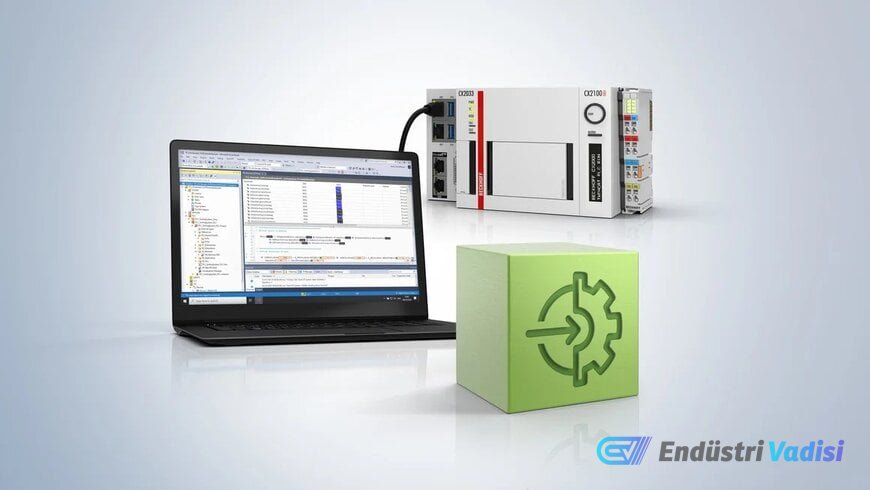
In today's automation projects, engineering workstations are subject to the same strict IT security policies as office computers. This can prevent control engineers from running and testing PLC code locally. Beckhoff offers a solution to this problem with TwinCAT 3 Usermode Runtime. This innovation allows PLC programs to run on restricted Windows engineering systems without the need for real-time kernel drivers.
🔒 Security Requirements in Windows-Based Control Engineering
System requirements in Windows environments are constantly changing due to security concerns. The traditional TwinCAT real-time runtime is deeply integrated into the operating system to achieve deterministic cycle times. However, in engineering systems where the installation or execution of this real-time runtime is not permitted, developers had limited options for running their programs before commissioning.
⚙️ How TwinCAT 3 Usermode Runtime Works?
TwinCAT 3 Usermode Runtime (TC1700) runs customer programs in the user mode of the operating system, not in a real-time context. This allows applications programmed in TwinCAT to run without real-time features, but they can also be executed in more restrictively configured Windows environments. The runtime mode is selected during installation and, thanks to its deep integration into the TwinCAT Package Manager, its use is almost invisible to the developer. It can be used without software license costs and only requires (trial) licenses for the TwinCAT products used in the application.
⏱️ Controlling Execution Timing: External Control and As Fast As Possible
Users are offered two options that provide control over the timing of the PLC program:
- External Control (TC1701): Provides an interface that allows an external application to schedule the execution of the control program. This enables synchronization with other programs, such as simulation models.
- As Fast As Possible (TC1702): Runs the application as fast as the underlying hardware allows, while simulating different cores and cycle timings. This makes it possible, for example, to preview the calculated results of an application before real-time to verify control algorithms.
🔄 Restricted Runtime for CI/CD and Simulation Processes
Both options are included in the new TwinCAT 3 Restricted Runtime (TC399x), which Beckhoff specifically developed for multi-hour use in continuous integration (CI), continuous deployment (CD), and simulation processes. The license allows flexible, repetitive use in development and test environments but does not permit use in production operations. To ensure this, an integrated enforcement function automatically switches the software to TwinCAT configuration mode after six hours of operation and stops program execution. A new start, which can be repeated as often as desired, provides another six hours of use.
💻 Applications in Automation Software Development
For machine builders and automation software teams, this combination addresses various typical workflow needs, such as running and debugging PLC code on locked engineering laptops, executing automated regression tests on build servers, and connecting control logic to simulation models for virtual commissioning. Since user mode execution is not deterministic, the runtime is designed for development and testing, while production machines continue to run on the TwinCAT real-time runtime.
🔍 Additional Information
Software-in-the-loop testing and virtual commissioning are established practices in automation engineering, and similar tools are available from other vendors (e.g., Siemens S7-PLCSIM Advanced and CODESYS Control Win). At the same time, Windows security features like virtualization-based security and memory integrity (HVCI) restrict which kernel drivers can be loaded, which is one reason why user mode execution is gaining importance on engineering PCs. Industrial security standards such as IEC 62443-4-1 also increasingly emphasize a secure development lifecycle for automation software, where automated CI/CD tests play an increasingly important role.