
Elif Özaksu
Corporate
- Thread Author
- #1
Daymon Thompson: 25 Years in the World of Automation
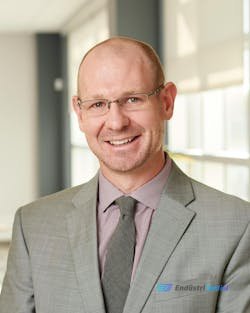
Daymon Thompson, Director of Product Management at Beckhoff USA, shared his experiences in the automation industry and his predictions for the future as the company celebrates the 40th anniversary of introducing its first PC-based machine control system. Thompson has been working in automation since 1999, building a wide range of machines from CNC machines to packaging equipment, pick-to-light systems for warehouse environments to laser engraving machines. These experiences, gained in both the US and Europe, have given him valuable insight into the automation and control needs of both markets. He has been in engineering and product-focused roles at Beckhoff for approximately 15 years.
The Beginning of a Career Journey: The Magic of CNC Machines
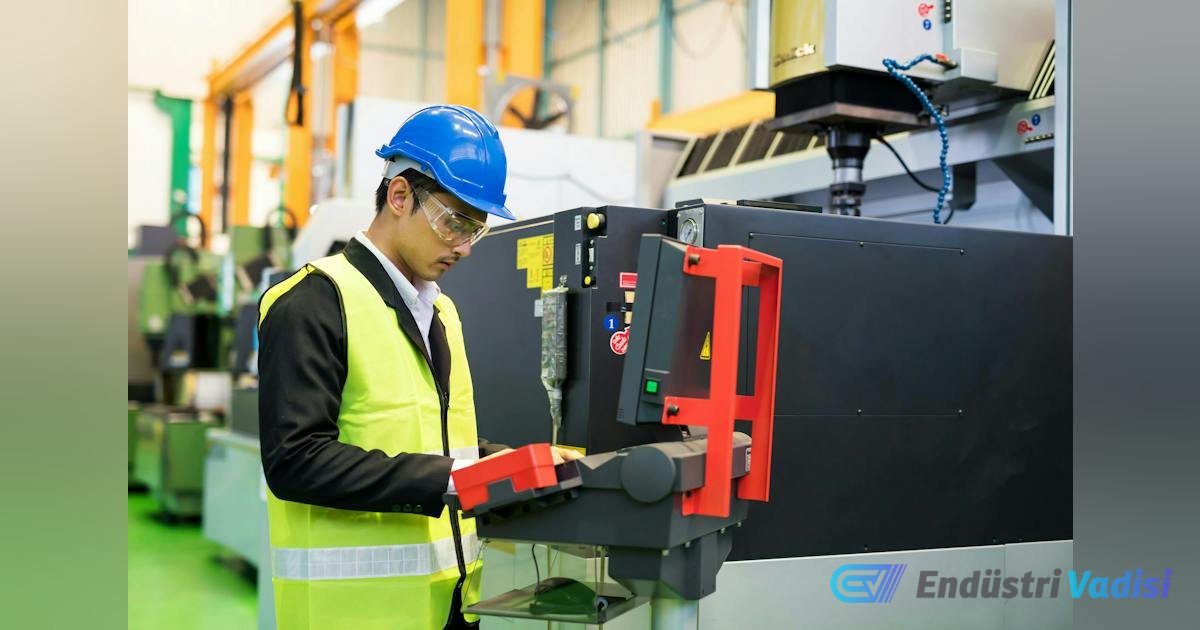
Thompson's passion for automation began in a machining class in high school. The CNC machine in the corner particularly caught his attention, and his desire to learn how to program it led to an internship and job opportunity at an aerospace company. This experience further drew him to programming and led him to pursue a computer science degree. Thus, he was introduced to automation, the hybrid world of computer science and manufacturing, including PLC programming, HMI programming, and SCADA. For Thompson, programming that produced a tangible result was far more fascinating than simply writing an application.
40 Years of Industrial Control: What Has Changed and What Hasn't
Thompson notes that in his 27 years in the industry, automation technology has changed tremendously in some respects, while remaining surprisingly constant in others. Previously, a machine would have a separate PLC, motion controller, safety controller, and a separate PC for the HMI. This created multiple wiring, gateways, and integration challenges. Each component having its own lifecycle could lead to costly re-architectures after seven to ten years.
What drew Thompson to Beckhoff was the philosophy of running all this functionality on a single CPU, via software. This is what is now called "software-defined automation." Beckhoff's TwinCAT automation software provides a real-time layer on this single hardware, making it possible to replace all hardware boxes with software modules. While there was initially great skepticism towards PC-based control, today many "PLC" manufacturers have also adopted this approach, using real-time operating systems or Linux on ARM or Intel processors.
The Driving Force Behind Change: Competition and the Need for Data
The main reason for this change is competitive necessity. Manufacturing applications demanded more axes, more processing power, and more communication protocols. This led to the need for more code running faster and a more flexible, open platform. PC-based control also opened the door to the communication protocols required by modern IT connectivity, as data became the primary driver of process optimization.
In the early 2000s, some control manufacturers experimented with their own versions of PC-based control but experienced instability issues because they ran directly on the operating system without a proper real-time layer. This gave PC-based control a bad reputation. However, Thompson emphasizes that the criticism should be directed at the implementation, not the philosophy. Today, there is industry-wide consensus that PC-based control is the future of automation. The open question now is which IT concepts, such as Docker containers and virtualized PLCs on servers, will define the next steps of this evolution.
Physical AI and the Future of Industrial Control
Regarding how concepts like physical AI fit into the evolution of industrial control, Thompson states that the platform architecture Beckhoff has been building for 40 years, by adding GPUs and more powerful processors, forms an ideal foundation for machine learning and physical AI.
Beckhoff launched its first real-time machine learning inference engine for PLCs in 2019. This evolved into a Machine Learning Server running on the operating system side of the controller, providing GPU access to run models. Today, Beckhoff also offers industrial PC (IPC) hardware that can include an internal NVIDIA GPU to run machine learning (ML) workloads directly on the machine for any physical AI application customers can imagine. This means a single control hardware platform instead of multiple boxes.