








Semih Asil
Industry Valley
- Thread Author
- #1
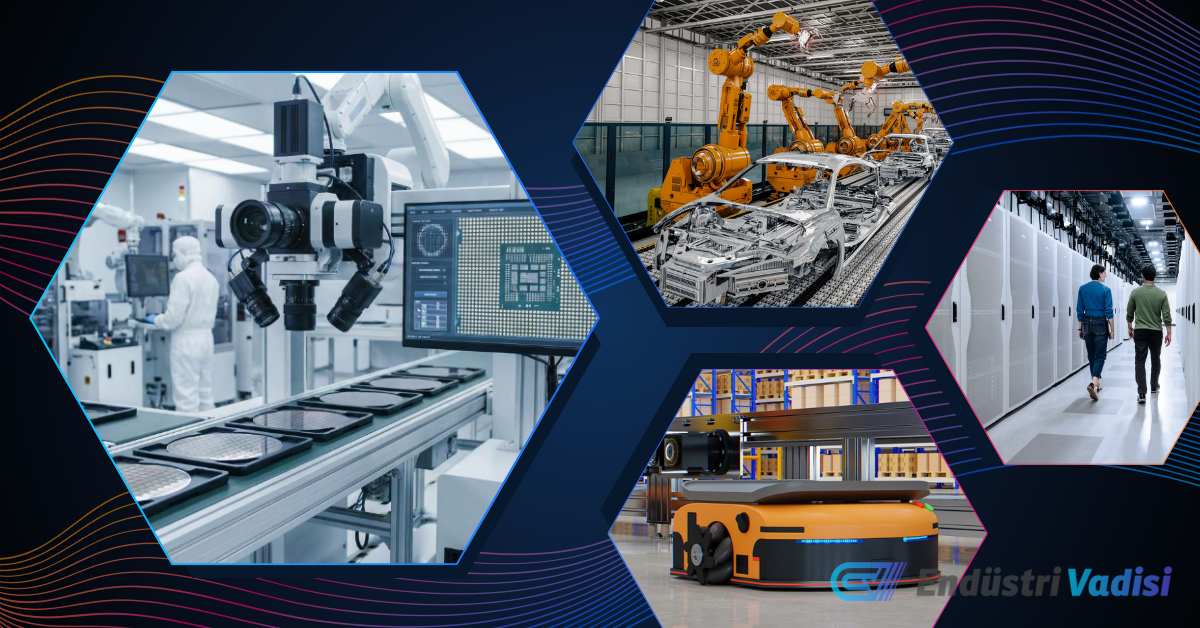
ARC Advisory Group's research reveals that a network infrastructure is a strategic decision for the manufacturing sector's increasing AI applications.
Under managerial pressure, manufacturing leaders face the imperative of increasing production, achieving excellence, and rapidly adapting to market changes.
Next-generation technologies – AI-powered processes, digital twins, software-defined industrial automation, autonomous robotics, and virtual PLCs – offer concrete and scalable approaches to address these challenges.
However, many manufacturers encounter outdated and inadequate infrastructure that stands as a barrier between their goals and the network infrastructure on the shop floor. The problem is not so much the technology itself, but rather that the infrastructure is not designed to accommodate these new applications.
### The Chasm Between Ambition and Implementation
A consistent pattern emerges from discussions with operations leaders, process engineers, and automation teams:
- AI projects begin to yield benefits on the production floor.
- They prove scalable, and there's a desire to generalize the project.
- However, the existing industrial network infrastructure does not support this generalization, and projects are disrupted.
### Industrial Network Infrastructure Requirements
- AI-powered quality control systems generate high-resolution video streams for real-time processing.
- Digital twins require low-latency and continuous data acquisition from thousands of points.
- Software-defined systems demand powerful data flow between the factory floor, data center, and external platforms.
### Research Findings
According to ARC Advisory Group's report, "the biggest initial obstacles to the adoption of advanced technologies are the limitations of existing network infrastructure." Issues with performance, flexibility, reliability, resilience, and observability can halt critical modernization projects.
### A New Perspective on Network Modernization
Modern industrial networks are not just about more bandwidth; they require a determined, enterprise-grade infrastructure lineup that aligns with industrial demands, along with security, resilience, flexibility, and manageability.
High-wattage Power over Ethernet infrastructure addresses a growing need to power next-generation industrial devices without the need for separate power lines.
Additionally, AI-powered network management and fault detection systems reduce the knowledge gap between OT and IT, ensuring continuous operation of factory networks.
### Cybersecurity Requirements
In modern industrial networks, the focus is on embedding security features into the infrastructure with a cyber-native principle, rather than relying solely on "added" cybersecurity solutions.
### Virtual Factory and Economic Advantages
Virtualization separates industrial applications from physical hardware, enabling centralized management of software updates. Audi's Edge Cloud For Production project can be cited as the best implementation of this approach.
### Implementation Experience
Arno Thijssen from Keurig Dr Pepper shared that they adopted a strategy that achieved success by improving infrastructure standards and fostering stronger collaboration in implementing AI use cases.
### Conclusion
Prioritizing network infrastructure that ensures the continuity and generalizability of AI-based applications in modernization investments will determine the future of manufacturing.
The manufacturing site is ready for AI. Is the infrastructure ready? This is a critical question for the industry.