







Ahmet Ö.
Corporate
- Thread Author
- #1
Fraunhofer IPMS Introduces Groundbreaking SLM Technology at Photonix Japan
Fraunhofer IPMS showcased its latest research in microelectromechanical systems (MEMS)-based spatial light modulators (SLMs) at Photonix Japan 2026. These high-precision devices rapidly modulate both the amplitude and phase of light, offering a versatile technology platform that operates across a broad wavelength range, from deep ultraviolet (DUV) to near-infrared.
New Horizons with Microscopic Light Control
SLMs precisely manipulate light at a microscopic level, enabling significant advancements in fields such as microlithography, true 3D holographic imaging, laser material processing, and sample illumination in advanced microscopy.
Supporting Industry with the "DIFFRACTIVE MEMS KIT"
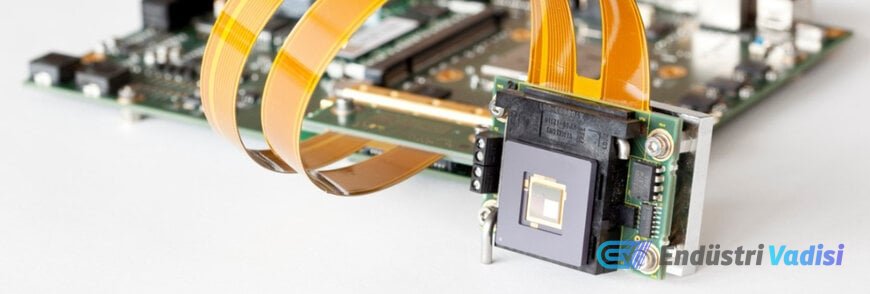
To assist industry partners in testing and applying this technology, the institute introduced the "DIFFRACTIVE MEMS KIT," a comprehensive evaluation system. This kit includes a microchip featuring 256 × 256 individually addressable analog tilting micromirrors, each measuring 16 micrometers. These micromirrors can continuously move to direct light in specific directions.
The kit comes with full control electronics, quick-start software, and a PC interface library. This allows companies to validate different SLM architectures in their own environments, from initial feasibility analysis to custom pilot production.
From Quantum Computing to Semiconductor Manufacturing: The Impact of SLMs
- Quantum Computing: The use of SLMs in quantum computing represents a major breakthrough in atomic-level manipulation. In neutral atom quantum computers, SLMs are used to create dynamic, holographic optical traps (optical tweezers). These traps hold and arrange individual atoms in precise 2D or 3D grids. Fraunhofer's SLMs' ability to operate efficiently in the deep ultraviolet (DUV) spectrum without degrading the micromirrors is critical for stable quantum state control.
- Semiconductor Manufacturing: In commercial semiconductor manufacturing, replacing static diffractive optical elements with programmable, high-speed MEMS mirror arrays allows factories to dynamically adjust laser beam profiles on the fly. This electronic adaptability significantly reduces optical losses, accelerates DUV lithography processes, and eliminates the need to physically change optical components, thereby increasing overall manufacturing efficiency.