






Alper Aktaş
Endüstri Vadisi
- Thread Author
- #1
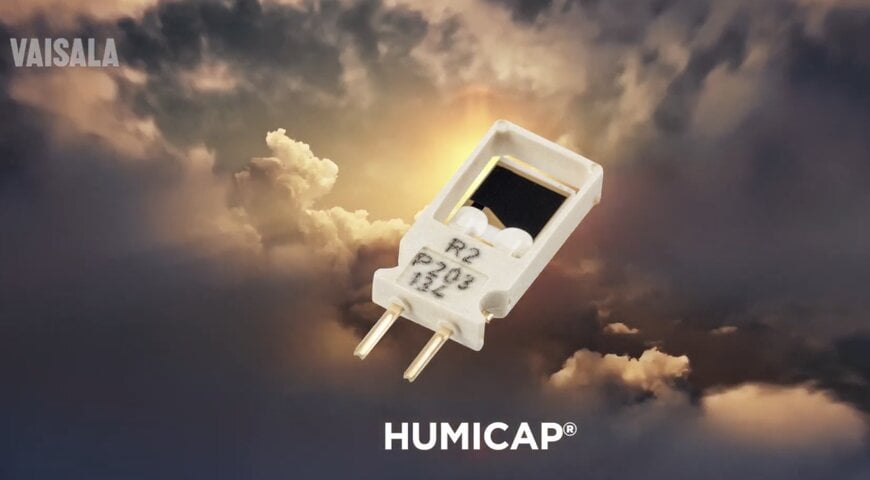
Sensors designed to withstand the harsh conditions of Mars are now set to become indispensable for critical industrial operations on Earth. Vaisala is bringing space-grade micromechanical pressure and humidity monitoring systems to industrial use to enhance the resilience of digital supply chains. This technology elevates environmental control to a whole new level in many areas, from pharmaceutical cleanrooms to data centers.
─────────────────────────
🔬 Space-Derived Sensor Architecture
Capacitive thin-film and micromechanical sensor designs used in interplanetary exploration vehicles are now being adapted for industrial environments. These sensors can operate without maintenance or recalibration even in environments with extremely low pressure, constant radiation, and severe temperature fluctuations, such as Jezero Crater. The secret to this durability lies in hardware architectures specifically designed to prevent mechanical fatigue.
[]HUMICAP: A capacitive thin-film polymer humidity sensor that measures dielectric changes in the polymer layer as it absorbs water vapor.
[]BAROCAP: A silicon-based micromechanical pressure sensor that uses a monocrystalline silicon structure to minimize mechanical hysteresis and ensure long-term signal stability.
─────────────────────────
⚙️ Uninterrupted Operation in Controlled Environments
The terrestrial applications of these sensor architectures provide continuous operational data across a wide range, from offshore energy platforms to semiconductor manufacturing facilities. By maintaining calibration stability over long periods, they reduce maintenance frequency and limit personnel exposure in hazardous or controlled areas.
[]Pharmaceutical Manufacturing: Precise humidity monitoring protects chemical processes and ensures strict regulatory compliance.
[]Digital Supply Chain and Data Centers: Accurate environmental data prevents thermal degradation of servers, optimizes cooling energy usage, and maintains operational continuity in enterprise networks.
─────────────────────────
💡 Predictive Maintenance and Energy Infrastructure
As industrial sectors transition to decentralized models, measurement accuracy directly impacts the management of wind and solar energy farms. Reliable sensor data enables facility operators to detect minimal pressure variations indicating potential system failures, allowing for hardware diagnostics before unexpected shutdowns. Alberto Cortes, Director of LAM for Vaisala Industrial Measurements, states, "Accurate operation in severe environments establishes a standard of reliability for power plants and critical industrial facilities. Fundamental data quality directly impacts efficiency and hardware resource optimization."
─────────────────────────
📊 Technical Details and Competitive Analysis
In the industrial environmental sensing market, capacitive polymer humidity sensors and silicon micromechanical pressure sensors directly compete with architectures developed by manufacturers such as E+E Elektronik and Process Sensing Technologies. Benchmarking for these specialized devices typically evaluates long-term drift characteristics. For micromechanical pressure sensors, remaining below 0.1% of full scale annually is required, while for industrial capacitive models, 0.8% to 1.0% relative humidity accuracy tolerances are necessary.
While traditional resistive humidity sensors often suffer from chemical contamination and condensation damage, thin-film capacitive sensors use heated probe architectures to recover quickly from humidity saturation, maintaining measurement integrity in high-condensation environments. Silicon-based absolute pressure sensors are similarly evaluated for temperature dependence and structural fatigue; monocrystalline silicon provides near-zero mechanical degradation compared to traditional metallic strain gauges.
─────────────────────────
The integration of space technology into industrial applications not only offers more accurate measurements but also enhances operational efficiency, reduces maintenance costs, and maximizes the reliability of critical infrastructures. These sensors from Mars are ready to shape our industrial future on Earth!