




Hasan S. Cemkan
Corporate
- Thread Author
- #1
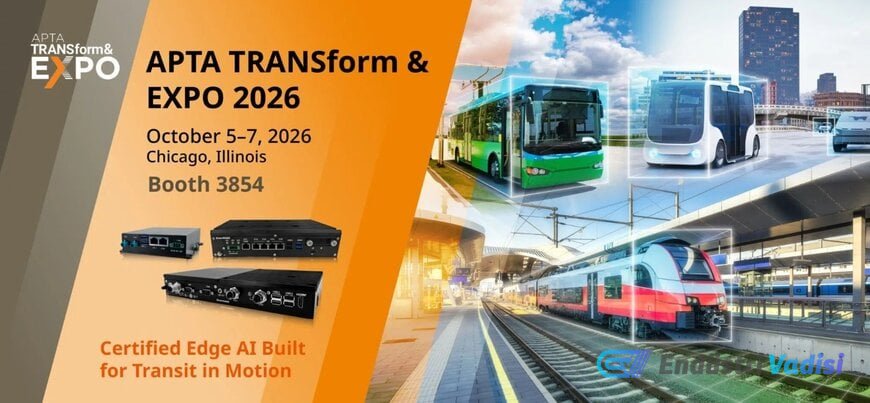
SINTRONES Took the Stage at APTA EXPO 2026!
SINTRONES Technology unveiled edge AI computers designed for vision processing and operational transit monitoring that eliminate cloud latency issues at APTA EXPO 2026, held in Chicago, USA, from October 5-7.
In-Vehicle AI Solutions
The company showcased its in-vehicle edge AI computing platforms specifically developed for public transit buses, rail vehicles, and connected transportation infrastructures. These platforms offer low-latency in-vehicle vision processing, proximity detection, and real-time situational awareness, independent of remote cloud connectivity.
Technology and Architectural Details
- VBOX-3631: Combines fleet management, telemetry analysis, and passenger information services into a single system with Intel Core Series 3 processors and an integrated neural processing unit.
- IBOX-602P-IP66: Features an NVIDIA Jetson Orin NX system-on-module and dual GMSL-2 deserializer interfaces for high-bandwidth camera vision. Its fanless aluminum chassis has IP66 protection and is resistant to vehicle voltage fluctuations thanks to M12 locking connectors and a 9-60V DC wide input power design.
Easy Installation and Integration
These platforms can be integrated directly into the vehicle electrical networks and physical chassis environments of municipal transit fleets. Compliance with EN 50155 railway standards and E-Mark automotive certification ensures resistance to shock and thermal conditions. They communicate with existing in-vehicle control subsystems via integrated CAN FD data buses and high-bandwidth GMSL-2 video channels, allowing for easy installation in both retrofit programs and newly manufactured vehicles.
Application Areas
Target sectors include municipal bus networks, school transit fleets, commuter railways, and commercial logistics fleets. Technical applications cover pedestrian hazard detection, vehicle blind spot monitoring, dynamic proximity sensing, and automated passenger information. In railway applications, they enable real-time monitoring of trackside conditions and mechanical subsystems without bandwidth degradation caused by cellular signal drops in tunnels or remote routes.
Operational Impact and Performance
Running computer vision algorithms directly at the edge provides deterministic processing response times, below the latency thresholds caused by wireless networks. By eliminating the need to send continuous raw video streams to external servers, the systems reduce cellular bandwidth consumption while maintaining deterministic response times critical for proximity alerts.
SINTRONES CEO Kevin Hsu explained their architectural goals: "Public transit is moving towards real-time, in-vehicle intelligence where vehicles need to understand and respond to their surroundings based on changing conditions. Our focus is to bring AI computing closer to the cameras, sensors, and vehicles, combining real-time intelligence with the reliability required for transportation environments.