




Erkan Teskancan
Corporate
- Thread Author
- #1
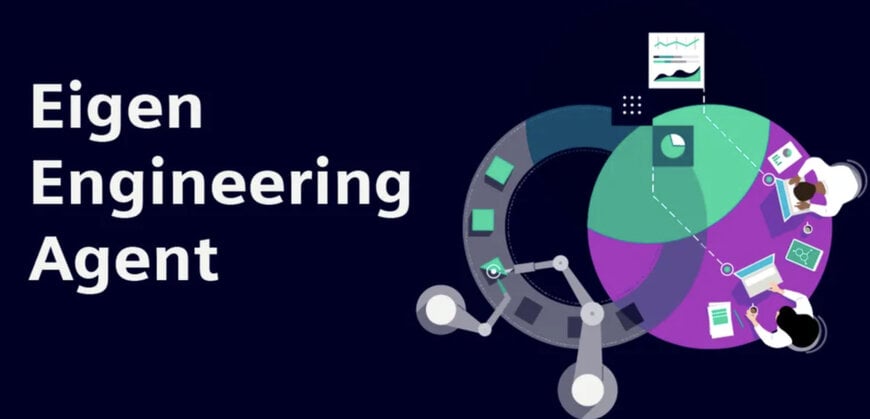
A groundbreaking development is underway in the world of industrial automation! Siemens is significantly increasing operational efficiency in complex engineering projects by expanding the capabilities of its industrial AI solution, Eigen Engineering Agent, with electrical design and automation integration.
─────────────────────────
💡 Action-Oriented Industrial AI
In an environment where most AI assistants merely offer suggestions, the Eigen Engineering Agent plans, executes, and verifies end-to-end engineering tasks. The system understands project requirements, writes control software, configures infrastructure, and continuously refines its work until it meets defined quality standards. This allows automation engineers to focus on system-level decisions. The agent works natively with the company's engineering software platform, TIA Portal, becoming an integral part of the Siemens Xcelerator ecosystem.
─────────────────────────
📊 Real-World Efficiency and Success Stories
Already used by over a hundred companies in nineteen countries, this technology is also favored by industry giants such as ANDRITZ Metals, CASMT, and Prism Systems. The agent accelerates daily tasks like creating programmable logic controllers (PLCs), human-machine interfaces (HMIs), and configuring devices. It provides two to five times faster execution compared to manual workflows, up to a 50% increase in engineering efficiency, and an 80% improvement in the overall quality of solutions.
Peter Koerte, Member of the Managing Board of Siemens AG and Chief Technology Officer, emphasized that this tool demonstrates the true value of artificial intelligence in the physical world, making the construction of factories and infrastructure more reliable and efficient.
─────────────────────────
⚙️ Bridging the Gap in Electrical Design with ECAD Integration
With recent updates, thanks to ECAD integration and standards-compliant project generation, the agent now deeply understands the context, including hardware topology and engineering intent, before software development. Traditionally, electrical engineering and automation are performed sequentially and disconnectedly. Electrical engineers design wiring in ECAD tools, and then automation engineers program behavior by manually copying device lists and tracking last-minute changes. This manual handover leads to valuable time loss and frequent errors.
The Eigen Engineering Agent eliminates this inefficiency by directly reading electrical design files in standardized formats such as XML and AML. The AI automatically detects inconsistencies, resolves naming conflicts, adds relevant devices to the project in TIA Portal, configures physical connections, and creates PLC tags while adhering to the actual hardware topology. The result is a much faster and error-free project start, fully aligned with electrical engineering.
─────────────────────────
🔬 Technical Depth and Competitive Advantage
In the market for generative AI applied to industrial automation, traditional control system providers are competing to reduce engineering times in the face of a global technical skills gap. While companies like Rockwell Automation offer AI assistants primarily focused on suggesting code snippets, and Schneider Electric explores similar optimization capabilities, Siemens' approach stands out with autonomous execution and functional bidirectionality.
The most significant technical feature of the Eigen Engineering Agent is its ability to natively process AutomationML (AML) files from leading ECAD platforms. By processing these structured design schemas, the AI not only copies the listed hardware but also extracts the necessary kinematic logic and control loops to create corresponding function blocks in TIA Portal. This topological interpretation capability provides Siemens with a significant competitive advantage in mechatronic integration, surpassing traditional virtual assistants based solely on Large Language Models (LLMs) that lack deep semantic knowledge of strict industrial automation standards like IEC 61131-3.
─────────────────────────
The Siemens Eigen Engineering Agent is shaping the future of industrial automation, making engineering processes smarter, faster, and more efficient. This innovative approach will accelerate the pace of digital transformation in the industry and simplify the management of complex projects.



















