








Hasan S. Cemkan
Corporate
- Thread Author
- #1
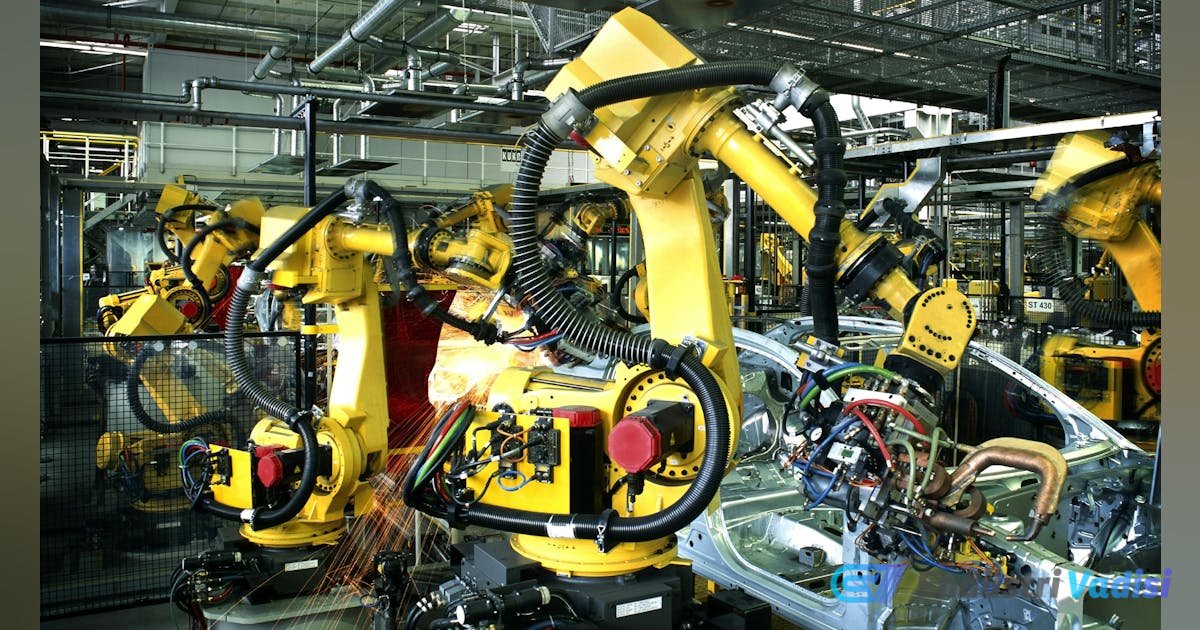
A groundbreaking development is underway in the world of industrial automation! Siemens is making an ambitious entry into the agentic AI software market, aiming to reduce the cost of robots, especially for small and medium-sized enterprises (SMEs). The company intends to optimize the engineering and production reconfiguration process, which accounts for approximately 70% of the total cost of robots, by shortening downtime.
─────────────────────────
💡 Eigen Engineering Agent: Brand-Independent Smart Solution
Siemens' newly introduced Eigen Engineering Agent stands out as a brand-independent agentic AI solution. This software can replace manual coding or programming for programmable logic controllers (PLCs), distributed control systems (DCS), and robotic applications. It automatically updates codes or instructions in line with new priorities and goals, providing flexibility and efficiency in production processes.
─────────────────────────
📊 Challenges of AI Integration and Siemens' Solution
Today, many manufacturers face challenges in successfully integrating AI agents. Data integration and communication between in-house teams are particularly critical aspects of this process. With Eigen, Siemens aims to overcome these challenges and make AI more accessible for SMEs.
According to Rainer Brehm, CEO of Siemens' automation business unit and CTO of Siemens Digital Industries, 70% of a robot's total lifecycle cost comes from engineering and reconfiguration processes. If an AI agent like Eigen can shorten the time required for these adjustments, robots will become more efficient, and SMEs will be able to use this technology at more affordable costs.
─────────────────────────
📈 Next-Generation Automation and Increased Efficiency
Brehm states, "Thanks to AI-powered robot and PLC programming, it becomes possible to achieve automation with a good return on investment even with much smaller batch sizes. This marks the beginning of a new era in automation."
Ujjwal Kumar, President of Siemens Digital Industries Automation in America, adds that the AI agent adds orchestration layers to existing technologies. Kumar explains, "AI uses the fundamental physics of the robot and PLCs, your different sensing technologies. All AI places an orchestration layer on top of this. This orchestration layer will become increasingly critical for faster deployment."
─────────────────────────
👨💻 Smart Solution to the Programmer Shortage
Kumar also emphasizes that Eigen can provide a solution to the shortage of programmers and coders experienced by manufacturers. "We struggle to attract the best programmers to the factory floor. Finding programmers to code our PLCs or robotic systems was a scaling bottleneck. Moreover, the new generation only knows how to do visual coding (vibe coding); they no longer want to do syntax-based coding," he says.
In this context, AI's ability to learn and reconfigure much faster offers a significant advantage compared to five years ago.
─────────────────────────
🤝 Human Factor and Future Vision
However, Kumar also adds that the human factor must always remain involved. He likens agentic AI to an orchestra, positioning humans as the conductors of this orchestra.
Siemens aims to expand this technology to more companies and broaden the capabilities of AI agents. Brehm summarizes their future vision by saying, "We are partnering intensively with tech giants like Microsoft, NVIDIA, and AWS because they see the next big thing in industry: AI will move out of the digital world and into industry.




















