




Mucitler Elektrik
Corporate
- Thread Author
- #1
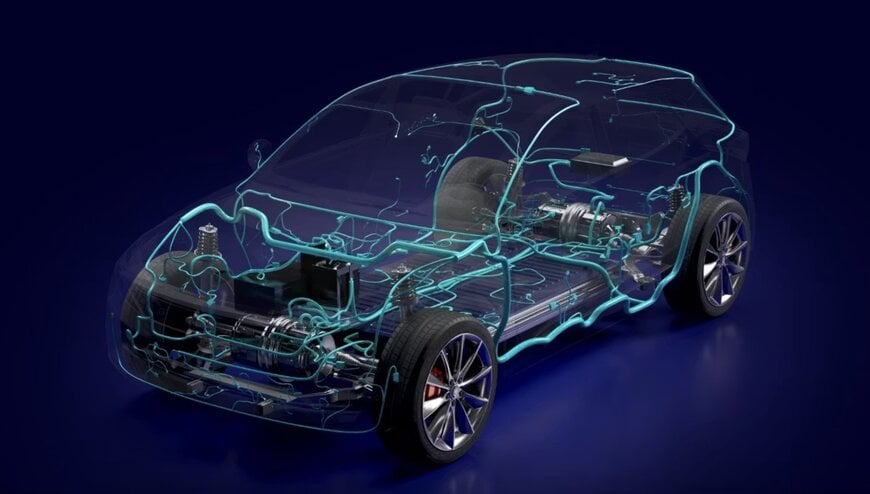
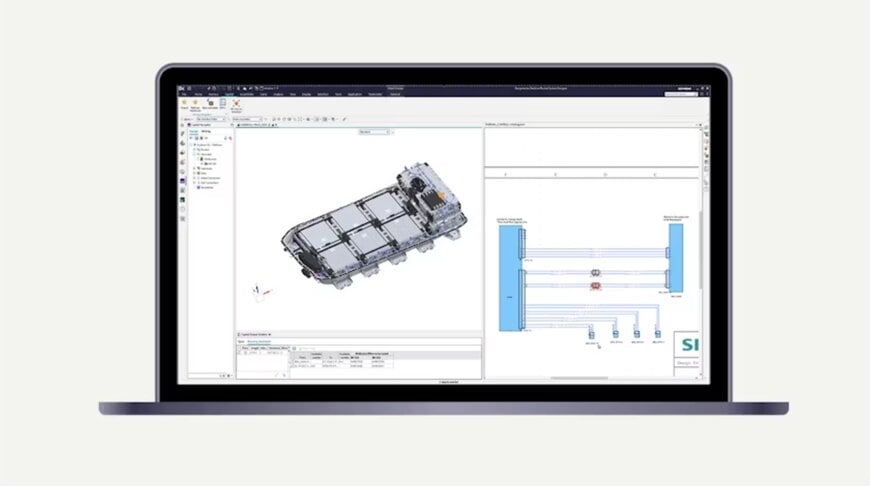
Siemens is here with an innovation that will revolutionize the world of engineering! Thanks to the new 3D electrical design capabilities now integrated into the Capital software, wiring design and physical harness routing are combined into a single model-based workflow. This integration, covering industrial software in the Siemens Xcelerator portfolio, allows electrical and mechanical engineers to work simultaneously in a shared 3D environment. This increases interdisciplinary collaboration, while significantly reducing changes and costly revisions in the final stages of design.
─────────────────────────
💡 Workflow Revolution in Electromechanical Engineering
As the complexity of electrical systems and software content increased, separate ECAD (Electrical Computer-Aided Design) and MCAD (Mechanical Computer-Aided Design) workflows often led to project delays, manual data transfers, and expensive product revisions. Siemens addresses these system inconsistencies by integrating Capital with Designcenter software for advanced product engineering and Teamcenter software for product lifecycle management (PLM).
This technical framework allows engineering teams to design, validate, and manage electrical systems directly within the native mechanical design environment. Frances Evans, Senior Vice President of Lifecycle Collaboration Software at Siemens Digital Industries Software, states that this update offers manufacturers the ability to pair electrical system design, including artificial intelligence (AI)-powered harness development, with 3D mechanical design in a unified, model-based workflow without compromise. This model-based configuration aims to increase innovation while reducing development risk through interdisciplinary visibility, early detection of design flaws, and structured decision-making processes for complex electromechanical assemblies.
─────────────────────────
📊 Data Continuity and System Validation
The new 3D electrical design architecture supports early validation of electrical layouts, improves data continuity throughout the enterprise digital workflow, and eliminates manual transfers between different engineering departments. By visualizing electrical components and wiring geometry directly in 3D, engineers can detect physical routing conflicts earlier and align the initial electrical design intent with the final mechanical application.
Chad Jackson, CEO and Principal Analyst at Lifecycle Insights, notes that interdisciplinary conflicts between electrical and mechanical teams are relatively inexpensive to resolve early on, but become increasingly difficult to correct later in the cycle when they solidify around adjacent subsystems. Jackson adds that a shared 3D context connecting electrical and mechanical engineers from the beginning of harness design makes early-stage problem-solving operationally feasible, rather than a theoretical process goal.
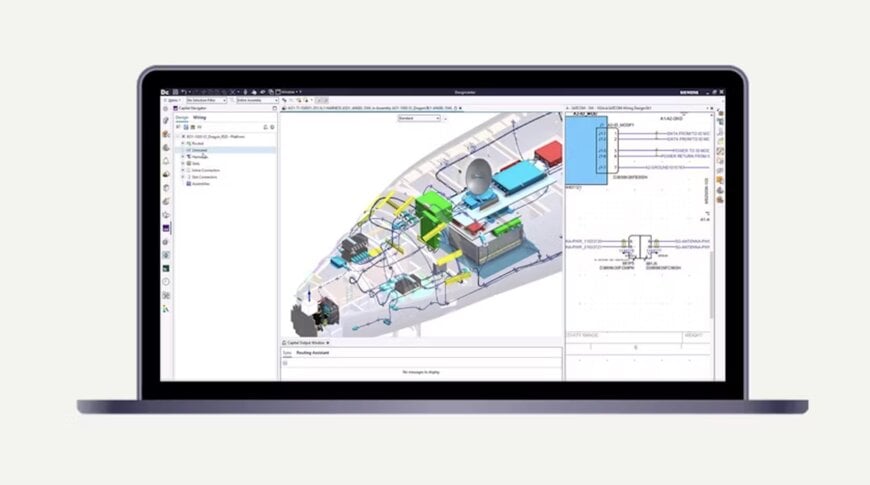
Key operational advantages of the integrated system include accelerated product development through early electrical system validation, enhanced ECAD-MCAD interaction in a single 3D workspace, and reduced overall costs and project risks through minimized downstream revisions. Furthermore, engineering efficiency is supported by the use of familiar electrical and mechanical design tools, bolstered by AI-powered automation.
─────────────────────────
⚙️ Technical Details and Future Outlook
The convergence of ECAD and MCAD environments relies on standardized data exchange protocols to maintain data schema integrity across different software tools. Historically, electromechanical engineering teams used traditional file formats such as DXF, STEP, or IGES to transfer structural outlines. However, these formats lacked the necessary electrical intelligence, such as netlists, terminal crimp data, signal separation rules, and wire cross-sectional areas.
Modern collaborative electromechanical platforms utilize specialized data exchange schemas, such as IDX (Incremental Design Exchange, based on the ProSTEP iViP profile) or the automotive KBL (Kabelbaumliste) standard. These protocols enable true bidirectional incremental data exchange. Instead of re-importing an entire harness assembly dataset, the system synchronizes only delta changes (e.g., moving an electrical connector component or changing a wire bundle diameter), preserving localized attributes and preventing data overwrite errors.
In AI-powered harness development, machine learning algorithms automate repetitive, rule-based engineering tasks. Harness routing algorithms calculate the mathematically shortest path or optimized multi-criteria path in complex 3D mechanical geometries while adhering to defined electrical and safety constraints.
Furthermore, automated part selection routines query localized database repositories to automatically match compatible terminals, wire seals, cavity plugs, and heat shrinks with specific connector slots based on wire gauge specifications. This rule-based automation transforms logical schematics into fully adorned, production-ready formboard drawings and accurate bills of materials (BOMs), optimizing physical material usage and production line balancing.
Siemens' move promises a significant transformation in the industry by making electromechanical design processes more efficient, error-free, and innovative. We will see the effects of this integrated approach more clearly in future product developments.