




Semih Asil
Industry Valley
- Thread Author
- #1
AI-Powered Industrial Solutions from SECO
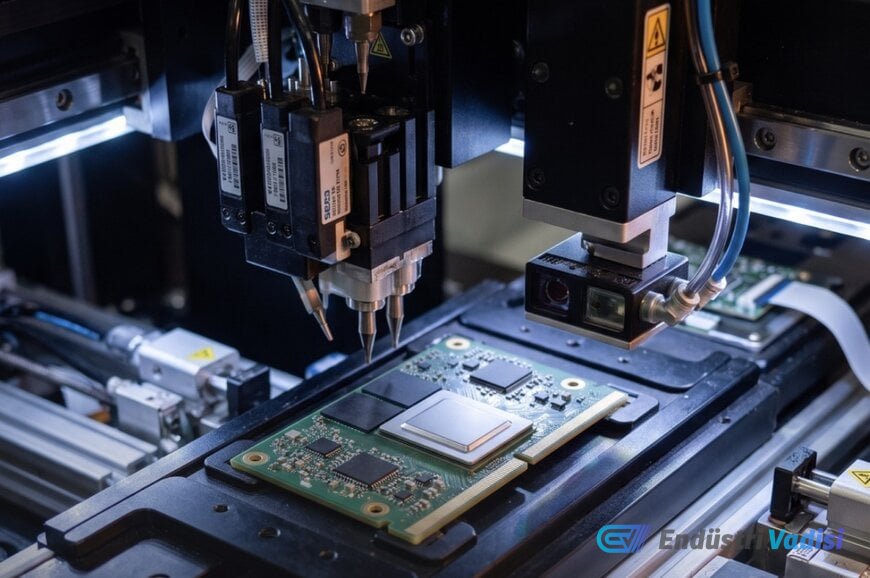
SECO offers integrated hardware modules and software frameworks that transform AI models into reliable, mass-producible, and connected systems. Designed specifically for the robotics, medical, and industrial automation sectors, these end-to-end solutions enable original equipment manufacturers to seamlessly transition from rapid prototyping environments to production-level deployments.
Hardware Foundations for Industrial AI Architecture
Introduced at embedded world North America 2026, the SOM-SMARC-Dragonwing-IQ8 provides a structured migration path for enterprise hardware. This platform allows engineering teams to port initial designs, tested on the Arduino VENTUNO Q prototyping board, directly to a production-oriented architecture utilizing Qualcomm Dragonwing IQ8 Series processors. This preserves software development investments while industrial-grade hardware features, robust operating system support, embedded cybersecurity protocols, and fleet management capabilities are made ready for large-scale enterprise deployments.
Concurrent Video Processing at the Edge
A multi-camera security configuration, powered by the Qualcomm Dragonwing IQ9 platform, showcases local processing capabilities by handling high-density multi-modal workloads. The system can manage up to 16 concurrent AI video streams, combining image-language models with real-time object detection algorithms. Utilizing dedicated neural processing and multimedia acceleration blocks found in the IQ8 and IQ9 silicon, the architecture processes intensive parallel tasks locally, thereby reducing latency and bandwidth dependency on centralized cloud servers.
Portable Systems for Remote Field Operations
Targeting mobile enterprise applications, the Intel-based Portable 10.1-inch Edge AI Mission System functions as a rugged, battery-powered processing unit. Running on an Intel Core Ultra Series 3 (Panther Lake) processor, the terminal supports local machine learning execution in disconnected environments. The system provides the necessary power efficiency and processing density for use cases such as field maintenance operations without continuous network connectivity and isolated digital assistants.
Unified Edge AI Ecosystem and Lifecycle Management
Beyond individual computing nodes, the integration of system-on-modules (SOMs), single-board computers (SBCs), and human-machine interfaces (HMIs) with the Clea software framework creates a standardized device lifecycle ecosystem. This infrastructure supports remote device management, secure over-the-air (OTA) updates, container orchestration, and AI workflow deployment.
Rodney Feldman, VP of Product, Innovation, and Marketing at SECO USA, stated, "Facilitating the transition from a working concept to something that can be manufactured, reliably deployed, and supported for years has been a major challenge. By bringing together computing platforms, software, AI capabilities, and lifecycle expertise, we enable OEMs to move faster without having to assemble and manage every piece of the technology stack themselves."
Digital Transformation of Mechanical Vending Equipment
Legacy infrastructure applications are digitizing mechanical hardware using Clea Vend software and the KarL4 compact contactless payment terminal. Tower Optical Company binoculars are utilizing the KarL4 terminal to perform digital wallet and card transactions with low power consumption and integrated cellular connectivity features. This retro-fit capability allows operators of traditional coin-operated mechanical platforms to securely authorize modern digital payments without redesigning the primary mechanical enclosure.
Additional Information
The SMARC (Smart Mobility ARChitecture) form factor, with Qualcomm's IQ8 and IQ9 series processors, competes with rivals like NVIDIA Jetson Orin Nano and Orin NX in terms of tera-operations per second (TOPS) per watt, maximizing neural processing unit (NPU) efficiency in thermally constrained environments. The Intel Core Ultra Series 3 architecture, while competing with AMD Ryzen Embedded processors, focuses on hybrid core designs that include dedicated NPU silicon to execute machine learning algorithms locally while maintaining legacy x86 instruction set compatibility. Software frameworks like Clea compete with platforms such as Balena and Azure IoT Edge, differentiating themselves with native hardware-level integrations and specific containerized orchestration for neural network lifecycle management.