







Cengiz Özemli
Academic
- Thread Author
- #1
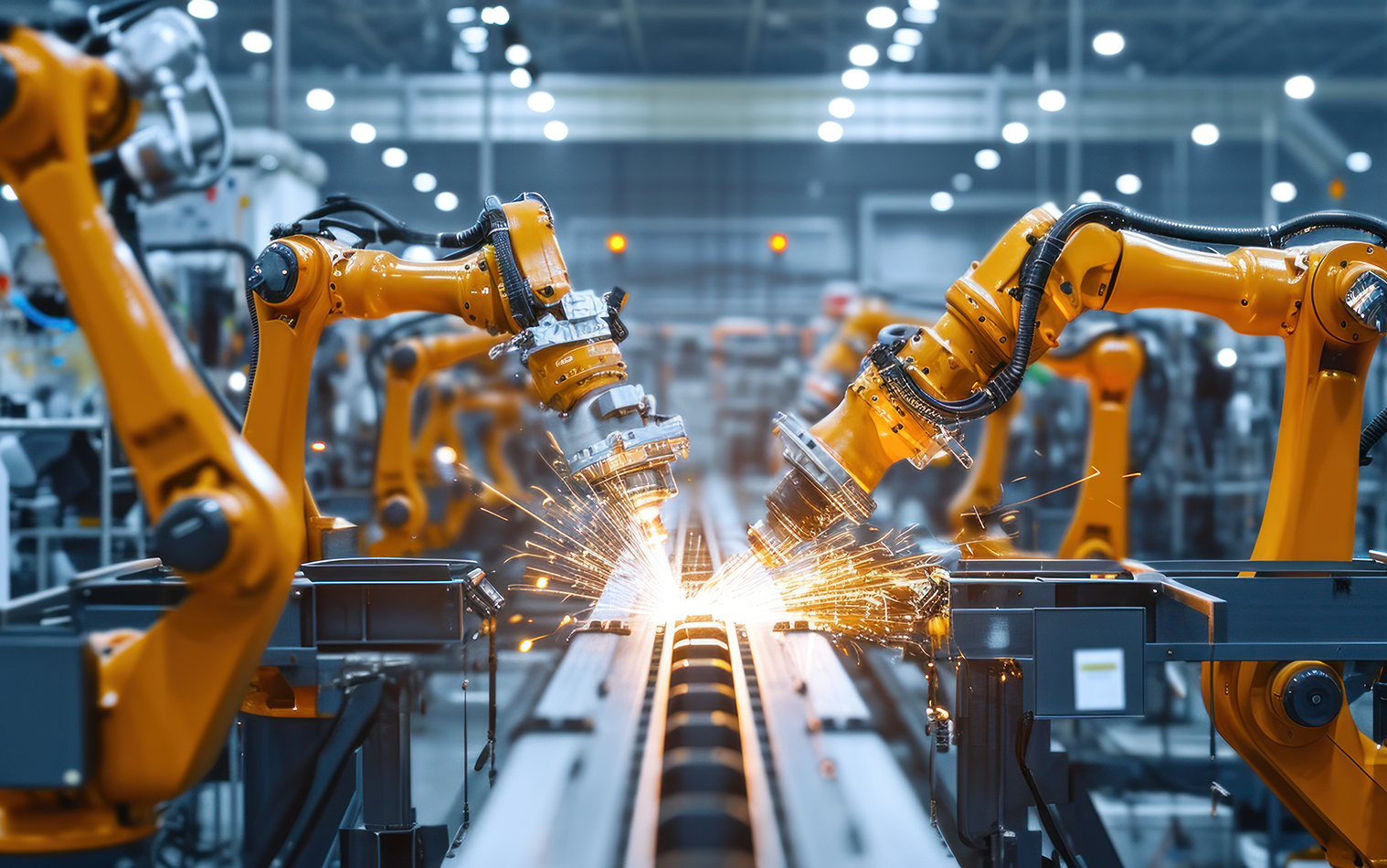
Western European countries reached a new global record in robot density in 2024 with 267 robots per 10,000 employees in the manufacturing sector. North America followed with 204 robots, and Asia with 131 robots.
### Regional Developments in Robot Density
According to the International Federation of Robotics' (IFR) 2025 World Robotics report, the integration of factory robots has become a priority in global economies. Takayuki Ito, IFR President, stated, "The robot density metric provides a standard measure for comparison by evaluating the total number of robots in a country based on its workforce."
In Western Europe, robot density increased by 3% annually. Germany, Switzerland, the Netherlands, Austria, Italy, Belgium & Luxembourg, France, and Spain were among the top 20 worldwide. The robot density for the European Union (EU-27) is 231 robots, significantly above the world average of 132.
In North America, robot density increased by 4%, with the USA ranking 8th globally with 307 robots per 10,000 employees. In Canada, this number was recorded as 241, and in Mexico, it was 62.
In Asia, robot density increased by 11% to an average of 131 robots. South Korea, Singapore, Japan, and Chinese Taipei are among the countries with the highest automation implementation.
### China's Situation
China has the largest operational stock in the world with approximately 2 million robots. China's robot density is 166 robots, ranking 6th in Asia and 22nd globally, showing an annual increase of 17%. Robots in China are widely used not only in industrial areas but also in rural regions.
### Countries with the Highest Robot Density
- South Korea: 1,220 robots per 10,000 employees, with an average annual growth of 7%
- Singapore: 818 robots, with an annual growth of 13%
- Germany: 449 robots, with an annual growth of 5%
- Japan: 446 robots, with an annual growth of 5%
Sweden (377), Denmark (329), Slovenia (315), USA (307), Chinese Taipei (302), and Switzerland (294) are among the other top 10 countries.
### What is Robot Density?
Robot density is the ratio of the number of industrial robots used in a business to the number of employees in that country. This ratio is used as a standard indicator to compare automation levels.
### About IFR
The International Federation of Robotics (IFR) is the voice of the global robotics industry, bringing together robot associations, academia, and manufacturers from over 20 countries. The IFR publishes two main reports analyzing robot use and the market worldwide: it provides global statistical information on industrial robots and service robots.