




Semih Asil
Industry Valley
- Thread Author
- #1
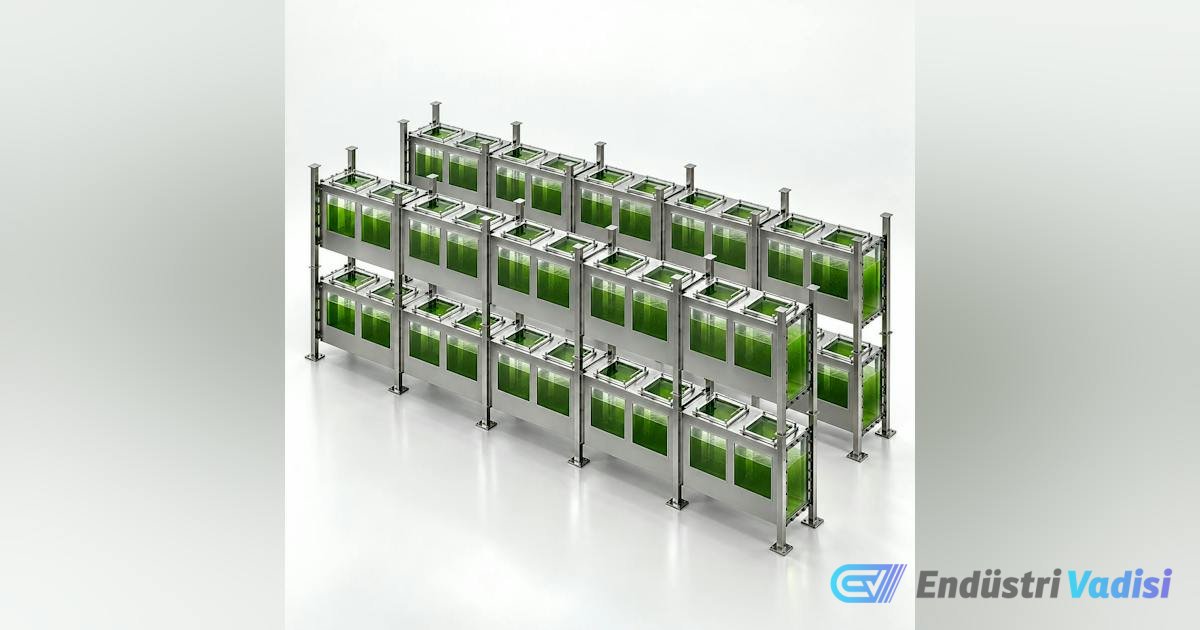
The Importance of Automation in Vertical Photobioreactors
Vertical photobioreactors offer a critical solution for increasing microalgae production volume. However, this vertical arrangement necessitates automation throughout the entire production process, from nutrient medium preparation to harvesting.
Seven Years of Experience from Hungary
Int-Energia Kft. and Metaplasma S.L., with seven years of operational experience at the Tiszasziget pilot vertical farm in Hungary, have developed an automated microalgae cultivation process control system for next-generation, larger-volume photobioreactors. This control system is an integral part of the vertical farm supplied to customers. AlgaFarms, a division of Int-Energia, conducts market research and sells vertical farms.
Structure of the Automated Microalgae Cultivation Process Control System
This system supports vertical farms consisting of closed photobioreactors connected in series and arranged on multiple levels. The modular design allows for expansion by adding sections and rows, which entails an increase in auxiliary equipment capacity.
The pilot plant in Tiszasziget operates on three independent reactor levels. Automation is implemented through separate subsystems for pH control and CO₂ supply, suspension withdrawal and centrifuge control, cleaning, and other operations. These subsystems operate in both automatic and operator-controlled modes. In operator-controlled mode, the operator sets the necessary operating parameters and modes.
Nutrient Medium Preparation and Photobioreactor Filling
Nutrient medium preparation and photobioreactor filling involve reverse osmosis water treatment and the supply of nutrient solution, prepared with treated water, to the photobioreactors.
Nutrient components are pre-measured and loaded by the operator through a hatch or delivered to the nutrient solution preparation tanks via a specialized pumping unit. Circulating mixing operates automatically according to a schedule. After the mixing process, the required amount of nutrient solution is supplied to the photobioreactors.
In the new generation system, the delivery and dosage of nutrient solution with treated water supply are controlled by the medium preparation and photobioreactor filling subsystem, based on Siemens LOGO! modules. This is part of the automated microalgae cultivation process control system.
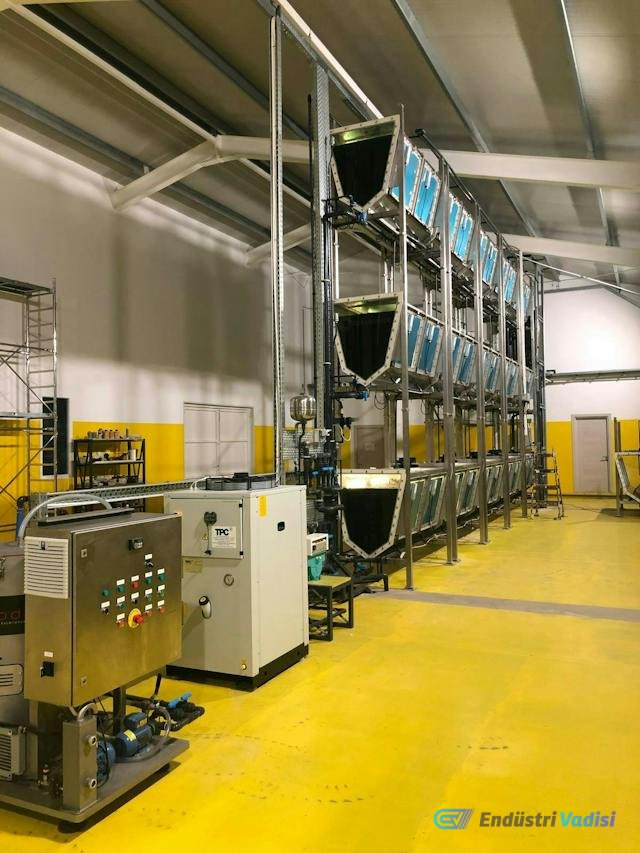
In the pilot plant, the operator initiates the supply of treated water and prepared nutrient solution to the photobioreactors. The supply stops automatically upon reaching the filling level or with operator intervention. Liquid level monitoring terminates filling and prevents overflow.
In the new system, the initial filling is performed using the medium preparation and photobioreactor filling subsystem under operator supervision. Subsequent replenishment is an automated process managed by the automated microalgae cultivation process control system.
Maintaining Cultivation Conditions in Photobioreactors
The main measured and controlled cultivation parameters are pH, temperature, illumination, CO₂ supply, and air supply for mixing. Settings depend on the chosen culture and biomass requirements.
In the pilot plant, a separate subsystem continuously measures the suspension pH and temperature and automatically controls the CO₂ supply based on pH readings. A heat pump maintains the set temperature. Illumination turns on and off automatically according to a schedule, while continuous air supply mixes the culture.
In the new generation system, the respective control subsystems monitor and control pH, temperature, illumination, CO₂ supply, and mixing air independently for each level. Adjustable process settings allow for adapting cultivation conditions to a specific culture and biomass requirements. Switching to other microalgae species requires considering their biological characteristics and cultivation requirements.
Biomass Harvesting and Vertical Farm Equipment Maintenance
The biomass harvesting subsystem within the automated microalgae cultivation process control system combines cultivation with suspension withdrawal from the photobioreactors, followed by biomass separation. Based on the diagnostic characteristics of the microalgae species-specific suspension, the subsystem initiates the delivery of a specific suspension volume to the centrifuge, separates the biomass from the nutrient solution, and returns the solution to the photobioreactors. If a small amount of nutrients remains in the solution, it undergoes reverse osmosis, and the treated water is directed to reserve tanks for reuse in subsequent cultivation. If necessary, the centrifuged biomass undergoes vacuum drying with controlled heating. Biomass is manually loaded into the drying chambers.
In the Tiszasziget pilot plant, the operator sets the required withdrawal volume. The suspension flow measurement subsystem monitors the volume transferred to the centrifuge and controls the centrifuge's operation. Before starting, the operator selects the destination of the separated liquid: return to the photobioreactors or discharge. Returning ensures the reuse of water and remaining nutrients within the specified operating regime. Drying proceeds automatically according to preset parameters after manual loading into vacuum drying cabinets.
The main equipment maintenance operation is washing off adhering microalgae from the photobioreactors. The corresponding subsystem of the automated microalgae cultivation process control system performs cleaning. Photobioreactors are washed sequentially according to a preset schedule.
Thus, the automated microalgae cultivation process control system covers nutrient preparation and continuous maintenance of conditions for cultivation, periodic harvesting, and farm maintenance.