








Semih Asil
Industry Valley
- Thread Author
- #1
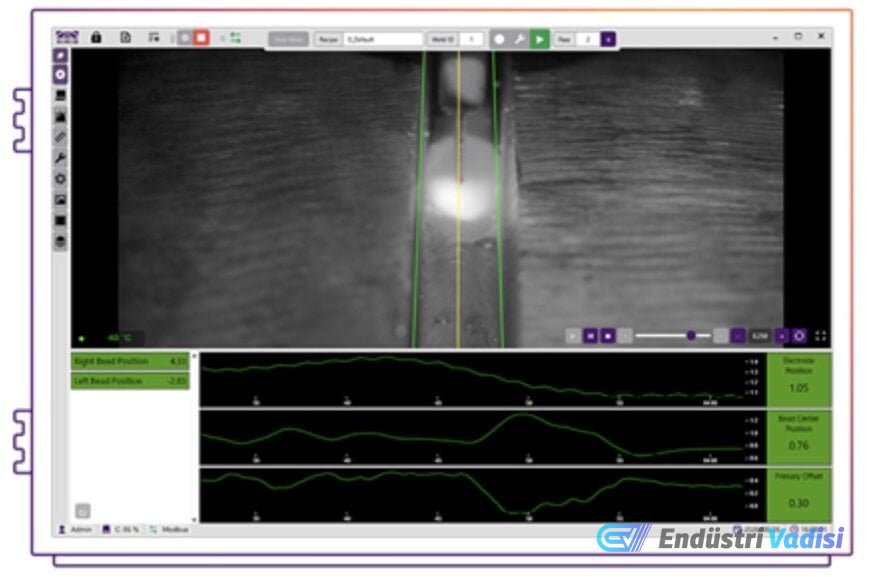
✨ Both Tracking and Monitoring in a Single Device
Xiris Automation has introduced WeldStudio Tracker, a groundbreaking new software platform in the world of robotic welding. This AI-powered machine vision software combines seam tracking and weld monitoring in a single optical device. Now, both real-time process correction and visual feedback for operators can be provided simultaneously in robotic welding applications.
👁️🗨️ AI-Powered Optical Seam Tracking
Traditional welding systems rely on tactile, through-arc, or laser optical trackers to compensate for issues like metal distortion or heat deformation. However, these methods operate separately from visual process monitoring systems, preventing operators from visually verifying the process. WeldStudio Tracker eliminates this problem. The software integrates machine vision into near-infrared, high dynamic range (HDR) cameras operating at over 140 decibels. This allows for simultaneous and clear images of the welding torch, arc, melt pool, and seam to be captured without overexposure, despite the extreme brightness of the welding arc.
📏 Zero Offset Measurement and Load Reduction
Thanks to AI models, the software identifies and tracks the key topographical features of the root, weld seam, and joint across multiple passes. Since measurements are taken directly from the camera's live field of view, the physical spatial offset typically required between a separate seam sensor and the electrode is eliminated. The camera image captures both the torch and the groove, allowing the system to continuously calculate absolute positions and relative movements.
Combining process monitoring and seam tracking in a single hardware unit reduces the total load weight on the robot arm and simplifies hardware integration. This combined approach allows the automated welding cell to make autonomous trajectory corrections while providing the human operator with a continuous live stream to evaluate process inputs and weld quality.
💡 Competitive Advantages
- Against Laser Triangulation Systems: While laser triangulation systems from manufacturers like SERVO-ROBOT and Meta Vision Systems offer high-precision topographical profiles, they require an additional camera system for visual process monitoring, which increases the weight and complexity at the end of the robot arm.
- Against Through-Arc Seam Tracking (TAST): TAST, integrated into advanced power sources from companies like Fronius and Lincoln Electric, adds zero weight to the torch but completely lacks visual feedback and is often limited to oscillating welding processes on thicker materials.
Xiris's integration of AI-based tracking with 140+ dB HDR near-infrared imaging directly competes by reducing robotic load and eliminating the spatial measurement offset between the sensor and the weld pool. While laser scanners provide geometric absolute measurements based on structured light, vision-based AI tracking relies on specific algorithm training to identify joint features in the 2D plane, eliminating the need for fragile laser emitters near the spatter zone.




















