






Elif Özaksu
Corporate
- Thread Author
- #1
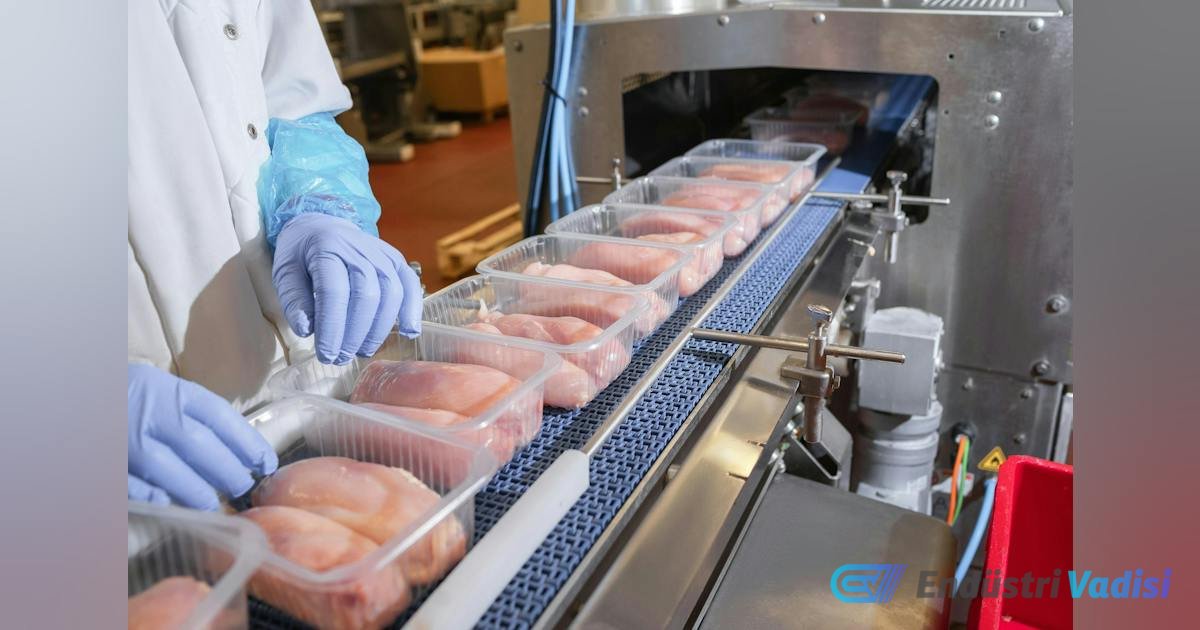
Automation in packaging and manufacturing has become one of the main investment areas. Esko's 2026 Packaging Trends Survey places automation ahead of artificial intelligence, while PMMI's 2026 Robotics in Packaging and Processing report shows that 72% of end-users surveyed use robotics. The direction is clear, but from an engineering perspective, the real question is where automation creates operational value.
🎯 System Throughput Matters, Not Machine Speed!
In packaging lines, this distinction is crucial. This is because line performance is not a simple sum of the nominal speeds of individual machines. For example, if a filling machine operates at 200 units per minute, the next process can handle 170, and the end-of-line system can process 140 units, installing a faster filling machine will not automatically increase throughput. The actual constraint might be elsewhere: downstream blockage, upstream starvation, insufficient accumulation, frequent micro-stops, changeovers, or manual operations between processes.
📊 OEE Alone Is Not Enough!
While OEE (Overall Equipment Effectiveness) is still a very useful metric, it primarily gives us an equipment-level view. A packaging line is an interconnected system. Therefore, the machine with the lowest OEE is not always the one limiting the total line output. A study on a beer filling line showed that the equipment with the lowest efficiency was not the unit limiting total line productivity when overall efficiency was considered.
The goal is not to make every machine run at its maximum speed, but to achieve the highest stable good product output from the entire line.
📦 Packaging Material Is Also a Process Variable!
Another point often overlooked in automation projects is the packaging material itself. A film, carton, bottle, or cap is not just a purchased material. Once it enters the production line, it becomes a technical process input. Variations in friction coefficient, stiffness, dimensional tolerance, sealing range, or hot tack behavior can affect feeding, tracking, sealing, and achievable machine speed. This means that a material change might reduce purchasing costs but increase the total conversion cost if it leads to more downtime, rejects, or speed loss.
🔍 Find Hidden Capacity Before New Capacity!
Before a major automation investment, one of the first things to check is how much capacity already exists in the line but is currently being lost. Changeover is a good example. A food factory case study using SMED and related lean methods reduced changeover time by approximately 30%, increased OEE to over 70%, and decreased labor cost by 10%. This doesn't mean every factory will achieve the same result, but it shows that usable capacity can be freed up without increasing the technical speed of the main equipment.
💡 Automation Doesn't Always Have to Start with a Robot!
Automation is sometimes discussed as if there are only two options: manual operation or full automation. In reality, there is a vast engineering space in between. A sensor, mechanical guide, stopper, gravity transfer, simple diverter, interlock, or a small conveying device can eliminate repetitive human intervention with much less complexity and investment. I call this "low CAPEX automation." The highest level of automation is not always the best solution for the process.
🚀 Start with the Constraint!
Before a major packaging line automation project, I believe the sequence should be simple:
- First, find the real bottleneck.
- Then, separate availability, speed, quality, changeover, starvation, and blockage losses.
- Check if packaging material behavior is part of the problem.
- Review line balance and manual operations.
- Look for low CAPEX improvements.
Only after this should automation investment be defined. The goal is not to automate as much as possible, but to automate the right part of the process, at the right level, where it creates measurable value in throughput, cost, quality, or consistency.