








Cengiz Özemli
Academic
- Thread Author
- #1
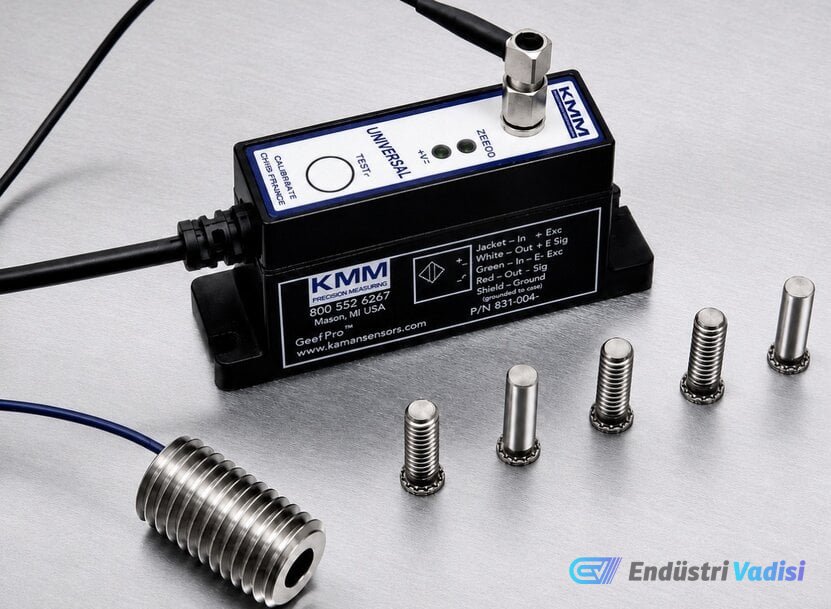
🔍 Innovative Solution from KMM Precision Measuring
KMM Precision Measuring introduces an adaptable verification module designed to assess material conductivity and structural integrity in modern manufacturing environments. This technology particularly stands out with its ThreadChecker system, which checks for the presence of threads, especially in electrically conductive materials.
⚡ Electromagnetic Verification and Material Analysis
This inspection system functions as a teachable Eddy Current instrument, identifying variations in physical properties corresponding to material conductivity. The sensor generates localized electromagnetic fields, detecting the presence or absence of threads, coating applications, and lack of heat treatment. By relying on electrical conductivity rather than optical imaging, it can successfully evaluate components regardless of surface cleanliness or fluid contamination. This methodology reduces application complexity in challenging manufacturing environments and standardizes the evaluation process.
⚙️ Hardware Configurations and In-Mold Integration
Specifically designed for in-mold automated inspection processes, the architecture consists of a single electronic module that interfaces with multiple probes and material combinations. Hardware features include four internal probes ranging from 4 to 10 millimeters (mm) and two external probes measuring 6 mm and 8 mm. To ensure physical durability in industrial conditions, system components are CE compliant and rated IP-67 against dust and liquid ingress. The sensors support standard DIN rail mounting options to ensure seamless integration into existing control architectures.
📊 Programmable Logic Controller Output Protocols
To facilitate automated decision-making and fault routing, the sensor module provides both switched and analog output configurations. When using switched output, the device connects directly to a programmable logic controller (PLC) or an alternative controller and is programmed to trigger an automatic alarm in the event of a missing thread. Alternatively, the analog output configuration allows control systems to monitor voltage fluctuations in real-time, enabling engineers to program the PLC with specific operational limits tailored to the application's exact conductivity thresholds.
💡 Additional Information: Industrial Automation and Competition
The industrial automation market utilizes various inductive and eddy current sensors for structural verification. Competitive solutions from manufacturers like Turck and Balluff also rely on electromagnetic induction to verify part geometries, thread presence, and material positioning. Benchmarking for these devices typically relies on analyzing maximum switching frequency, analog voltage resolution, and environmental durability. While standard inductive sensors are often limited to basic presence detection, advanced eddy current modules used in automated inspection ecosystems evaluate complex conductivity metrics to determine heat treatment status and coating thickness. Industry standard benchmarking requires a minimum IP-67 ingress protection rating and standardized integration protocols (such as analog (0-10V) or discrete PLC switching) to ensure functional interoperability across various manufacturing platforms.





















