






Erkan Teskancan
Corporate
- Thread Author
- #1
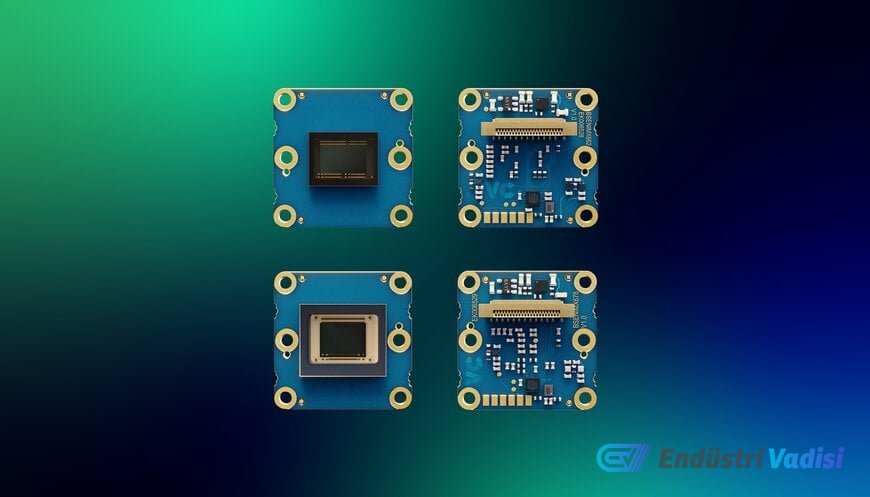
Vision Components continues to introduce innovative products to the industrial imaging world. The company will unveil its new cost-oriented VC MIPI Blueline camera series and the AI-powered VC EvoCam at the Vision 2026 exhibition, held in Stuttgart from October 7-10.
📸 VC MIPI Blueline: Plug-and-Play Industrial Cameras
Developed and manufactured in Germany, these industrial-grade MIPI camera modules stand out with their optimized costs. Offered as ready-to-use packages with compatible lenses and cables, the series will launch with six different models equipped with Sony Starvis and Onsemi color sensors. With resolutions ranging from 2 to 12.5 megapixels, these cameras offer plug-and-play compatibility thanks to main Linux kernel support, minimizing engineering effort.
🧠 VC EvoCam: Compact AI Power
Also showcased at the exhibition will be the VC EvoCam, a highly compact (65 x 40 mm) smart board-level camera. Powered by the MediaTek Genio 510 Edge AI processor, this all-in-one system runs on a customized Debian Linux operating system and naturally supports common image processing functions. The VC EvoCam can be configured with an internal image sensor or paired with up to two cable-connected remote sensors from the VC MIPI portfolio.
🎉 30th Anniversary Celebration
Vision Components will also celebrate its 30th anniversary during the exhibition. The company will have completed three decades since launching its first industrial-grade smart camera in 1996.
💡 The Rise of MIPI and Edge AI
The Mobile Industry Processor Interface (MIPI) Camera Serial Interface 2 (CSI-2) has become a dominant standard in embedded imaging due to its high bandwidth and low power consumption. By integrating drivers directly into the main Linux kernel, Vision Components significantly reduces the software engineering burden of integrating MIPI cameras into industrial applications. Furthermore, the integration of NPUs (with 3.2 TOPS of power) like the MediaTek Genio 510 onto the camera board reflects a general industrial shift towards "Edge AI." Processing high-resolution image data at the sensor edge minimizes latency, reduces the need for expensive external computing hardware, and optimizes overall system power consumption for smart devices and robotic systems.