Süeda Asil
Corporate
- Thread Author
- #1
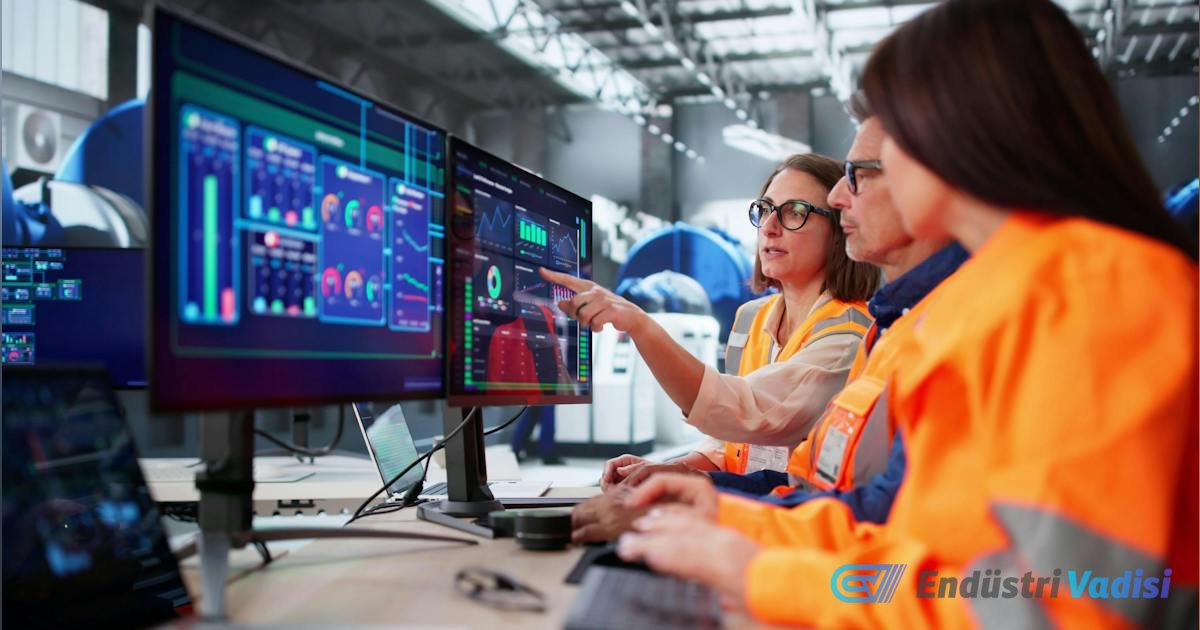
🛠️ The Heart of Industrial Automation: SCADA and HMI
SCADA (Supervisory Control and Data Acquisition) and HMI (Human-Machine Interface) applications, which have been rooted in industry for decades, play critical roles in production automation. However, rapid technological advancements such as wireless connectivity, cloud, and edge computing, along with cybersecurity threats, create significant challenges in integrating older SCADA/HMI systems with new technologies.
To address these challenges, leading industry experts Adam Schindewolf (Emerson), Linda Htay (IDEC Corp.), Alan Cone (Siemens), and Christopher Deloglos (Weidmuller) answered our questions.
📊 Converting Legacy Data Formats to Modern Standards
Linda Htay (LH): Many factories operate with machines installed years ago, using proprietary or legacy communication protocols. Instead of replacing these systems, manufacturers are using edge devices, HMIs, gateways, or controllers that can communicate with both legacy equipment and modern platforms. These devices collect, normalize, and securely transmit operational data using standards such as MQTT, OPC UA, Modbus TCP, or EtherNet/IP.
Alan Cone (AC): Manufacturers can convert legacy data formats to modern standards by using hardware gateways that change data types or software applications that translate data from one format to another.
Christopher Deloglos (CD): Digital transformation struggles in facilities where different generations of communication technologies coexist. Manufacturers should address this transformation at the edge, where a single device can handle multiple protocols, collect data, and republish it in a standardized format.
📈 Historical Data Systems and High-Frequency Data Collection
AC: Siemens' WinCC Historian collects data based on configured settings such as cyclic continuous, change-dependent, event-driven, or hysteresis. WinCC also offers fast and slow tag logging options. Data processing varies between these two methods to preserve data while limiting disk operations.
CD: High acquisition rates and long-term storage requirements move in opposite directions, so the solution is tiered storage. Weidmuller u-OS enables high-frequency data to be captured close to the source, preventing latency and bandwidth penalties. This connects to long-term storage via sampling and retention policies, allowing complete data to be stored locally for a certain period, then aggregated, sampled, or change-based data to be transferred to a central historian or cloud.
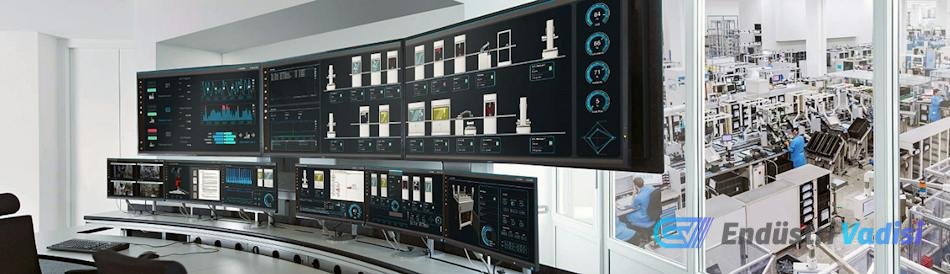
🔗 Connectors and APIs for Integration with ERP and MES Systems
AC: We offer MQTT and OPC-UA connectors in our WinCC products. We also have open systems and APIs like GraphQL & REST, and we enable users to develop their own custom communication drivers.
CD: u-OS is an open, flexible, and independent platform designed for interoperability with third-party platforms through containerized support for third-party applications or three integrated Data Center APIs. It offers a REST/HTTP API over JSON for easy data access, a NATS API for high-performance messaging, and a real-time interface for the lowest latency needs.
☁️ Real-Time Data Streaming to Cloud-Based Analytics Platforms
Adam Schindewolf (AS): Emerson's Inmation acts as a data fabric between OT systems and IT/cloud data consumers, enabling real-time data streaming. It continuously acquires and contextualizes live operational data from control systems, historians, and other data sources, then publishes this data via streaming interfaces such as MQTT, REST APIs, or direct cloud connectors.
LH: Real-time visibility is a critical requirement for increasing efficiency, predictive maintenance, and operational decision-making. A common method for transmitting operational data to cloud platforms is MQTT, a lightweight publish/subscribe protocol designed for Industrial IoT applications.
AC: Siemens' WinCC integrates the WinCC Cloud Connector service, which acts as a pathway for data streaming to cloud systems. This connector uses OPC UA and MQTT as protocols to communicate with cloud services.
CD: On our u-OS platform, various historical timestamped applications can be installed and run to provide real-time data streaming to cloud-based data sinks such as AWS's S3 buckets and Azure Blob Storage. Node-RED and MQTT are default application examples.
🔄 Data Continuity and Seamless Transition in System Migrations
AS: Because Inmation operates non-intrusively alongside existing systems, it is suitable for gradual migration strategies. It can simultaneously acquire both historical and real-time data from legacy historians and control systems without disrupting their operations, creating a decoupled data layer. This enables manufacturers to validate.