








Alper Aktaş
Endüstri Vadisi
- Thread Author
- #1
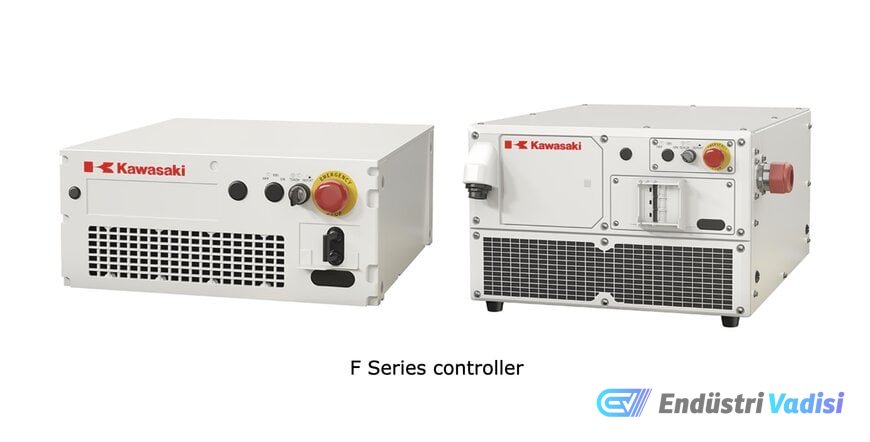
🚀 Cybersecurity Transformation in Industry
The rapid integration of Industrial Internet of Things (IIoT), cloud analytics, and remote maintenance gateways has transformed manufacturing cells from isolated islands into interconnected network nodes. This connectivity, while optimizing equipment uptime, has also rendered operational technology (OT) infrastructure vulnerable to cyberattacks. Historically, industrial robot automation prioritized personnel safety, with controller software and communication buses considered secure. However, in today's smart factories, an unprotected controller could allow adversaries to alter kinematic motion parameters or compromise intellectual property. New regulations, such as the EU Cyber Resilience Act, are shifting industrial equipment certification from mechanical and functional safety to mandatory lifecycle cyber resilience. To address these vulnerabilities, reinforced controller architectures that combine functional safety buses with hardware-level security, cryptographic session controls, and auditable user privileges are essential.
🛡️ Kawasaki F Series S-type Controller: The New Name in Security
Kawasaki Heavy Industries has launched the F Series Controller S-type to protect its connected robotic installations against increasing cyberattack vectors. This newly designed unit retains the kinematic motion algorithms and physical expandability of Kawasaki's widely used F Series controller platform, while integrating multi-layered cybersecurity measures directly into the execution environment.
- Identity-Based Access Controls: To prevent unauthorized parameter changes and credential theft, role-based access privilege management is provided with individual usernames and passwords. This separates standard production operations from restricted engineering and security configuration permissions.
- Operational Traceability: The controller records comprehensive operation and security event logs, allowing for auditing of system changes or tracking abnormal behavior in post-incident forensic analysis.
- Encrypted Communication: Network data in transit is protected through secure, encrypted communication protocols such as SSH, FTPS, and HTTPS.
- Hardware Integrity: To prevent unauthorized firmware installation, the S-type implements cryptographic integrity verification at operating system startup, preventing unauthorized or unsigned binaries from running on the controller.
🤝 Integrated Functional Safety and Certified Development
Rather than separating cybersecurity from traditional plant safety, the F Series Controller S-type combines physical operator protection with digital defense mechanisms. The controller maintains the core F Series' safety control technologies by providing native support for the PROFIsafe communication protocol. This combined safety and security framework enables machine builders to manage safe operational postures, limited speeds, and zone monitoring without routing sensitive safety signals over unverified network bridges.
Kawasaki developed the F Series Controller S-type under certified product development processes according to the international IEC 62443-4-1 standard (Security for industrial automation and control systems - Secure product development lifecycle requirements). This ensures continuous vulnerability management, coordinated disclosure workflows, and verified patch delivery frameworks, helping equipment integrators and end-users comply with stringent regulatory expectations under the EU Machinery Regulation and Cyber Resilience Act.
🔍 Industry Position and Competition
In industrial automation and robot control systems, the IEC 62443 cybersecurity standard family and ISO 10218-1/2 robot safety standards make a fundamental distinction between functional safety (preventing physical harm from equipment malfunction) and cybersecurity (preventing intentional electronic compromise). Functional safety protocols like PROFIsafe ensure that data transmission corruption or frame loss triggers a safe state; however, these layers do not provide confidentiality or cryptographic authentication. To bridge this gap, a hardware-level Root of Trust must be implemented.
Kawasaki's F Series Controller S-type directly competes with reinforced controller architectures from leading industrial robot manufacturers such as FANUC (R-30iB Plus), ABB (OmniCore), KUKA (KR C5), and Yaskawa Electric (YRC1000). By integrating secure operating system validation, encrypted services, and IEC 62443-4-1 compliant lifecycle management directly into the F Series enclosure, Kawasaki eliminates the need for external security gateways. This provides an inherently resilient control node for automotive assembly lines, heavy shipbuilding cells, and general manufacturing facilities, designed to withstand evolving industrial network attacks.





















