








Mucitler Elektrik
Corporate
- Thread Author
- #1
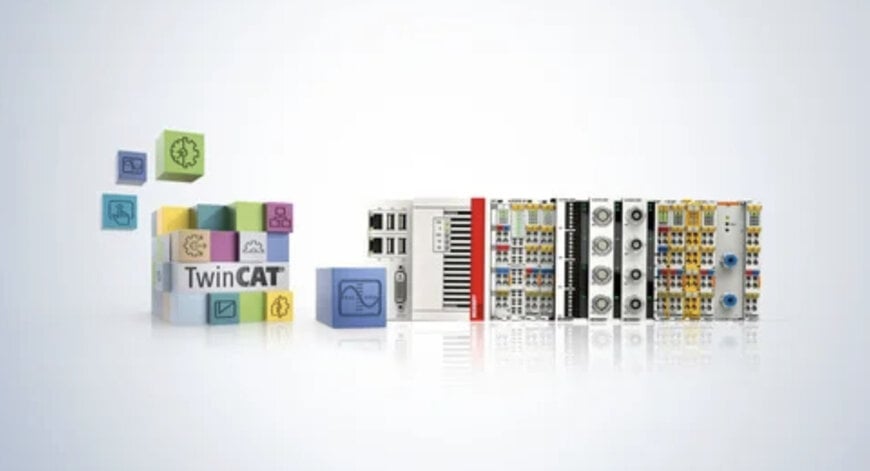
At the heart of industrial automation, precise measurement and data acquisition are becoming increasingly critical. Especially in test benches and data acquisition applications, high-precision measurement technology integrated into existing control architectures elevates data quality to its peak. One of the latest developments in this field is integrated PC-based solutions that enable time-synchronized acquisition of voltage and energy data without the need for external measurement amplifiers.
─────────────────────────
💡 Scalable Measurement Infrastructure and Fieldbus Integration
Today's complex industrial processes necessitate the real-time and synchronized transmission of large data volumes. The combination of hardware and software modules in IP20 and IP67 protection classes offers flexible scalability. The high-speed fieldbus EtherCAT forms the foundation of this infrastructure, and it can be expanded with gigabit variants like EtherCAT G for higher bandwidth requirements. Thanks to full integration into the TwinCAT control software, connected sensors can be configured directly from within the automation system's control software according to needs.
─────────────────────────
🔋 Cell Voltage Measurement for Battery Production and the Hydrogen Industry
One important application area of this architecture is the production of electric mobility and fuel cells. Special EtherCAT Terminals are used for high-resolution short- and long-term monitoring of individual cell voltages in batteries or hydrogen fuel cells. The analog input terminals EL3008-0003 (for eight plus/minus three volts) and EL3008-0005 (for eight plus/minus five volts) support the acquisition of stacked voltages up to fifteen hundred volts in measurement category CAT II. Cascaded cabling significantly reduces installation effort when monitoring large cell stacks.
─────────────────────────
⚡ Grid Analysis and Distributed Condition Monitoring
For grid analysis and energy management within the digital supply chain, the EL3475 EtherCAT Terminal is used in conjunction with the SCL6xxx series of low-signal split-core current transformers. This combination captures all relevant electrical characteristics, enabling precise grid analysis. Electronic nameplates and pre-assembled cables minimize configuration errors and facilitate retrofitting of existing systems. The collected energy data can be transferred directly to higher-level analysis tools and cloud environments via the bus system.
For distributed condition monitoring and dynamic position tracking directly on the machine, the robust IP67 module EP3751-0260 is used. This EtherCAT Box combines a three-axis accelerometer with a three-axis gyroscope. With twenty-bit resolution and a four-kilohertz sampling rate, the system precisely records rotational movements and vibrations. The housing's resistance to mechanical shock, vibration, and EMC guarantees reliable operation in extreme environmental conditions and ensures data consistency in the automotive data ecosystem.
─────────────────────────
🔬 Advantages of PC-Based Measurement
In the field of industrial measurement technology and data acquisition, PC-based systems, unlike traditional measurement systems, offer an integrated approach that does not require separate measurement amplifiers and special software licenses. This approach eliminates hardware silos by positioning the measurement technology directly on the DIN rail as a standard input/output module or distributed in the field.
The acquisition of stacked voltages up to fifteen hundred volts with cell voltage measurement terminals is an important criterion for testing high-voltage batteries for passenger vehicles, where modern drive architectures use voltage levels of eight hundred volts and above. Compared to specialized battery management test benches, cascaded EtherCAT cabling reduces system costs and decreases data transmission latency to the central controller.
For distributed vibration monitoring, the combination of an accelerometer and gyroscope in an IP67 housing, with a four-kilohertz sampling rate and twenty-bit resolution, offers functional advantages over standard condition monitoring systems that only record vibration amplitudes without rotational position changes. This high integration density reduces the number of required sensor heads and cables on moving machine parts, thereby decreasing the likelihood of mechanical failure in demanding industrial environments.


















