






Cengiz Özemli
Academic
- Thread Author
- #1
## Integrated Architectural Solution for Industrial Edge AI Inference
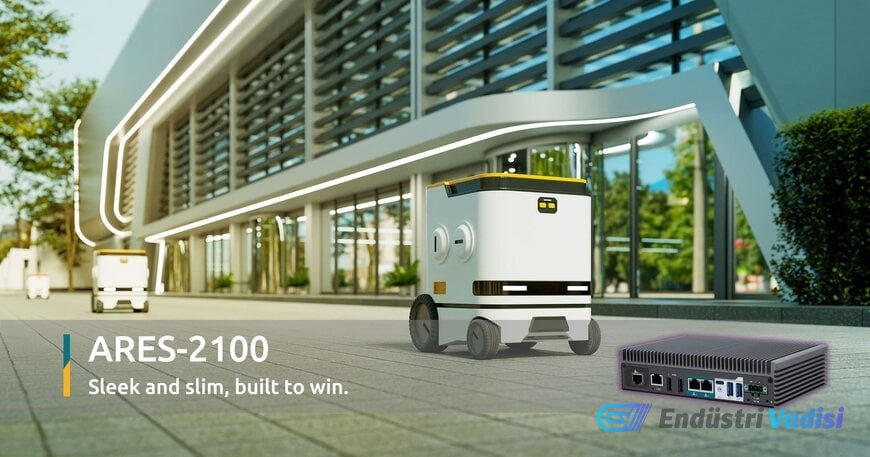
Integrated architectural platforms that enable high-efficiency artificial intelligence (AI) inference in limited spaces within industrial automation environments are becoming increasingly important. Arbor Technology's ARES-2100 Series, developed with Intel Wildcat Lake processors, stands out as a pioneer of innovative solutions in this field.
The ARES-2100 Series is designed as a fanless edge computing system and is capable of performing complex machine vision and inference tasks throughout the digital supply chain. This platform uses a hybrid computing architecture to provide the necessary hardware acceleration for real-time automated inspection and autonomous mobile robot (AMR) navigation.
### ARES-2100 Series Technical Specifications
- Utilizes Intel Core Series 3 processors (codenamed Wildcat Lake).
- Total AI computing performance reaches 40 TOPS (Trillion Operations Per Second).
- Performance is distributed across three main silicon engines: CPU, Intel Xe3 graphics unit, and Intel NPU 5.0.
- Thanks to a separate Neural Processing Unit (NPU), it offers 17 TOPS capacity for neural network operations.
- This architecture minimizes latency by offloading inference operations from the central processor and reduces overall power consumption.
For industrial operators, this hardware separation ensures that high-speed image analysis for machine vision does not conflict with critical control logics or communication protocols.
### Mechanical and Durability Features
The system is designed in a 1U ultra-thin form factor, suitable for the needs of modern automotive data ecosystems and smart factory environments. This compact chassis can be integrated into narrow industrial cabinets and 1U server racks.
The fanless thermal design eliminates mechanical failures caused by moving parts. Vibration and shock resistance have been tested to MIL-STD-810H standard, providing high reliability in mobile applications such as Automated Guided Vehicles (AGV).
It is resistant to industrial power fluctuations thanks to secure connections with cable locks and a wide DC input range of 9V-36V.
### Connectivity and Thermal Management
The system can operate between -20°C and 60°C, enabling operation in unconditioned factory environments.
Up to three 2.5GbE LAN ports are available for edge-to-cloud data transfer and sensor integration, along with M.2 expansion slots for modular upgrades.
Optional UFS 3.1 storage is supported for high-speed data logging; this storage offers higher read/write speeds than traditional SATA-based industrial storage.
The combined use of Intel NPU 5.0 and the robust 1U chassis provides a stable environment for light AI inference. These technical specifications allow manufacturers to implement quality control and predictive maintenance at the data generation point, thereby reducing bandwidth requirements over the wide area network.
These developments can be considered a significant step for the use of artificial intelligence in industrial automation on edge devices.