








Süeda Asil
Corporate
- Thread Author
- #1
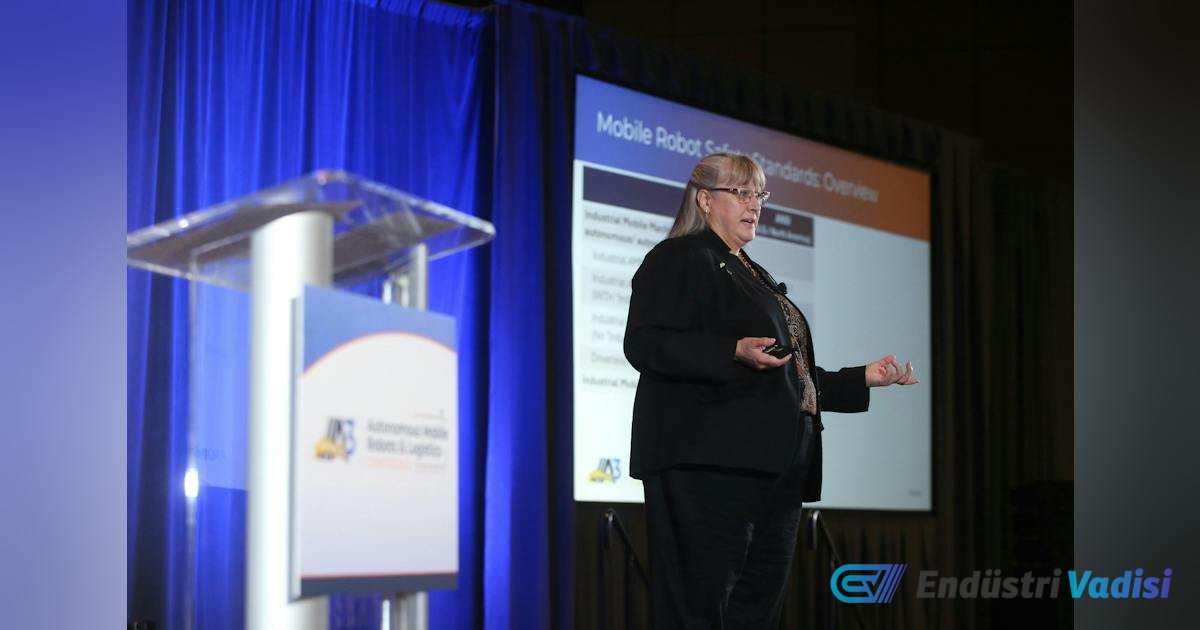
New Robot Safety Standards and What They Mean for Manufacturers
As robot technologies advance, so do safety standards. The R.1506-2025 standard, set to be published in 2025, will particularly impact a wide range of systems, from existing robot systems to mobile robots and emerging technologies. These updates will bring significant changes to how manufacturers manage robot applications in their facilities.
What Does This Mean for Existing Robot Users?
The revised parts 1 and 2 of ISO 10218 (adopted in the US as ANSI/A3 R15.06-2025) do not mandate retroactive compliance for existing industrial robot installations. However, when a new robot cell is designed, or an existing cell is modified, relocated, or redeployed for a new process, a new risk assessment is required. This presents a good opportunity for manufacturers to review their safety protocols.
The 2025 editions clarify functional safety requirements, incorporate collaborative application guidance into the main standard, and address cybersecurity affecting safety. Users who understand these changes will be better positioned for future projects.
What to Consider When Adding New Systems?
- Application-Oriented Approach: Safety depends on the entire system (robot, end effector, workpiece, layout, and human interaction) rather than the robot itself.
- Early Risk Assessment: A comprehensive risk assessment conducted at the beginning of a project is more economical than later redesigns. Risk assessment should be understood as a repeated process throughout the design phase and the system's lifecycle.
- Integrator Selection and Lifecycle Planning: Manufacturers must ensure their integrators design new robot applications in compliance with current standards and plan how the system can be reconfigured throughout its lifecycle. Operators and maintenance personnel should also be involved in this process.
- Special Considerations for Mobile Robots: For industrial mobile robots, the entire area accessible by the robot should be treated with the same care given to the design of an industrial robot cell for fixed robot applications. The ANSI/A3 R15.08 standard adds facility-level considerations such as traffic, corridors, and shared spaces.
Why Are Robot Safety Conferences Important?
Robot Safety Conferences are a critical opportunity to learn about the latest safety standards for robotics. It is important to understand how the requirements specified in the standards can be implemented in a real facility. These conferences focus on teaching participants what ANSI and ISO robot safety standards require and how to apply them.
How Does Safety Change as Robotics Matures?
As robotics matures, safety becomes both better and more complex. Safety tools like speed and separation monitoring, and power and force limiting, are much more capable than they were a decade ago. However, robots are being used in less structured environments, in closer physical proximity to humans, and for more diverse tasks. This requires a shift in focus from safeguarding a fixed cell to evaluating dynamic applications. The challenge is not that robots are becoming less safe, but that the range of situations to evaluate is expanding.
How Does Autonomy Affect Safety?
Autonomy means a machine makes decisions based on what it perceives in a dynamic environment. This raises questions about sensor reliability, how the system handles unexpected situations, and how its behavior can be validated.
The gold standard for machine safety has been "functional safety" for over a decade. However, with machine learning or artificial intelligence, machines changing how they react to stimuli over time as they learn creates a very different paradigm from functional safety. To bridge this gap, modern autonomy often requires traditional functional safety "envelopes" to limit and monitor the unpredictable behavior of AI. For example, an AI model might be trained in a lab, "frozen" (so its reactions become deterministic), extensively tested, and then deployed. Or, a traditional, certified functional safety system (like a laser scanner or safety PLC) is "wrapped" around the AI, so if the AI makes an unexpected decision, the traditional system can cut power.






















