



Süeda Asil
Corporate
- Thread Author
- #1
💡 Software, Not Hardware, is Key!
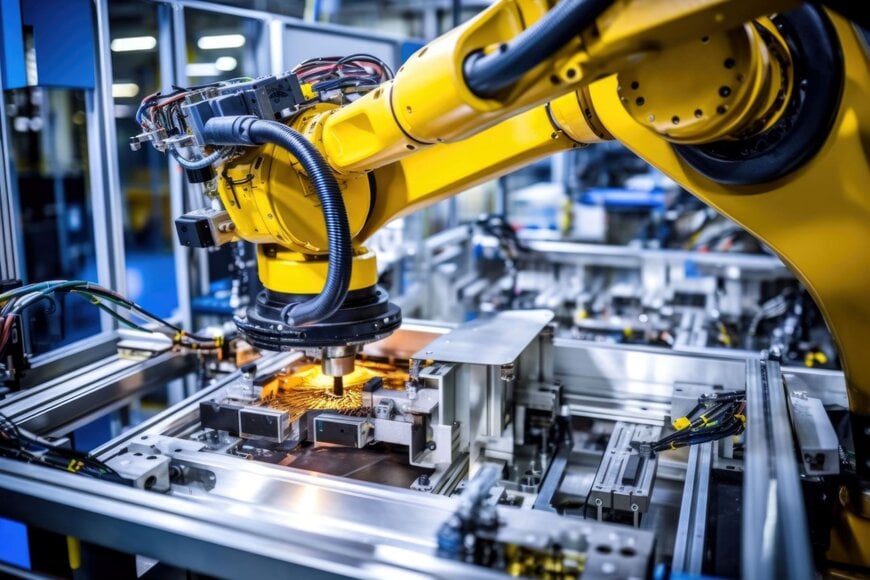
Manufacturers often focus on physical hardware upgrades, such as high-efficiency motors, to boost productivity and reduce energy consumption. However, Beth Ragdale, Product Manager at Beckhoff UK & Ireland, emphasizes that the greatest efficiency gains often come from optimizing machine control logic. Inefficient sequencing, excessive cycle times, and unnecessary robot movements create hidden costs that cannot be solved by hardware changes alone. By adopting intelligent control architectures that integrate motion, logic, and safety, production cells can be dynamically adjusted and coordinated much more efficiently.
📊 Uncover Hidden Inefficiencies with Real-Time Data Analysis!
Leveraging real-time machine data is critical to uncovering these hidden inefficiencies. Beckhoff's TwinCAT® Analytics software uses built-in algorithms to evaluate operational data, including energy consumption and cycle times, allowing for the identification of bottlenecks and excessive idle times. This continuous data analysis maximizes equipment performance and forms the basis for predictive condition monitoring. By identifying early changes in vibration, temperature, or operating patterns, maintenance teams can prevent unexpected downtime, ensuring operations continue to improve efficiency and extend overall equipment life.
⚙️ Transition from Hardware to Software: The Future of Industrial Automation
In modern industrial automation, the shift from hardware-centric to software-defined manufacturing is largely driven by the physical limitations of component efficiency. A high-efficiency motor (IE4 or IE5) might offer a few percentage points of energy savings, but if the Programmable Logic Controller (PLC) dictates that the motor idles at full speed between batches or commands unoptimized, jerky point-to-point robot trajectories, these hardware savings are immediately negated. Platforms like Beckhoff's PC-based TwinCAT architecture eliminate these operational silos by running PLC, motion control, and analytics concurrently on a central multi-core industrial PC. This enables real-time analysis of high-frequency data collected via high-speed deterministic fieldbuses like EtherCAT. By applying algorithmic analysis to this high-resolution data, engineers can implement intelligent "sleep and wake" modes, optimize acceleration profiles to reduce mechanical wear, and transition from reactive to predictive maintenance, all without the need for complex third-party edge gateways.