




Semih Asil
Industry Valley
- Thread Author
- #1
AI Revolution in Industrial Panel PCs: Edge Computing with Intel Core Ultra 🚀
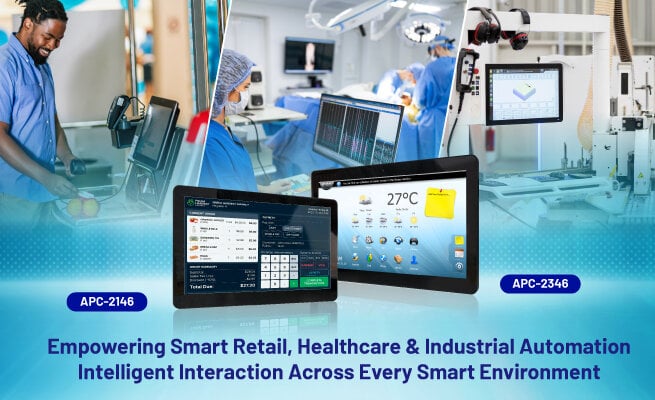
A groundbreaking development is underway for the industrial automation, healthcare, and retail sectors. Avalue Technology is launching fanless panel systems with integrated neural processing units (NPUs), bringing AI-powered edge computing to industrial applications. These innovative systems are designed to meet local data processing and human-machine interaction (HMI) needs.
─────────────────────────
🔥 Performance Boosted by Intel Core Ultra
Avalue's next-generation fanless industrial panel PCs, models APC-2146 and APC-2346, are equipped with the Intel Core Ultra 5 125U processor platform. These 21.5-inch and 23.8-inch Full HD systems integrate neural processing unit (NPU) capabilities to support AI inference. They are poised to make a significant difference, especially in areas such as smart retail, self-service kiosks, medical environments, and industrial automation facilities.
─────────────────────────
💡 Edge Computing Architecture and AI Inference
The processing power of the APC series comes from the Meteor Lake architecture of the Intel Core Ultra 5 125U processor. This platform includes a dedicated NPU that optimizes energy efficiency by offloading AI workloads from the central processing unit (CPU). Critical for intelligent image recognition and real-time data processing tasks, this architecture supports up to 32 GB of DDR5 memory at 5600 MHz. Additionally, there is an M.2 Key E expansion slot for the integration of Wi-Fi and Bluetooth modules. The systems are compatible with Windows 10, Windows 11, and Linux operating systems.
─────────────────────────
🛡️ Environmental Protection and Physical Features
Designed for continuous operation in harsh industrial conditions, these systems feature a fully enclosed, fanless thermal management architecture. This design prevents dust ingress, reducing mechanical failure points. The 21.5-inch APC-2146 model uses plastic casings with a depth of approximately 45.5 mm, while the 23.8-inch APC-2346 model has a depth of approximately 49.5 mm. Both models feature multi-touch (PCAP) interfaces and narrow-bezel true-flat screens. The front panels are IP65-rated for water and dust resistance, ensuring easy cleaning and maintenance.
─────────────────────────
🔗 Connectivity and Application Areas
The Panel PCs offer comprehensive industrial input/output (I/O) interfaces to support peripheral integration. These include dual Intel Gigabit Ethernet ports, four USB 3.0 ports, one USB Type-C port, HDMI, and analog audio input/output. The systems operate with a wide range 12 to 24V DC power input and support VESA mounting standards, allowing integration into factory control machines, digital signage enclosures, or mobile medical carts.
In the retail and self-service sectors, this hardware provides the necessary local processing power for backend data synchronization and high-speed network communication. In Industry 4.0 applications, it functions as a human-machine interface (HMI) for real-time production monitoring, equipment integration, and quality control. In the healthcare sector, fanless operation and IP65-rated displays meet clinical requirements such as low acoustic noise and strict infection control protocols.
─────────────────────────
🔬 The Future of Industrial Computing
The Avalue APC-2146 and APC-2346 models represent a significant milestone in the integration of Intel Core Ultra (Meteor Lake) processors into industrial panel PCs. Traditionally, industrial PCs required separate cards for AI acceleration, but this new generation of panels leverages the built-in NPU of the Intel Core Ultra 5 125U processor. Their ability to operate with passive cooling thanks to low power consumption of 15W sets them apart from other rugged HMI terminals that require active cooling for high-performance inference operations. These integrated AI capabilities enhance efficiency and autonomy in industrial applications, paving the way for future smart factories and healthcare solutions.