






Erkan Teskancan
Corporate
- Thread Author
- #1
### Early Fault Detection with Module-Level PV Monitoring
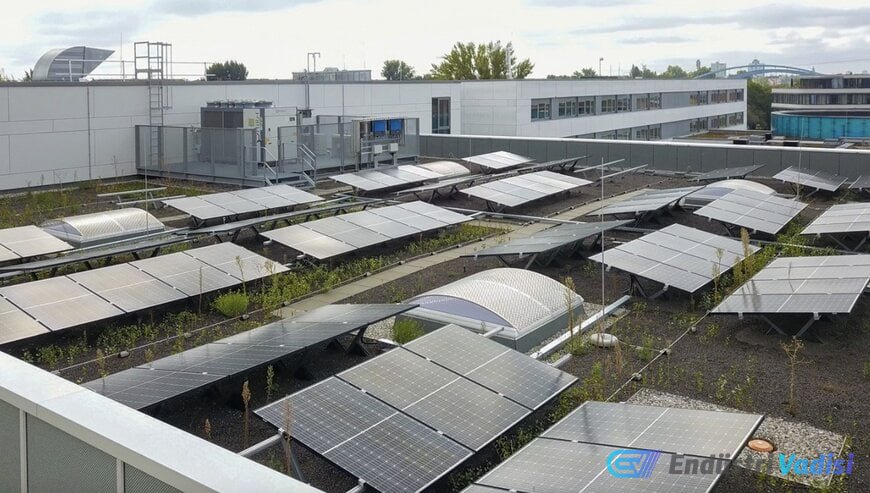
Fraunhofer IFF is developing a new AI-powered sensor system that enables continuous and high-resolution monitoring of photovoltaic (PV) systems at the module level. This system offers significant improvements in fault detection, performance transparency, and predictive maintenance.
### Limitations of Traditional PV Monitoring
Existing systems typically collect data at the inverter or string level, making it difficult to detect module-level faults. Faults such as defective bypass diodes, electrical connection issues, or local degradation may go unnoticed until they cause significant impacts. Optical methods like infrared thermography and drone imaging only provide periodic assessments dependent on environmental factors.
### High-Resolution Module-Level Sensors
The new system measures electrical and thermal parameters such as direct current, voltage, and module temperature directly with sensors placed on each PV module. Environmental data like solar irradiance is provided by external weather stations. This allows individual modules to be monitored, clearly revealing local faults and performance deviations.
### Wireless Data Collection and System Architecture
Sensor nodes communicate via a mesh network using low-power wireless protocols. Data is transmitted to central gateways, synchronized, and processed on a control platform. This architecture ensures reliable and energy-efficient operation in large solar power plants with thousands of modules.
### AI-Powered Anomaly Detection and Analysis
At the heart of the system are artificial intelligence algorithms. Anomalies in electrical and thermal data are detected by AI, and faults are classified at the module or string level.
#### Detected Problems
- Thermal anomalies such as hot spots
- Mechanical defects like cracks and delamination
- Electrical issues such as bypass diode failures
- Effects of soiling, shading, and snow cover
- Degradation and mismatch effects
The system not only detects anomalies but also provides maintenance recommendations and predictive maintenance capabilities.
### Validation and Implementation Process
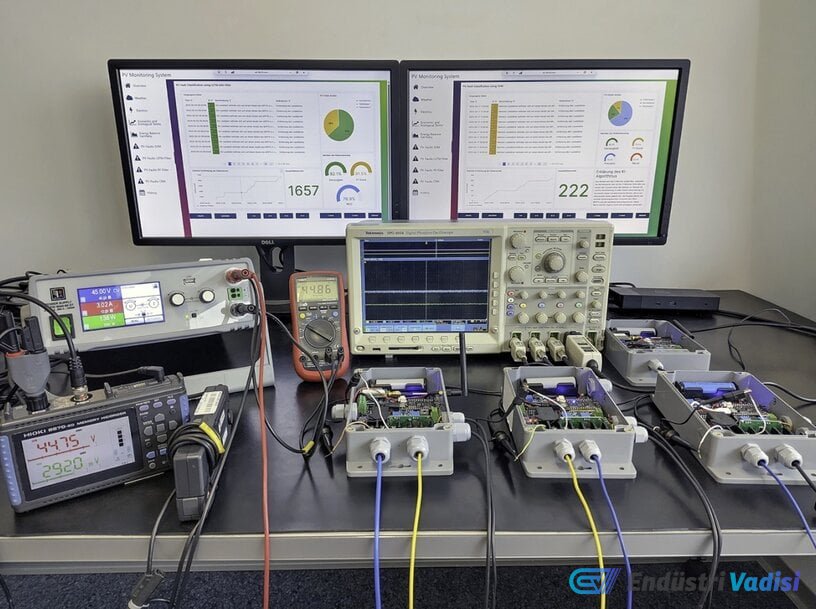
Prototype sensor and communication systems have been tested in laboratory environments for accuracy, stability, and durability. Field tests are ongoing in pilot sites, including Turkey, to optimize scalability and AI performance under real-world conditions.
### Future PV Operation and Maintenance
Continuous module-level monitoring fills a significant gap in current PV plant management. Advanced fault detection and localization lead to higher energy efficiency, less downtime, and optimized maintenance planning. With the increasing importance of photovoltaic systems in the energy sector, such high-resolution monitoring solutions play a critical role in enhancing reliability and overall performance.