








Elif Özaksu
Corporate
- Thread Author
- #1
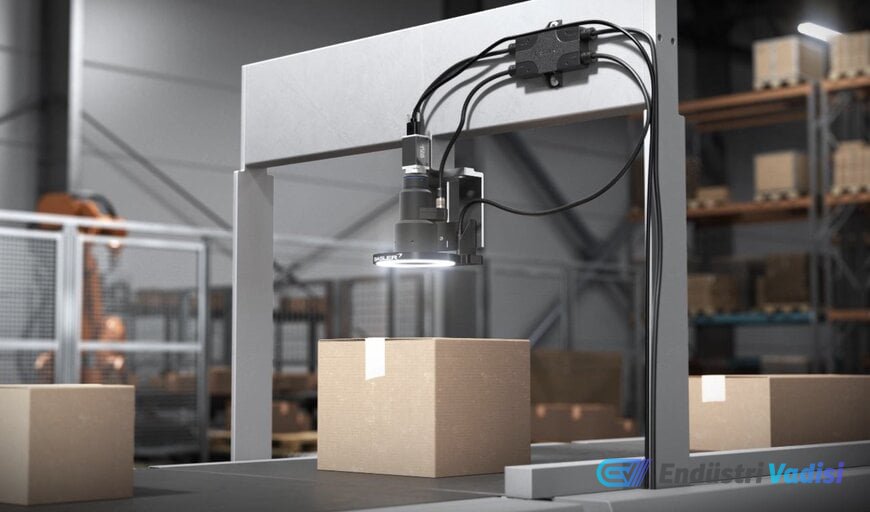
💡 Integrated Control with a Single Cable from Basler
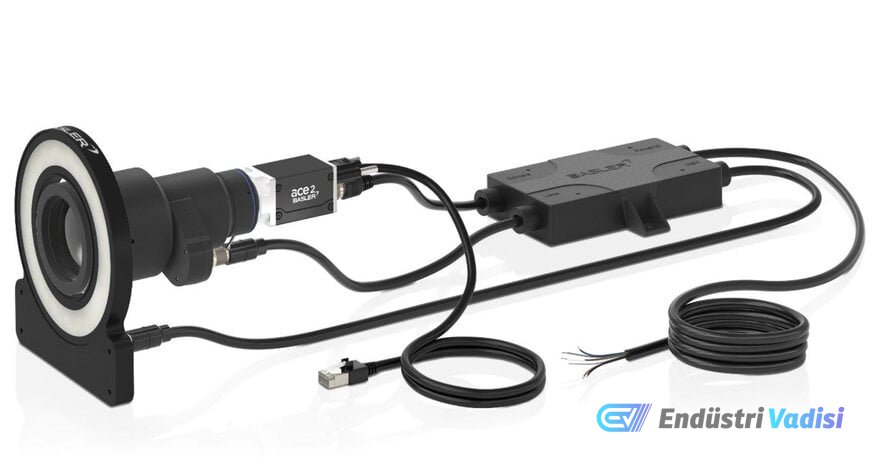
Basler offers a modular synchronization cable and SDK solution that centralizes lighting and autofocus control in machine vision systems. This innovative approach eliminates the need for external hardware controllers, consolidating cameras, motorized lenses, and lighting units via a single synchronization cable.
⚙️ Hardware Consolidation and Simplification
Traditional machine vision architectures rely on external controllers to synchronize image acquisition, lighting pulses, and focus shifts. Basler's new system bypasses these external components by processing imaging, lens, and lighting commands directly at the camera. Using a smart power I/O cable, bidirectional communication is established between the camera, optical lens, and LED lighting unit over a single camera I/O line. This integration reduces the overall hardware and cabling footprint while freeing up unused general-purpose I/O lines for triggering other external devices.
💻 GenICam-Compliant SDK Integration
To manage the physical hardware, the solution utilizes a GenICam-compliant software development kit (SDK), such as the pylon Software Suite. This framework allows engineers to program autofocus and flash modes through a unified application programming interface (API), rather than writing different code for separate peripheral controllers. The modular design supports cross-vendor interoperability by integrating Basler's ace 2 and boost R cameras with Optotune liquid lenses, Computar motorized lenses, and various LED illumination modules. Mapping these components to a common GenICam registry simplifies the deployment and scaling of vision systems.
🚀 Dynamic Focus and Flash Applications
- Logistics and Parcel Handling: In high-throughput logistics environments, variable package sizes necessitate continuous focus adjustments. Centralized camera control allows liquid or motorized lenses to adapt to changing imaging distances while coordinating flash timing to eliminate motion blur during barcode or label reading.
- Electronic Device Assembly: In electronic device assembly, rapid autofocus and dynamic flash enable visual inspection systems to identify topological defects across varying component heights.
According to Basler Global Product Category Managers Christian Schafmeister and Torben Deike, centralizing the procurement and synchronization of these hardware components reduces the engineering overhead associated with vision system construction.
🔍 Additional Information and Competitive Analysis
In the industrial machine vision sector, the synchronization of illumination and optics often requires dedicated constant current flash controllers from manufacturers such as Gardasoft, CCS, or Advanced Illumination. These traditional controllers offer microsecond-level pulse widths and significant overdrive capabilities but add physical bulk and require separate programmatic integration. Basler's camera-side control competes with emerging decentralized control architectures, such as direct-to-camera liquid lens controllers integrated by companies like IDS Imaging Development Systems or Edmund Optics. While dedicated external controllers offer an advantage in providing high power outputs for intense overdrive applications, Basler's synchronization architecture prioritizes spatial efficiency and API consolidation, offering an optimized solution for embedded vision applications where physical space and cabling simplicity are primary constraints.





















