




Mucitler Elektrik
Corporate
- Thread Author
- #1
🛠️ The Role of the System Integrator
System integrators provide services of varying scales based on their clients' needs. An engineer who honed their PLC and SCADA programming skills working on refinery and pipeline automation projects decided to start their own business about 15 years ago. Focusing on small businesses, this one-person operation offered advantages in terms of customer loyalty and gaining experience. Fieldwork and self-sufficiency are critical in such projects.
⚠️ Dangers of Equipment Without Feedback
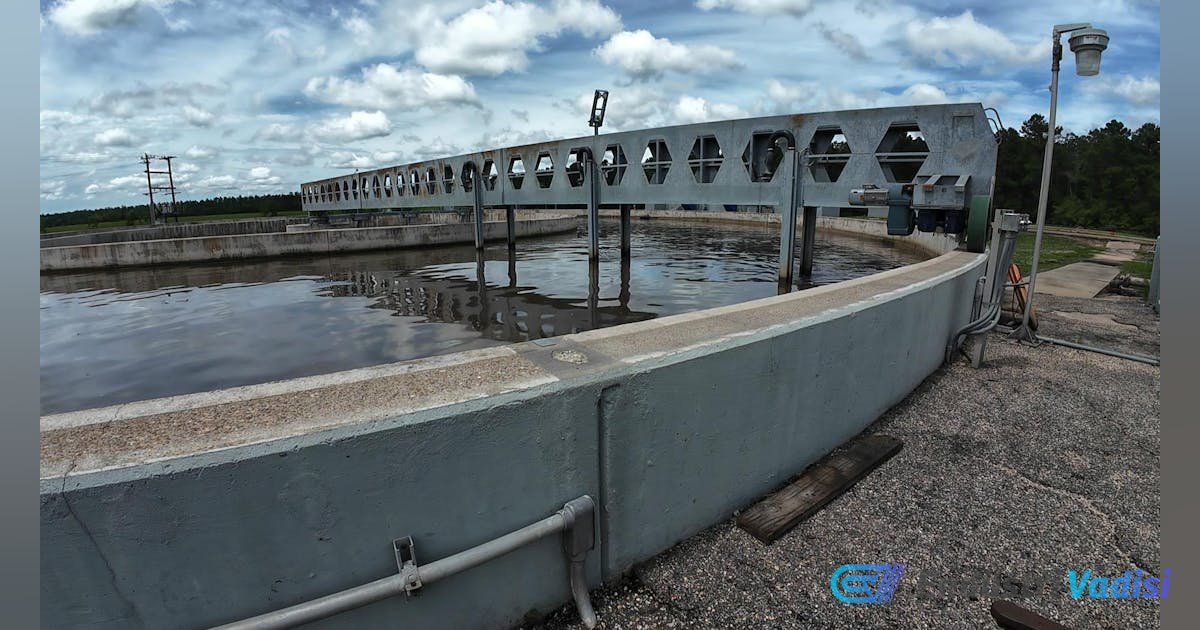
At a wastewater treatment plant, rotating bridges in aeration basins, in use since 1996, were causing problems. These bridges carry diffuser bars that oxygenate the water. Sediment accumulating at the bottom of the basin forced the rotating arms to get stuck or drag. The original design lacked any protection or feedback mechanism beyond motor overload protection. The absence of current monitoring, position feedback, or rotation time data prevented problems from being detected before they escalated into failures. Increasingly frequent jams led to the bridge bending and requiring crane correction, resulting in costly consequences.
💡 The Solution in Position Monitoring
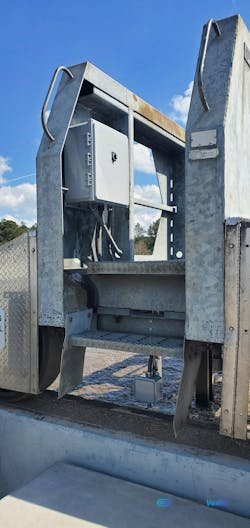
To solve the problem, it was not feasible to add sensors to the bridge and connect cables to the plant's PLC because the bridge was constantly rotating. Therefore, it was decided to mount the controller directly on the bridge. The brush circuit was modified to provide constant power to the bridge, and a step-down transformer was added for instrumentation. After the new controller and sensor were mounted on the bridge, wireless communication was established with the plant's SCADA system.
To detect the bridge's rotation, an inductive proximity switch was used, which detected metal targets strategically placed around the basin's perimeter. This sensor verified normal operation by determining the bridge's movement and rotation speed/direction. A current transducer was added to monitor motor current. This provided a 4-20mA analog signal to the PLC, making it possible to catch high current conditions that basic overload protection might react to slowly or miss entirely. In case of a problem, the system stops the bridge and sends an alarm to the SCADA system.
🧠 Smarter Bridge Automation
AutomationDirect products, also used in the plant's main control system, were chosen as the most suitable PLC platform for the project. The small-sized CLICK PLUS PLC with built-in Wi-Fi offered both control logic and wireless connectivity in a single compact package. The plant's SCADA system, Inductive Automation Ignition, communicated directly with the PLC.
The logic was quite simple: A timing sequence runs at startup. Once the bridge reaches nominal speed, proximity targets monitor the bridge's rotation. Normally, the bridge moves from one target to the next in about 20 seconds. If a target is not detected within 30 seconds, the system stops the bridge and triggers an alarm. The current transformer allows operators to see when a drag begins, preventing larger failures. Free software and extensive online resources greatly contributed to the successful completion of the project.