





Semih Asil
Industry Valley
- Thread Author
- #1
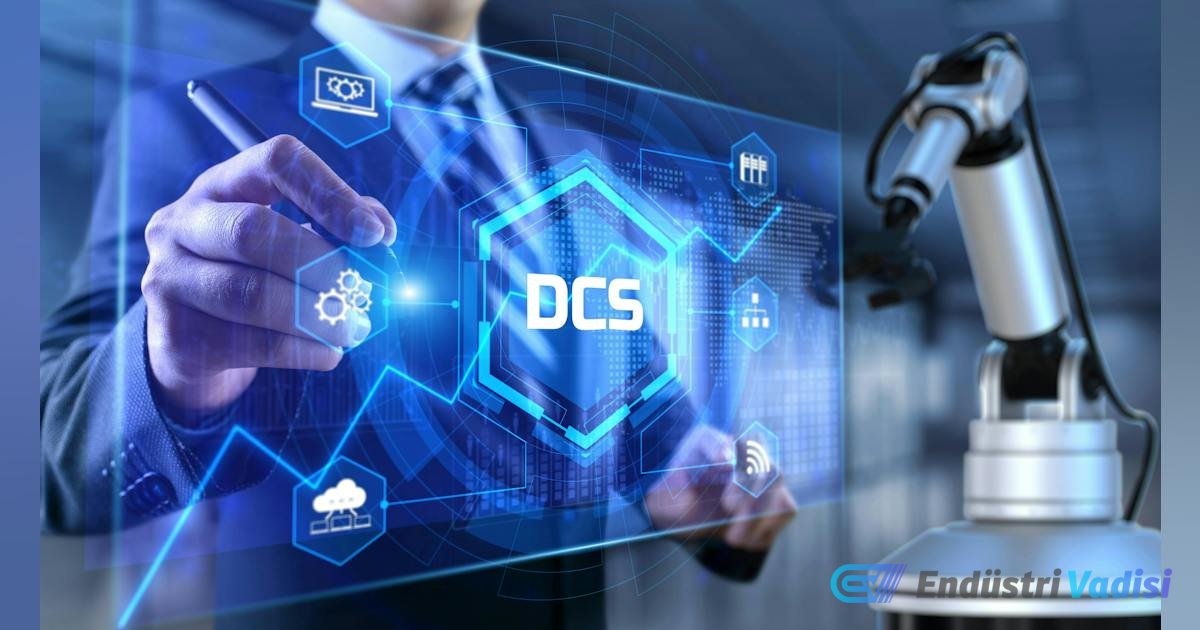
🏭 Why Were Legacy Distributed Control Systems (DCS) Important?
Legacy DCS systems offered reliability for operating many interdependent systems over long periods in continuous or batch-based manufacturing processes. These systems provided process control, supervision, and redundancy across the plant, allowing operators to centrally monitor and optimize systems without shutting down the entire operation.
Especially in critical sectors such as pharmaceutical manufacturing, refineries, and semiconductor production, these systems were indispensable for preventing safety, environmental, or product failures. They offered advantages such as built-in application-specific safety measures, alarm management, and operator visibility, ensuring auditable and repeatable process execution.
⏳ Challenges of Aging Systems
However, as these systems aged, their support and maintenance became difficult. Finding spare parts for decades-old proprietary systems became almost impossible. This "vendor lock-in" poses a significant risk for manufacturers if critical parts become unavailable.
Manufacturers cannot afford to halt their current processes, and the cost and time of wholesale replacement of production equipment make upgrades prohibitive. Furthermore, the proprietary nature of these systems makes the integration of third-party equipment challenging.
🌉 Building a Bridge to the Future: Solutions
It is possible to build a bridge for secure, modular upgrades and maintenance for legacy DCS systems. This requires a high-level perspective on how hardware and software work together in older systems and for standards-based solutions to create universal translation layers for data and controls.
📊 Data Orchestration Layer
The data orchestration layer uses edge computing devices to standardize, tag, and contextualize data from different processes and systems. This enables real-time analysis and information sharing. Unified data systems allow proprietary equipment to share data with new equipment through a translation layer.
⚙️ Software-Abstracted Control Layer
Software-abstracted controls enable rapid process changes, dynamic scaling, and flexible automation without the need for machine-specific custom coding. A unified data architecture, working in conjunction with software-abstracted controls, facilitates robust machine and process analysis and process portability.
📦 Module Type Package (MTP) Standard
MTP is an industry standard for equipment integration. It provides a standardized definition of functions and elements. Machines designed for MTP communication integrate easily into existing systems and communicate with the control layer.
💡 Future-Proofing and Risk Mitigation
A software-abstracted control architecture supporting a data orchestration layer and standards-based hardware allows manufacturers to solve the obsolescence problem in vendor-locked deployments. This approach enables manufacturers to integrate new vendors, parts, and equipment into legacy systems with a lower commissioning cost.
This way, a third-party OEM can quickly and cleanly integrate into an existing DCS using their preferred PLCs, controllers, or motion systems. The data orchestration layer ensures that process, batch, and status information is portable across historical records, MES, and other platforms, empowering analysis and decision-making.
This approach also minimizes validation risk because the primary impact of new hardware or vendors falls on the software-abstracted layers. Manufacturers no longer have to choose between maintaining old proprietary systems or expensively replacing them entirely. Instead, by providing process agility and reducing the risk of unexpected downtime as the supply of legacy components and spare parts diminishes, they can integrate standards-based or proprietary components into existing systems as needed, while preserving the reliability and precision of their existing DCS deployments.