








Elif Özaksu
Corporate
- Thread Author
- #1
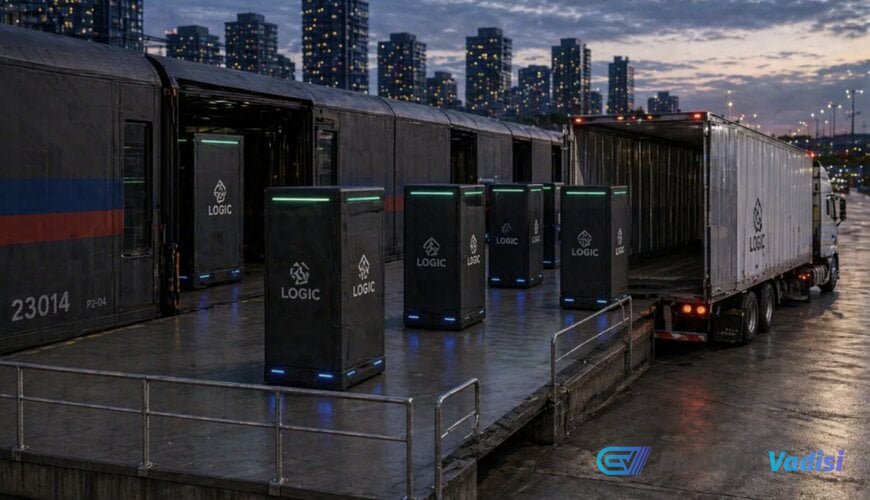
## Autonomous Transfer System in Rail-Road Logistics
Transfer points between rail and road often create bottlenecks in the logistics chain due to manual processes and forklift-based handling. To automate this process, Logic company has developed an intelligent transfer system that combines the Logic Pallet mobile robot and the Digital Twin Operating System.
### System Overview
The system is designed for intermodal terminals where loads are transferred from railway wagons to trucks and vice versa. The Logic Pallet, as an autonomous mobile unit capable of self-loading and unloading, reduces reliance on manual labor and lifting equipment.
By eliminating forklift use, the system standardizes transfer operations, significantly reducing handling steps and time losses. This leads to higher efficiency and predictable cycle times, especially in terminals operating with variable load volumes.
### Operations Management with Digital Twin Modeling
The Logic Digital Twin Operating System creates a real-time virtual model of the transfer area. Data such as inventory location, load weight, and task status are collected from each Logic Pallet connected to the system.
This digital twin model simulates traffic flow within the terminal, identifies potential bottlenecks, and dynamically adjusts pallet movements. By distributing workloads according to real-time conditions, a balanced operation is achieved that adapts to changes in demand.
### Data Collection and Traceability
Each Logic Pallet collects operational data such as cargo weight and stock information during transport. This information is integrated into the system, ensuring the continuity of the process between rail and road.
The collected data set supports the development of logistics processes such as shipment tracking, route accuracy, and demand forecasting. In this way, physical operations are converted into data, providing a consistent view of asset movements across facilities.
### Impact on Terminal Operations and Safety
Autonomous transfer reduces delays and safety risks associated with forklifts and manual handling. Controlled and regular material flow minimizes variability in the handling process.
This approach increases equipment utilization while shortening waiting times in loading and unloading cycles. At the same time, it makes work environments safer by limiting human interaction with heavy equipment.
### Towards Integrated and Scalable Logistics Systems
The combination of autonomous transport units and digital twin control systems points to integrated logistics systems where movement, monitoring, and decision-making processes are integrated.
The system performs coordinated operations at multiple pallets and transfer points, enabling scalable applications in intermodal environments. This allows railway operators, freight terminals, and third-party logistics providers to manage increasing cargo volumes with more consistent performance and comprehensive visibility.





















