








Semih Asil
Industry Valley
- Thread Author
- #1
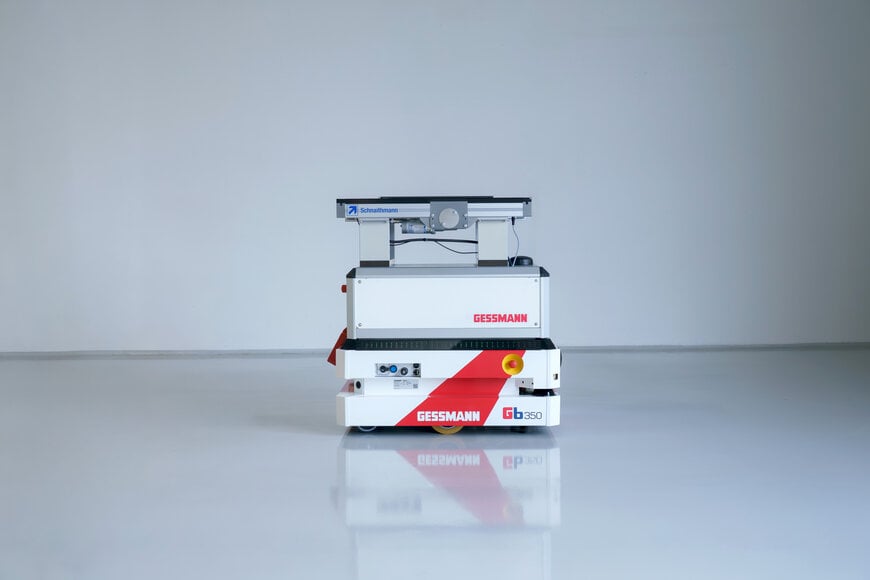
The pursuit of flexibility and efficiency in industrial production makes the integration of Autonomous Mobile Robots (AMRs) into modular assembly and transfer systems inevitable. This collaboration is creating a dynamic revolution in material flow and opening the doors to the factories of the future.
─────────────────────────
🤝 Foundations of Collaboration: Schnaithmann and Gessmann
Schnaithmann Maschinenbau GmbH and W. Gessmann GmbH have signed a strategic technological collaboration to combine assembly automation with mobile intralogistics. This partnership focuses on integrating autonomous mobile robots into production lines to ensure dynamic material flows in industrial production.
─────────────────────────
🎯 Industrial Challenges and Role Sharing
Modern production environments require scalable processes that support rapid variant changes and small batch sizes, rather than rigid cycle times and high production volumes. To manage this variability, Schnaithmann is integrating Gessmann's autonomous transport systems into its existing assembly and transfer lines. Schnaithmann provides the mechanical and control infrastructure for the transfer systems, while Gessmann contributes its modular robot system and expertise in mobile automation and safe human-machine interaction.
─────────────────────────
⚙️ Technical Solution and System Architecture
The technical implementation is based on autonomous transport systems that move workpieces and small load carriers between defined transfer points. These systems create a decoupled material flow architecture. The vehicles navigate safely in aisles narrower than 1.2 meters and are equipped with an autonomous control system featuring integrated safety technology. 360-degree laser scanners provide navigation and environmental safety monitoring. Communication for mobile units is managed by a Wi-Fi-based system, ensuring stable data transmission in large-scale assembly and logistics environments.
─────────────────────────
💡 Application Areas and Use Cases
The integration of AMRs enables the feeding of buffer areas, dynamic bypassing of line interruptions, and automated logistics for quality control parts. Furthermore, mobile units can be combined with collaborative robots (cobots). Thanks to a fully integrated control architecture, the cobot accesses the AMR's safety sensors, calibrates its orientation according to the vehicle's position, and performs handling processes such as bin-picking or visual quality control directly at the operation site without requiring fixed structural changes to the infrastructure.
─────────────────────────
📊 Operational Impact and Strategic Goals
The combination of these two technologies reduces integration times through standardized interfaces, lowers retooling costs during layout changes, and ensures continuously transparent material flows. Thomas Wahl, Technical Sales Manager at Schnaithmann, explains the operational approach: "While our transfer systems provide high repeatability and stable cycle times, AMRs offer flexibility and adaptive material logistics."
─────────────────────────
This integration is shaping the future of industrial automation, offering an unprecedented level of flexibility and efficiency in production processes. The factories of the future will be more dynamic, more efficient, and more competitive with such intelligent solutions.


















